Japan's Nikkei share average declined 0.72% to 67,763.91 as of 0157 GMT on Wednesday, experiencing choppy trading conditions after flitting between a 1.66% drop and a 0.25% gain. The broader Topix index fell 0.62% to 4,037.16, as reported by The Economic Times. Technology stocks faced significant pressure after the tech-heavy Nasdaq posted sharp overnight losses, dragged down by Micron Technology and other chipmakers on heightened concerns about the durability of Wall Street's AI-driven rally. This sentiment followed Samsung Electronics' earnings which did not meet investors' elevated expectations, prompting profit-taking in the semiconductor sector across Asia and the United States. According to Business Standard, chip and AI-related companies posted some of the biggest losses, including Taiyo Yuden, Tokyo Electron, Advantest, Fujikura, and Ibiden.
According to The Economic Times, Samsung Electronics fell more than 10%, weighing on regional technology shares after the world's largest memory chipmaker forecast a 19-fold jump in second-quarter operating profit from a year earlier. Despite the strong earnings outlook, investors were disappointed as they had expected a stronger earnings outlook. Market strategist Daisuke Hashizume from Daiwa Securities noted that "Investors can not fully regain their confidence in AI shares" and "Samsung Electronics flagged a strong outlook but the market was not convinced that prices will keep rising." This mixed reaction to Samsung's results created uncertainty in the broader semiconductor sector and regional technology markets. As reported by Business Standard, investor sentiment was also affected by reports that China's DeepSeek is developing its own AI chip, raising concerns about increased competition in the sector.
Japanese semiconductor-related stocks experienced significant declines during the session, with technology stocks among the biggest losers. Shares of chip-making equipment maker Tokyo Electron fell 2.4%, while chip-testing equipment maker Advantest edged 0.38% lower. High-flying Taiyo Yuden, a manufacturer of multi-layer ceramic capacitors to regulate power in AI servers, fell 6%. However, Memory maker Kioxia recouped early losses to trade 2% higher, showing some resilience in the sector. Technology investor SoftBank Group was up 0.28%, while Game maker Konami Group, which was beaten down on rising memory prices, rose nearly 1%. According to Business Standard, major consumer and industrial stocks also ended lower, with declines in Fast Retailing, Toyota Motor, and Mitsubishi Heavy Industries.
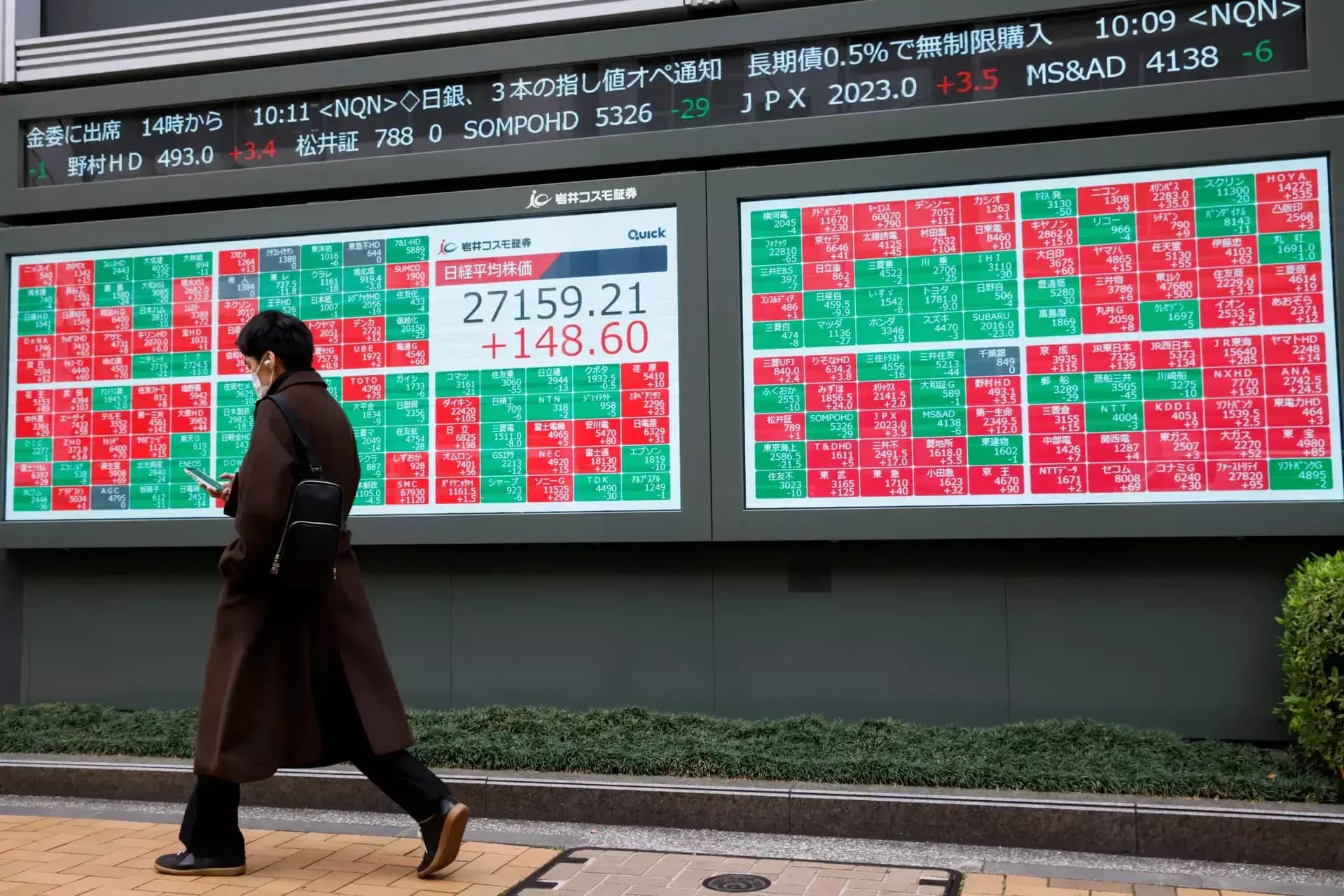
Despite the overall market decline, Japan's banking sector demonstrated strength during the session. According to The Economic Times, Mitsubishi UFJ Financial Group rose 2.26%, becoming the top percentage gainer in the Nikkei, while Mizuho Financial Group and Sumitomo Mitsui Financial Group advanced 0.39% and 0.18% respectively. Nomura Holdings also showed positive momentum, rising 3% during the trading session. In contrast to the technology sector, Mitsubishi UFJ gained 2.3% and Fast Retailing rose 1.1%, helping limit the overall market decline. Phone company KDDI rose 1.69% as investors rotated their target to shares sensitive to domestic demand.
Investors also assessed domestic economic data, which showed nominal wages rose 3.2% in May, while household spending fell 0.4%, reflecting mixed signals for the economy. As reported by The Economic Times, of the more than 1,500 stocks trading on the Tokyo Stock Exchange's prime market, 47% rose, 49% slipped and 2% traded flat. The Topix's value share index climbed 0.14%, while the growth share index fell 0.36%. Toyota Motor also showed positive momentum, closing 0.79% higher during the trading session. Markets were further weighed down by rising tensions in the Middle East and higher oil prices after the US carried out fresh airstrikes on Iran following recent attacks on ships passing through the Strait of Hormuz.