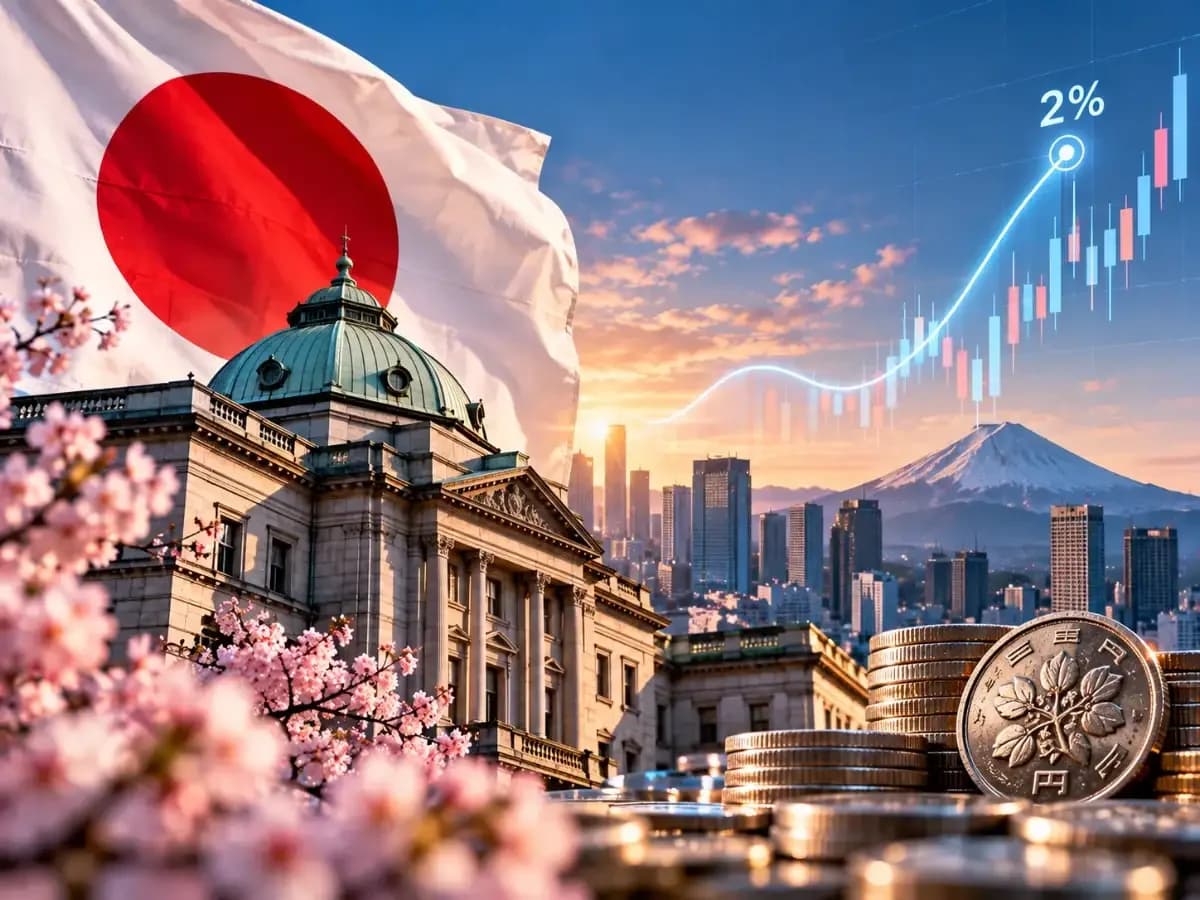
Bank of Japan officials are actively acknowledging the pressing concerns regarding rising inflation, with a faction within the bank advocating for a quicker adjustment in interest rates. Many BOJ policymakers saw a growing need to focus on rising inflation risks, with some arguing that interest rates may need to increase at a faster pace, according to minutes of the central bank's July meeting released Monday. The minutes reinforced expectations that the BOJ could continue raising borrowing costs from historically low levels as underlying inflation approaches its 2% target and price pressures broaden. Markets are increasingly pricing in the possibility of consecutive BOJ rate increases, with money-market pricing pointing to a 36% probability of the BOJ raising its policy rate to 1.5% in October, according to Tokyo Tanshi. Traders have fully priced such a move for December, as the central bank's policy focus increasingly includes limiting the inflationary impact of yen weakness.
Japan's benchmark government bond yields are on track for a fifth consecutive quarter of double-digit gains, marking the first time since 1992 that the benchmark yield has recorded such sustained increases. The 10-year Japanese government bond (JGB) yield was set to rise 42 basis points in the three months through the end of September, according to Reuters reports. The 10-year yield was down 0.5 basis point at 3.08% on Wednesday, as the broader global bond selloff continues to pressure Japanese markets. The two-year government bond yield fell 2 basis points to 1.94% after a relatively firm auction of two-year JGBs provided some relief to investors, though the move came as expectations for an October U.S. Federal Reserve rate hike eased following dovish remarks from New York Fed President John Williams.
The surge in bond yields has been amplified by yen weakness, which has remained under pressure despite the BOJ's rate increase to 1.25% earlier this month, the highest level in 31 years. According to Reuters reports, the currency's weakness has prompted increased policy attention from both Tokyo and Washington, with joint yen-buying operations by Japan and the United States in July and August, along with calls from U.S. Treasury Secretary Scott Bessent for Japan to maintain higher interest rates. The yen's persistent weakness has become a key concern for Japanese policymakers because it raises the cost of imported goods and energy, with analysts increasingly expecting the BOJ's policy focus to include limiting the inflationary impact of a weaker currency. The two-year JGB yield rose as high as 1.975% on Monday, its highest level since March 1995, with the yield having doubled over the past 12 months and is more than six times its level at the same point in 2024.
The shift in market expectations comes as investors balance the BOJ's gradual policy normalisation against developments in U.S. monetary policy, currency markets and Japan's fiscal position. Market expectations for a Bank of Japan rate increase had been partly supported by bets that the Federal Reserve could also tighten policy in October, according to Reuters. A narrowing interest-rate differential between Japan and the United States could put additional pressure on the yen, increasing expectations that the BOJ may need to respond. The sustained rise in Japanese government bond yields also reflects the changing global interest-rate environment, with investors closely monitoring inflation, central-bank policy and government borrowing needs, as the continued rise in long-term borrowing costs keeps attention focused on Japan's fiscal outlook.
The surge in domestic buying contrasts sharply with the behavior of foreign investors, who have turned into net sellers of Japanese government bonds. Overseas investors purchased just ₹2.4 lakh crore of coupon-bearing JGBs from April through August, compared with ₹32.8 lakh crore during fiscal 2025, which was their largest annual purchase in the JSDA data. Foreign investors have also turned into net sellers of medium-term JGBs, offloading ₹1.9 lakh crore during the April-August period, compared with net purchases of ₹17.4 lakh crore in fiscal 2025. Global bond markets have remained under pressure as U.S. Treasury yields climbed to multi-year highs amid concerns that surging oil prices could fuel inflation and lead the Federal Reserve to keep interest rates higher for longer. Japan's fiscal position remains another factor complicating the outlook, with government debt remaining more than twice the size of annual economic output, while rising borrowing costs are increasing debt-servicing expenses.