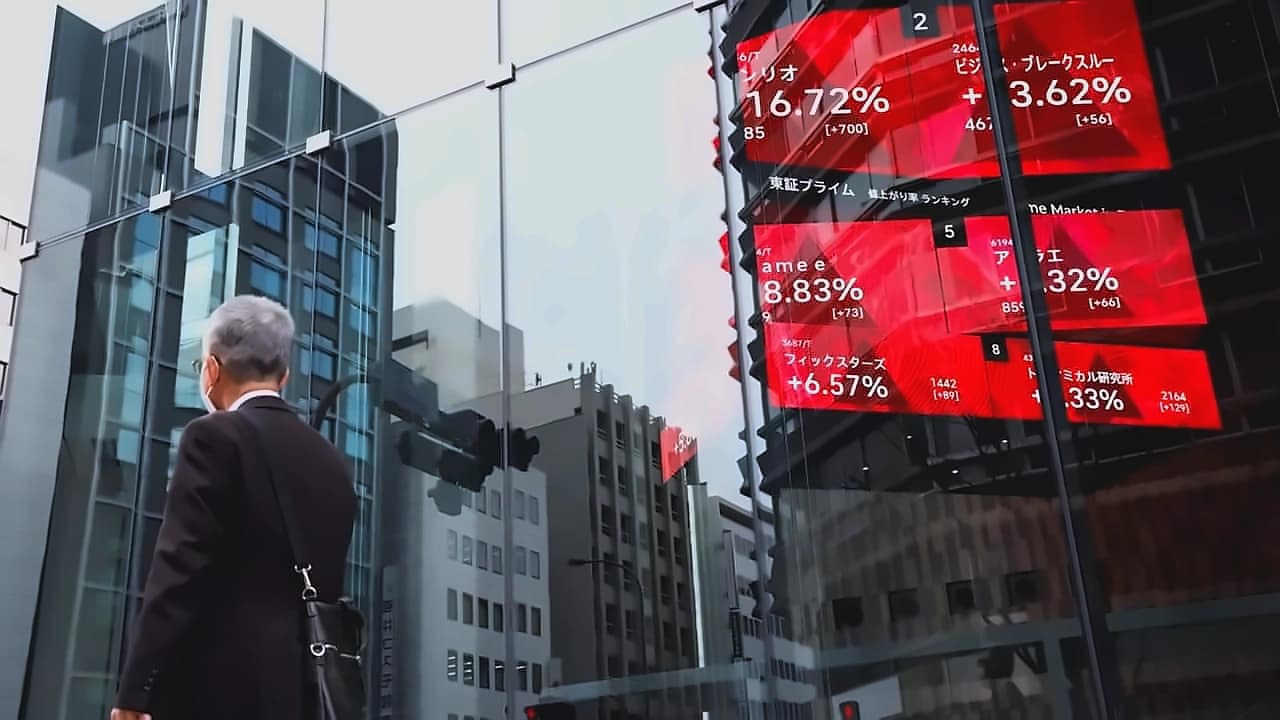
The Kospi Index dropped as much as 5.5% early Monday, with Samsung Electronics and SK Hynix both down about 9% following Friday's record gains. According to latest reports, the market tracked overnight losses on Wall Street, where chipmakers led a broad decline. The sell-off affected major technology stocks across Japan, with companies posting steep losses during the trading session as persistent concerns over the sustainability of artificial intelligence trade continued to weigh on investor sentiment. The Kospi has slumped about 40% from its June peak, with losses deepening this week as investors questioned the durability of the artificial intelligence trade. Samsung shares fell 1% even after saying net income jumped more than 250-fold in the June quarter, as the two companies together account for more than half of the market capitalisation of the Kospi.
Major technology stocks in Japan faced substantial pressure during the session, with Kioxia Holdings leading losses at -18%, followed by Samsung Electronics at -13%, SK Hynix at -15%, and MediaTek in Taiwan down about 10%. Among the biggest technology losers were Kioxia Holdings (-18%), Samsung Electronics (-13%), SK Hynix (-15%), Murata Manufacturing (-12.9%), and Taiyo Yuden (-12.4%). The broader technology sell-off was triggered by SK Hynix's disappointing Q2 results, with revenue of ₹79 trillion won (equivalent to $54.3 billion) missing market expectations of ₹84 trillion won, and operating profit of ₹60.54 trillion won (equivalent to $42.0 billion) falling short of analyst expectations of ₹64.22 trillion won. Samsung shares fell 1% even after saying net income jumped more than 250-fold in the June quarter, as the two companies together account for more than half of the market capitalisation of the Kospi.
South Korean stocks posted their record one-day gain Friday, rising 18% as foreign buying, widely seen as short covering, drove the rally. The surge capped a tumultuous week, after the Kospi had dropped 17% over the previous three days amid AI-driven swings. Samsung jumped 27% and SK Hynix 30% on Friday, marking a daily record for both companies. However, global investors, who bought record Kospi shares on Friday, drove Monday's selloff, unloading more than 1 trillion won ($698 million) worth of the index's stocks in early trading. As Homin Lee, senior macro strategist at Lombard Odier Singapore, noted, "This is likely a payback from Friday's incredible rally, with some external headwinds motivating profit-taking and leverage reduction. A strong won and headlines around China's advances in AI and semiconductors are likely adding a bit to the headwinds."
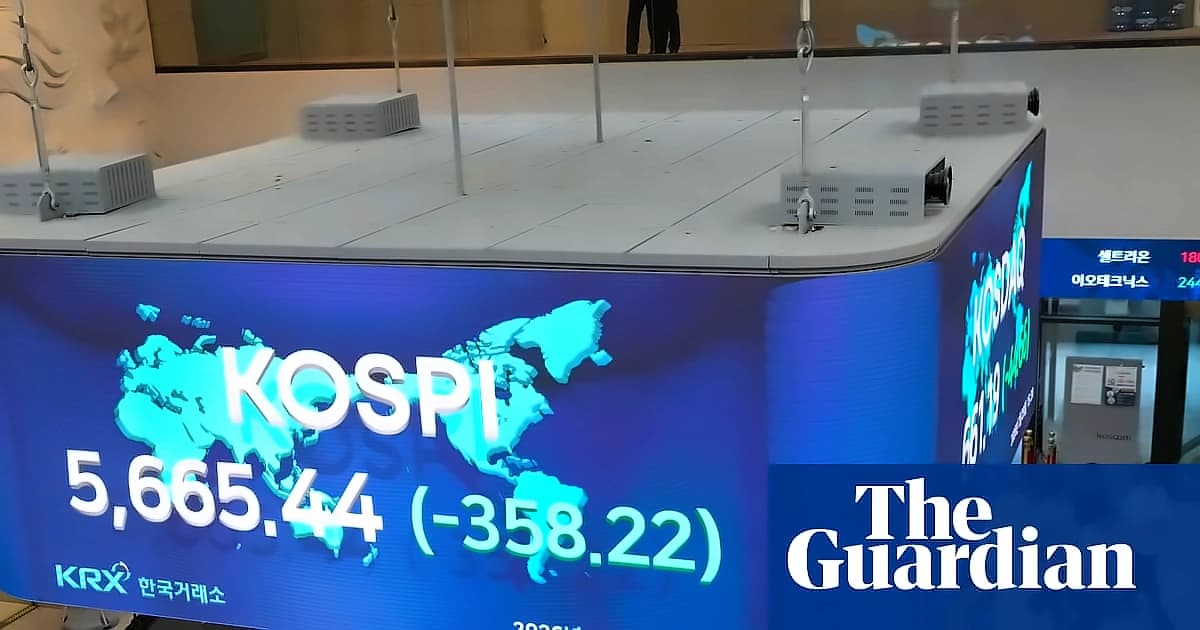
Top officials from the finance ministry, Bank of Korea and financial regulators held an emergency meeting late Wednesday and pledged additional measures to stabilize the stock market and curb retail access to leveraged ETFs after the two-day rout wiped billions of dollars off investors' holdings. New measures included limiting retail involvement in leveraged ETFs by capping exposure at a set share of investors' total portfolios and raising trading costs, the finance ministry said. However, Kim Dojoon, chief executive officer at Zian Investment Management, noted that "those measures may help ease the market's volatility in the future but they are not the measures that could reduce the declines at the moment." He emphasized that "The problem is there are no buyers in the market. We need new buyers, whether that's the stock stabilization fund that can provide support. Giving signal that the market has buyers, that's first."
The current sell-off reflects deeper systemic concerns about the sustainability of artificial intelligence investment, with Nvidia leading over $750 billion in AI infrastructure investments through partnerships with SK Group and OpenAI. Market analysts are increasingly worried about a circular financing model that may be distorting true demand in the AI industry. Additionally, Sunday's report that Nvidia may provide around $250 billion of financial support for an OpenAI datacenter project has raised questions about how much AI chip leaders are effectively financing their own customers, and how sustainable that is. Media reports regarding China beginning mass production of its self-developed deep ultraviolet (DUV) lithography equipment have further heightened market concerns over the long-term competitiveness of Japanese semiconductor equipment manufacturers. As Li Huihui, a professor at emlyon business school, noted, the Japanese and South Korean markets correspond to valuation adjustments in different segments of the AI investment chain: South Korea prices the scarcity premium of HBM, while Japan prices capital expenditure expectations for semiconductor equipment.
The amplified decline in Japanese and South Korean semiconductor stocks compared to US peers stems from three key factors: concentrated ownership structures leading to insufficient liquidity, leveraged ETFs buying high and selling low to magnify volatility, and foreign futures trading intensifying short-term directional pressure. These factors explain why the declines in Japanese and South Korean semiconductor stocks are typically much larger than those of their US peers. The declines triggered a market-wide circuit breaker on the Kospi for an unprecedented second straight day on Wednesday, highlighting the extreme volatility in the current market environment. Looking ahead, Kioxia's earnings report scheduled for July 31 remains a critical catalyst, with potential for further selling pressure if guidance falls short of expectations. The market is also watching this week's Federal Reserve interest rate decision and earnings from Microsoft, Meta, Apple, and Amazon, as hawkish signals or weakened financial guidance could add to downward pressure on regional valuations.