The Bank of Japan has signalled its intention to continue raising interest rates following its June 15-16 meeting, which saw the central bank raise its policy rate to 1% - the highest level in 31 years since September 1995. According to the latest board meeting summary released on Wednesday, June 24, a member of the nine-member board stated it was appropriate for the bank to continue raising the policy interest rate considering that consumer price index (CPI) inflation had been approaching 2% and financial conditions were turbulent. The BOJ had raised its policy rate for the first time since December, with some board members seeking another hike in subsequent months as the latest benchmark rate was the lowest among major world economies. A Bloomberg survey of economists showed that about 90% of them predicted a move by December, while a third stressed on October, with economists recently changing their outlook to 1.75% from 1.5% earlier this month.
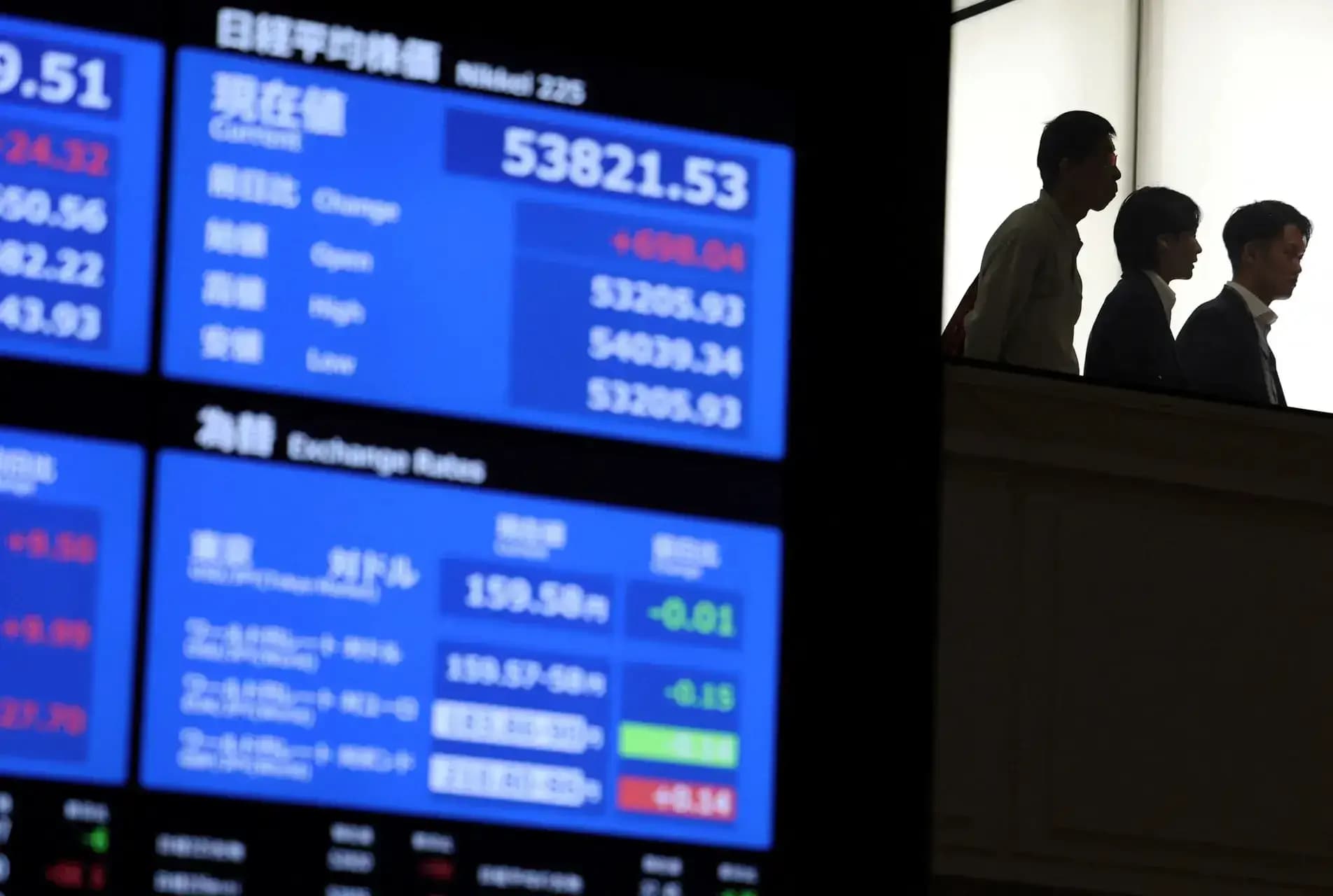
The BOJ's policy concerns are being driven by mounting inflationary pressures and currency weakness, with service prices for businesses rising to 3.3% for the third consecutive month according to the latest BOJ report released Wednesday, June 24. The yen was trading at 161.68 at the close of trading in Tokyo on Wednesday, June 24, close to its weakest level in four decades against the dollar amid caution against an increase in Federal Reserve rates this year. The central bank cited rising cost pressures from a weak yen, high energy prices and strong AI-driven demand as key factors behind the rate hike decision. A member of the board called 2% a neutral interest rate, describing it as desirable to raise the rate as per requirement keeping a few intervals, with this backed by an opinion to bring it to the neutral rate as soon as possible. The BOJ has estimated a neutral level between 1.1% and 2.5%.
The BOJ meeting highlighted significant political tensions, with Governor Kazuo Ueda hospitalized on June 9 with a liver cyst infection, marking the first policy meeting since 2010 to take place without a governor present. He was discharged earlier than expected last week. Prime Minister Sanae Takaichi is viewed as a potential obstacle to Ueda's rate-normalisation efforts, with Toichiro Asada, Takaichi's first appointee to the BOJ board, opposing last week's rate hike. Another appointee, Ayano Sato, is set to join the board at the end of the month, adding to the political dynamics. Before last week's meeting, economic policy minister Minoru Kiuchi, attending as the government's representative, said he "strongly" expected the bank to coordinate with the government. The meeting summary indicated rising tensions, noting that a Cabinet Office official reminded the board of its responsibility to communicate its rate decision and stated that the bank should explain the rate hike while acting proactively and appropriately if economic activity fluctuates excessively.

Japanese government bond yields showed mixed movements following the rate hike announcement, with the benchmark 10-year JGB yield remaining flat at 2.670% while shorter maturities edged higher. The 2-year yield increased 0.5 basis points to 1.41%, the most sensitive to Bank of Japan policy rates, while longer-term bonds showed slight declines with the 20-year JGB yield falling 0.5 basis points to 3.565%. The 30-year yield sinking 1 basis point to 3.840%, and the 40-year JGB falling 0.5 basis points to 3.765%. As per Miki Den, a senior Japan rate strategist at SMBC Nikko Securities, yields have fallen to around 1.9%, and last month city banks were buying medium-term bonds, so demand from banks probably will not emerge unless yields reach 2%. The combination of expectations for additional rate hikes, inflation concerns and a potentially more expansionary fiscal policy has continued to push Japanese government bond yields higher, with investors closely monitoring upcoming economic data and policy signals from both the government and the Bank of Japan.
The BOJ is scheduled to release its core inflation measures on Wednesday, which are designed to remove the impact of institutional factors from the government's core CPI and core-core CPI. Government data on consumer inflation for the Tokyo metropolitan area due Friday will likely help gauge the strength of inflationary pressures facing the nation. The Bank of Japan is also scheduled to release its core inflation measures on Wednesday, which are designed to remove the impact of institutional factors from the government's core CPI and core-core CPI. Additionally, the Ministry of Finance is scheduled to auction about 2.5 trillion yen of 5-year sovereign notes on Tuesday and around 700 billion yen of 20-year government bonds on Thursday, with the 20-year sale likely to garner more bidding interest from institutional investors. The sustained bond yield movement reflects the market's assessment of Japan's economic trajectory and the potential impact of both fiscal and monetary policy decisions on inflation and interest rates.