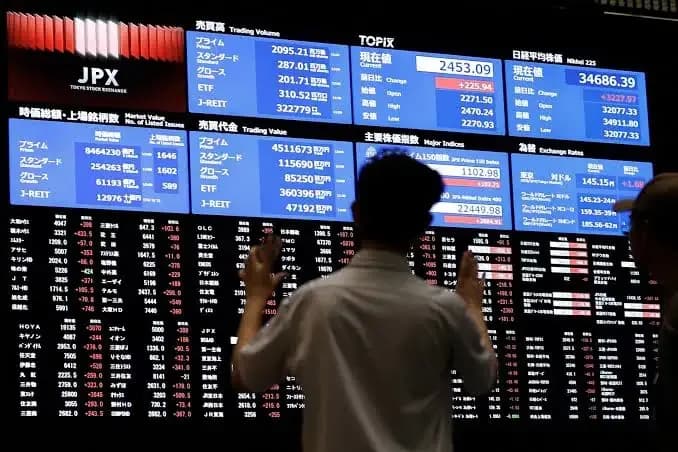
Japan's 40-year government bond auction demonstrated robust investor demand, with the bid-to-cover ratio reaching 2.70 in Wednesday's sale, according to a Bloomberg report. This represents an improvement from 2.54 at the previous auction and significantly exceeds the 12-month average of 2.47. The strong demand came despite ongoing concerns about inflation stemming from the Middle East crisis, as investors responded positively to the higher yield environment. The bonds yielded 3.84% in the latest auction, compared to 3.6% in the previous sale and the highest yield estimate of 3.85%, as reported by Bloomberg. The strong performance reflects broader global bond market changes, with Vanguard's latest Q2 outlook indicating that coupon income supported bond returns during a period of elevated volatility.
The strong Japanese auction performance reflects broader global bond market changes, with Vanguard's latest Q2 outlook indicating that coupon income supported bond returns during a period of elevated volatility. According to Vanguard's report, global bond yields rose unevenly during the first quarter, reflecting regional differences in inflation sensitivity and diverging monetary policy expectations among central banks worldwide. The firm notes that credit spreads widened modestly from cycle lows, with performance becoming increasingly differentiated across sectors and individual bond issuers. Vanguard maintains an up-in-quality bias in credit and favors investment-grade corporate bonds with all-in yields now above 5%, supported by solid fundamentals and strong investor demand. The current environment shows U.S. 30-year Treasury yields haven't consistently exceeded 5% since the early 2000s but have just crossed that threshold, with a lot riding on normalization of energy prices and an end to the Iran war.

The rising bond yields are creating significant implications for equity markets, as the equity risk premium has tightened back to the lowest level since the late 90s, early 2000s. This means that equities are looking more expensive relative to bonds now that Treasuries are rising faster than inflation expectations, leaving equity markets more exposed than usual to interest rate shocks. According to market analysts, if the Fed's monetary policy is perceived as too weak and accommodative, this could exacerbate the current selloff in yields. The U.S. 30-year Treasury yields haven't consistently exceeded 5% since the early 2000s but have just crossed that threshold, with productivity gains from the next report in early June being particularly important to track as they could influence the Fed's rate decision.
The strong auction performance occurred against a backdrop of escalating Middle East tensions, with oil prices continuing to rise due to uncertainty about a possible agreement to reopen the Strait of Hormuz. According to the Bloomberg report, just hours after President Donald Trump hinted that talks with Tehran over an interim deal were moving forward, US and Israeli forces attacked Iranian ships in the channel and other targets. These developments have contributed to the higher yield environment and increased demand for longer-duration government bonds. The conflict in Iran sent Brent crude prices surging well above $100 per barrel in March 2026, after averaging roughly $66 per barrel over the prior 12 months, creating a supply shock that directly pressures headline inflation.
Prime Minister Sanae Takaichi's announcement that the government will finance its supplemental budget without raising bond issuance on a calendar-year basis has helped alleviate supply concerns in the bond market, as reported by Bloomberg. This policy measure has contributed to the improved investor sentiment and stronger demand for the 40-year government bonds, addressing one of the key factors that had previously weighed on the market. The municipal bond market recorded its strongest first-quarter inflows on record at $31.2 billion, underscoring growing investor appetite for tax-efficient fixed-income exposure in a volatile environment.