A new Reuters/Ipsos poll reveals that 79% of Americans expect a prolonged US war with Iran, with only 18% still expecting the fighting to end within weeks. The survey of 1,019 US adults over three days closing Sunday shows widespread pessimism about the conflict's duration. Only 37% backed the strikes, which restarted on June 26 after Washington blamed Tehran for hitting commercial ships. Earlier surveys supported this trend, with a Financial Times poll finding 58% of voters judged the war not worth the cost, and a Generation Lab survey of adults aged 18 to 34 finding 77% called the strikes on Iran the wrong move.
The US military launched strikes on Iran for the fifth consecutive night, following President Donald Trump's declaration that the interim ceasefire agreement was 'over'. According to Business Standard, the latest strikes took place overnight and into early Monday in Iran, coming after attacks by the military on Sunday morning in response to an Iranian strike on a container ship in the critical waterway. This marks the fifth consecutive night of US military operations against Iranian targets, representing an escalation from the previous three-night pattern. The strikes came after three cargo ships transiting the Strait of Hormuz were attacked on Tuesday, leading to the most extensive exchange of fire between the two sides since the interim deal was signed last month. A US official said a few strikes were conducted on missile and air defence systems and paramilitary Revolutionary Guard boats at a couple of locations to further degrade Iran's ability to attack commercial shipping, as reported by Business Standard. The US military's Central Command described its forces as hitting dozens of sites in the strikes Monday, including air defence systems, radar sites, missile and drone equipment and small boats, representing a far-heavier set of attacks than in previous rounds.
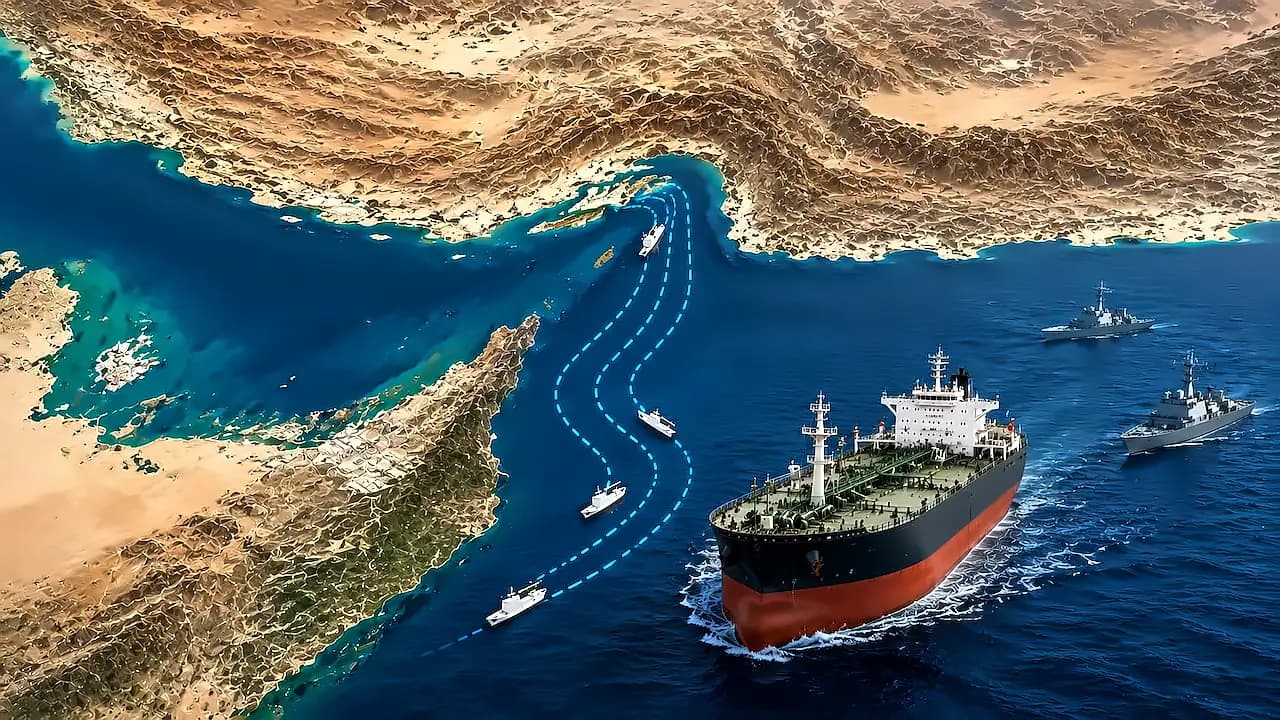
Iran announced the closure of the strategic Strait of Hormuz after firing a warning shot that hit a vessel navigating an unauthorized route, warning that any retaliation would trigger a 'severe response'. According to Iranian authorities, the Cyprus-flagged container ship, M/V GFS Galaxy, had switched off its tracking system and sailed through an unauthorized route, jeopardizing maritime security. The Islamic Revolutionary Guard Corps (IRGC) described its action as a warning strike, as per Reuters. US Central Command (CENTCOM) launched retaliatory strikes at 7:15 p.m. ET on Saturday, roughly an hour after Iran released its statement warning that 'new enemy bases' across the Middle East would be targeted if the US responded to the container ship incident. The strikes were carried out under orders from Trump, with the attack causing severe damage to the engine room and starting a fire, leaving one civilian crew member missing, according to CENTCOM. Oman's maritime authority said it rescued 23 crew members but one was missing, with India's foreign ministry calling him an Indian national, as reported by Business Standard.
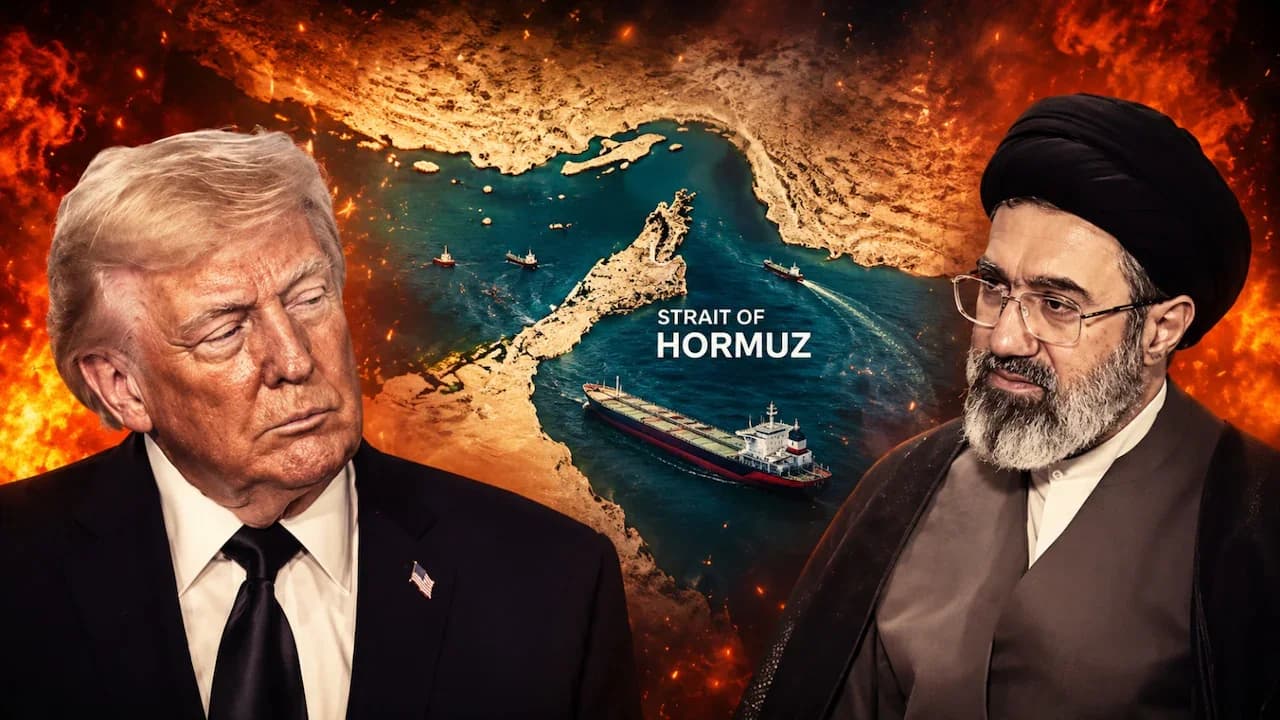
President Donald Trump announced the reinstatement of an Iranian blockade of the Strait of Hormuz and proposed charging a 20% fee on cargo transiting the strait, escalating regional tensions significantly. According to Business Standard, Trump said on Truth Social: "The Hormuz Strait is OPEN, and will remain OPEN, with or without Iran. We are reinstating THE IRANIAN BLOCKADE." He later told reporters at the White House that the US was attacking Iranian capabilities in the strait. "The USA. will be, from this point forward, known as 'THE GUARDIAN OF THE HORMUZ STRAIT', but as such, and as a matter of FAIRNESS, will be reimbursed, at the rate of 20% on all cargo shipped." Trump told Congress that military action resumed on July 7, a move that frees the military for 60 more days without congressional approval, as reported by Reuters. Iran's top joint military command said the US had no role in determining the future of the waterway and would not be allowed to intervene, with Iranian Foreign Minister Abbas Araqchi writing on X that Tehran was the guardian of the strait and would remain so "forever." Iranian Foreign Minister Abbas Araghchi responded to Trump's comments that "20% is of course too much. We will be fair."
Traders moved quickly as Trump vowed to seal off Iranian ports near the strait and skim 20% off every cargo passing through. Crude climbed roughly 4%, and Bitcoin (BTC) slid to around $62,600 amid fears the chokepoint will remain snarled for a while. The poll also revealed that 6 in 10 respondents expect gasoline to be costlier over the coming year, with pump prices already sitting near $3.87 a gallon, far above where they stood before the war. Before the conflict began in February, around a fifth of the world's oil and gas traffic passed through Hormuz daily, delivering more than 15 million barrels of fuel to global markets worth at least $1.2 billion. If the US were to impose a 20% fee, it could generate around $240 million a day. US officials said around 20 vessels had been escorted through the strait in the previous 24 hours, although ship-tracking data showed little traffic moving. MarineTraffic said on Monday that vessel activity through the strait declined by about 52% between July 10 to 12 compared to the previous week.