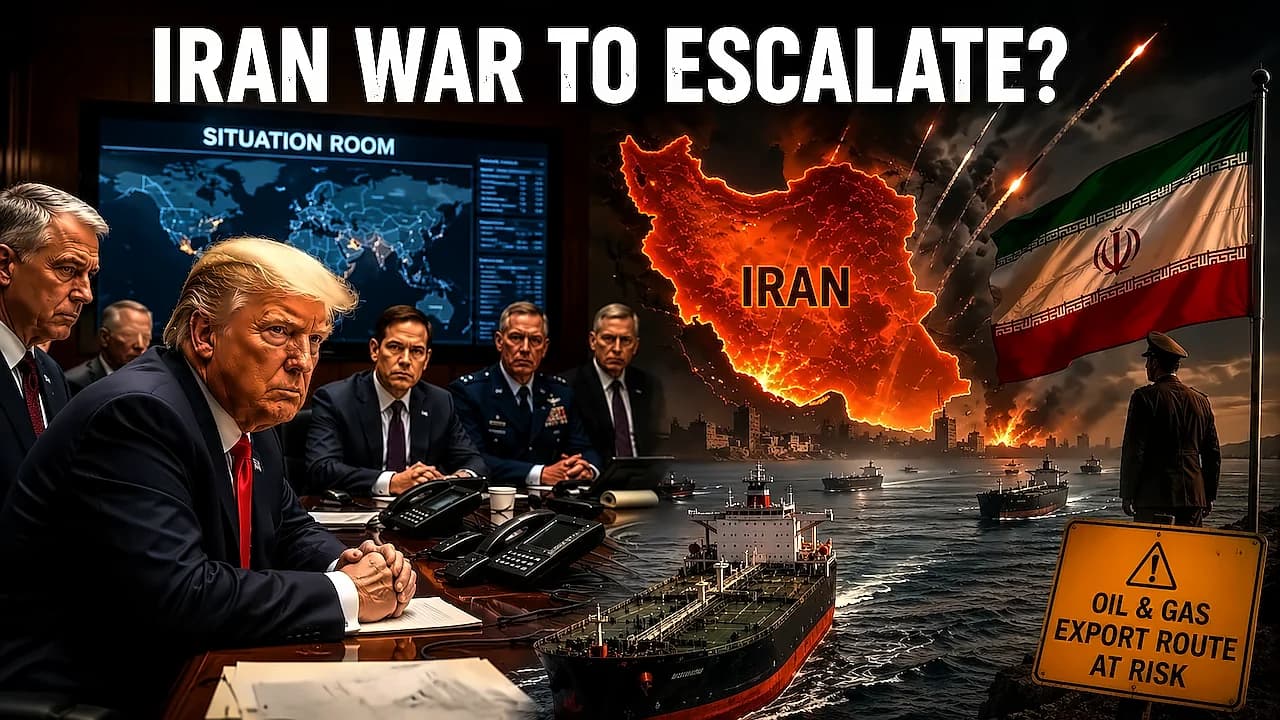
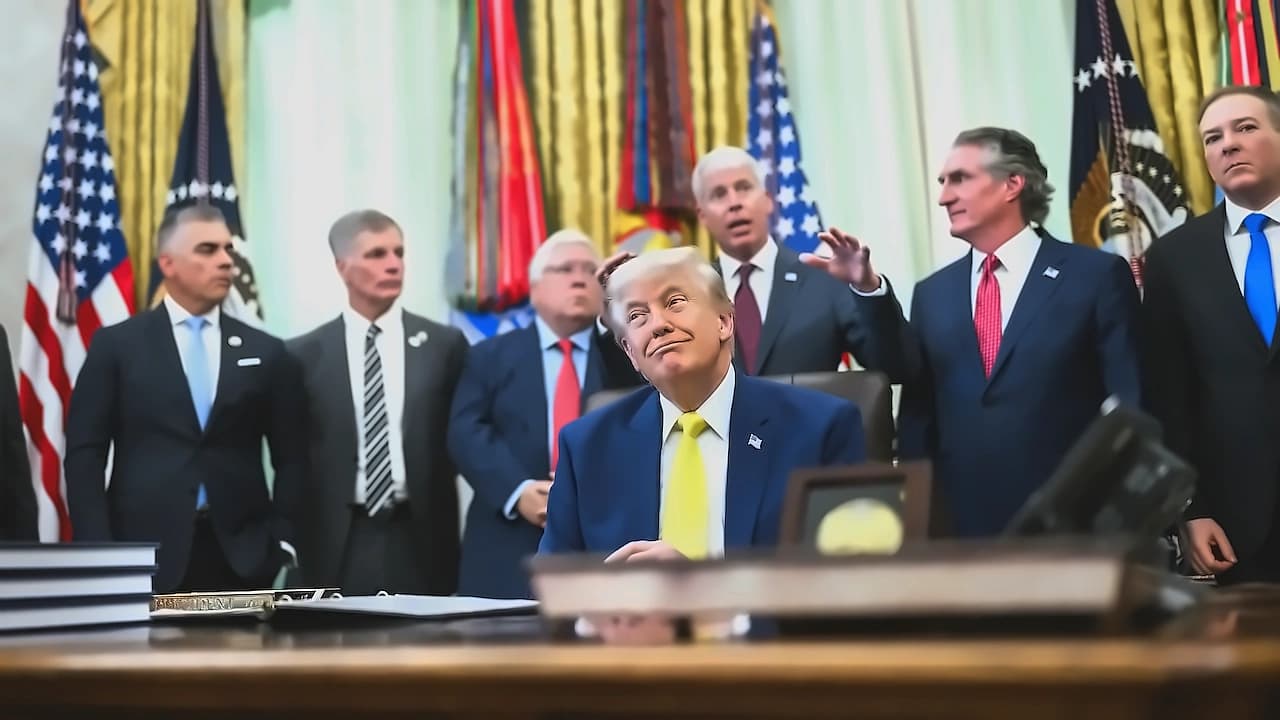
President Donald Trump issued a stern warning to Iran on Sunday, stating that the U.S. will resume attacks unless Tehran can control its Hezbollah allies in Lebanon. According to Business Standard, Trump posted on Truth Social: "Iran must immediately stop their highly paid PROXIES in Lebanon from causing trouble. If they don't, we'll hit Iran very hard again, just like we did last week, only harder!" This represents a significant escalation from Trump's previous statements about the ceasefire, as he now threatens to intensify military action against Iran if Hezbollah continues its activities in Lebanon. During an Oval Office appearance on Monday, Trump reinforced his position, telling reporters: "As long as they respect us, we're gonna be fine. If they don't respect us, things wouldn't be good." He added that if Iran doesn't live up to their agreement or isn't behaving, "I will do what I have to do."
Israel and Hezbollah have reached a Lebanon ceasefire agreement after their fighting delayed progression of the U.S.-Iran deal, according to multiple sources familiar with the situation. The agreement was scheduled to begin at 4 p.m. local time (9 a.m. ET), following the latest exchange of strikes that killed at least 18 people in Lebanon according to the country's Health Ministry. The truce was mediated by the US, Qatar, and Iran, with a diplomatic source confirming the deal was mediated by all three parties. President Donald Trump later told NBC News that he had spoken with Israel and asked them to agree to the cease-fire, referring to the development as "a positive." Trump added "It's a little icing on the cake" when describing the ceasefire's impact on broader regional negotiations. Israel's Ambassador to the United States, Yechiel Leiter, confirmed that Israel was "firmly committed to an immediate ceasefire" and has halted offensive operations, though an official Hezbollah source noted that Israelis are still firing and trying to move deeper into Lebanese territory.
The latest flareup in Lebanon resulted in at least 18 civilian deaths in Israeli strikes and 47 total casualties according to Lebanon's Health Ministry, with 33 people wounded in the violence. The fighting was the most violent since the ceasefire was established, with Hezbollah targeting Israeli forces near the city of Nabatieh in southern Lebanon with several salvoes of rocket fire and drones overnight after intermittent Israeli shelling throughout Thursday. Israel responded with a wave of airstrikes on the city and surrounding towns against what it said were Hezbollah targets, with an Israeli official stating "If Hezbollah does not attack us, then for us it is not a time of war." By evening, the clashes appeared to have ended, though the violence posed an early challenge to the new U.S.-Iran agreement.
Planned US-Iran talks in Switzerland were cancelled on Friday amid the renewed violence, with Vice President JD Vance no longer planning to fly to Switzerland to help kickstart talks with Iran, according to a White House spokesperson. The White House blamed logistical issues for the cancellation of Vance's trip to Geneva, stating "the plans for the upcoming technical talks have not been finalized, and the U.S. delegation has been prepared to depart at the first available opportunity." Lebanese broadcaster Al Mayadeen reported that Iran's delegation postponed their travel to Switzerland due to the hostilities in Lebanon. Iran's chief negotiator Mohammad Bagher Ghalibaf said Friday that direct talks with the United States would be bound by Tehran's "red lines," with Ghalibaf warning against any breach of the agreement and threatening a "decisive response ... to the enemy." These negotiations are vital to ensuring the reopening of the Strait of Hormuz for international shipping, with AXSMarine reporting 25 verified commercial vessel crossings through the Strait of Hormuz on June 18 - the highest single-day count since April 18 and more than five times the average daily level recorded during the first ten days of June.
Secretary of State Marco Rubio spoke with Lebanese President Joseph Aoun about the situation in Lebanon as Israel and Hezbollah agreed to a ceasefire after trading attacks on Friday. During the phone call, Rubio "reaffirmed the United States' full support for the Government of Lebanon's efforts to create a fully sovereign Lebanese state that is at peace with all its neighbors," according to the U.S. State Department. Aoun thanked Rubio for his support and "underscored the need for a comprehensive ceasefire" to end all Israeli attacks on Lebanon's territory, describing that condition as a "fundamental pillar" for advancing US-mediated talks between Lebanon and Israel. The talks are scheduled for June 23–25 in Washington, where the two sovereign governments will make progress toward a lasting peace, with Rubio adding that the bilateral negotiations between the two governments are "the only feasible path to reconstruction, economic recovery, and ending recurrent cycles of violence."