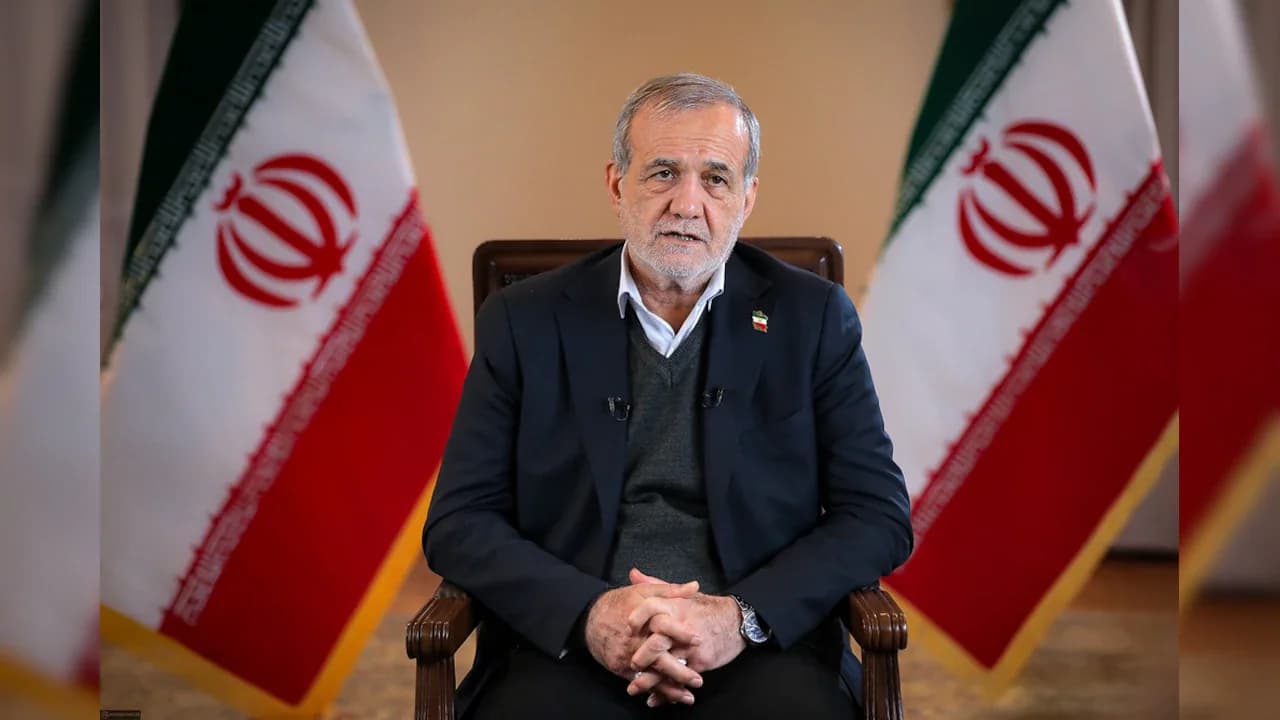
Iranian President Masoud Pezeshkian made significant diplomatic signals at the Shanghai Cooperation Organisation (SCO) Summit in Bishkek, Kyrgyzstan, on Tuesday, stating that 'Iran would immediately reciprocate if the US returns to its commitments under an interim deal signed in June.' Speaking before departing Tehran for the summit on Monday, Pezeshkian emphasized that 'We are not seeking war, and this is a clear message that we have repeatedly communicated to the world.' However, he added that 'Iran would not stay silent in the face of aggression and would deliver a 'decisive' response to any aggressor.' The June memorandum of understanding provided for an immediate ceasefire and started a 60-day period for negotiations aimed at reaching a wider peace deal, with Iran agreeing to clear the Strait of Hormuz of mines and allow ships to pass during the period, while the US agreed to end its naval blockade, lift sanctions, issue waivers for Iranian oil exports and begin work on a reconstruction package for Iran.
The latest developments show a first exchange of fire between the two countries in a month, with the US targeting Iranian missile launchers on Larak Island, in the Strait of Hormuz, and Iran responding by firing missiles at American military facilities in Jordan, which were intercepted. According to Business Standard, the British military's United Kingdom Maritime Trade Operations Centre reported receiving reports of an attack on a ship in the Strait of Hormuz, with a tanker hit by three projectiles Monday on its way out of the Persian Gulf through the strait east of Oman. The monitoring agency said there were no reports of casualties on the boat or any environmental impact caused by the attack. While there was no immediate claim of responsibility for the attacks, Iran has fired regularly on ships in the Strait of Hormuz as it continues to restrict traffic through the key waterway, with the US also firing on ships as it maintains its blockade of Iranian ports.
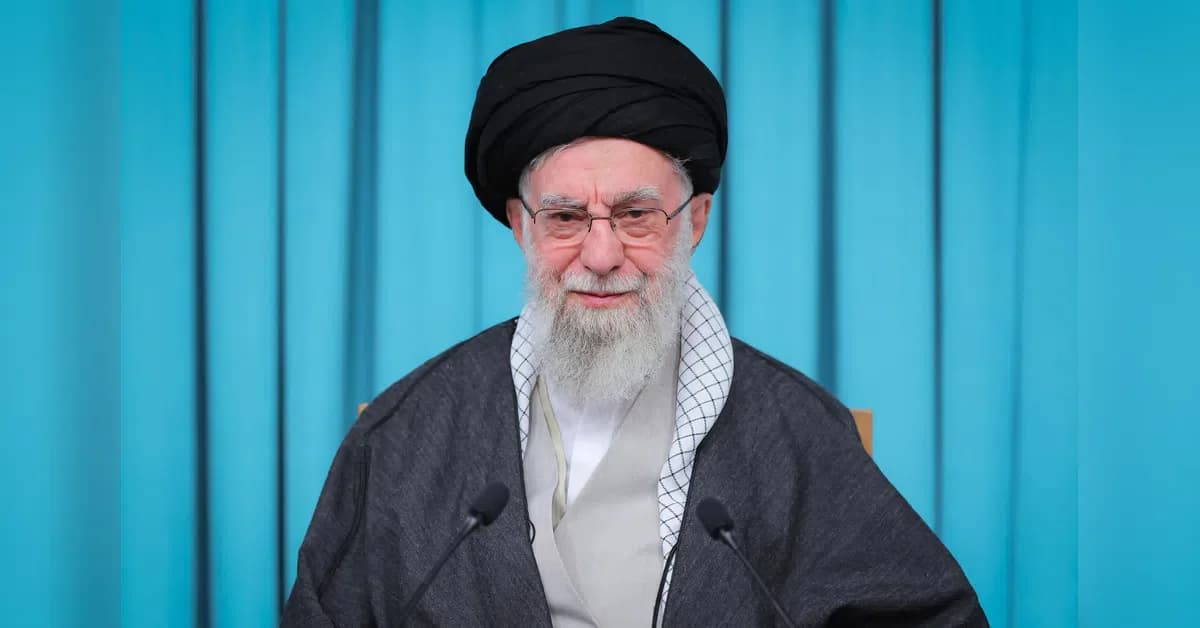
Iran's leadership has coalesced around a hard core of military generals and clerics following six months of war with the US and Israel. The new leadership emerged after two attacks while holding talks, with the US and Israel launching a bombing campaign on February 28 that killed Ayatollah Ali Khamenei, who had been Iran's supreme leader for 37 years. The 56-year-old Ayatollah Mojtaba Khamenei, his son, has not been seen in public since the strikes and is believed to have been wounded in the attacks. Supreme Leader Khamenei announced key appointments on August 11 and 12 that formalized Iran's new senior leadership structure, including Mohsen Rezaei as secretary of Iran's Supreme National Security Council and Brig. Gen. Ahmad Vahidi as head of the Guard, where he has been acting commander since his predecessor was killed. The most significant appointment was Hossein Taeb, named head of the Basij, the Revolutionary Guard's volunteer street force, who led the Basij when it played a key role in crushing mass protests against the 2009 reelection of hard-line President Mahmoud Ahmadinejad.
While Pezeshkian has long favoured a negotiated end to the war, the most powerful force in Iran remains the paramilitary Revolutionary Guard, which is pressing for greater concessions from the US, including Iranian control over the Strait of Hormuz and financial compensation for the war. According to Business Standard, those conditions would likely be unacceptable to Washington. The leaders of China, Russia and India are all attending the summit in Kyrgyzstan, which has been billed as a counterweight to US global influence, with Iran's foreign minister having already held meetings with his Chinese counterpart and Pezeshkian due to have talks with Russian President Vladimir Putin later Tuesday.
Iran's new leadership has threatened to escalate the war if economic pressure continues, but recent developments suggest a more nuanced approach may be emerging. Alex Vatanka from the Middle East Institute reports that "there is a growing consensus that open-ended conflict threatens its long-term survival" among senior regime figures. He notes that "trusting in repression as your only way out of crisis, if that's actually a sound strategy ... plenty of folks inside the Iranian regime, through Iranian media, are saying that cannot be sustainable." This week, the Trump administration announced Operation Economic Outcast, targeting Tehran and its global financial links through ramped-up sanctions. The move comes as Iran faces its worst economic crisis since the 1980s, with Iran's economy expected to shrink by 5.4% this year according to the International Monetary Fund. Inflation has soared above 80% and the value of the rial currency has plummeted, making daily life exhausting for regular Iranians who are "buying all food items on credit because nobody has cash." Despite these severe economic challenges, Vatanka observes that "the Iranian regime's control over the country remains solid," with the leadership "digging in its heels and taken an even harder line."