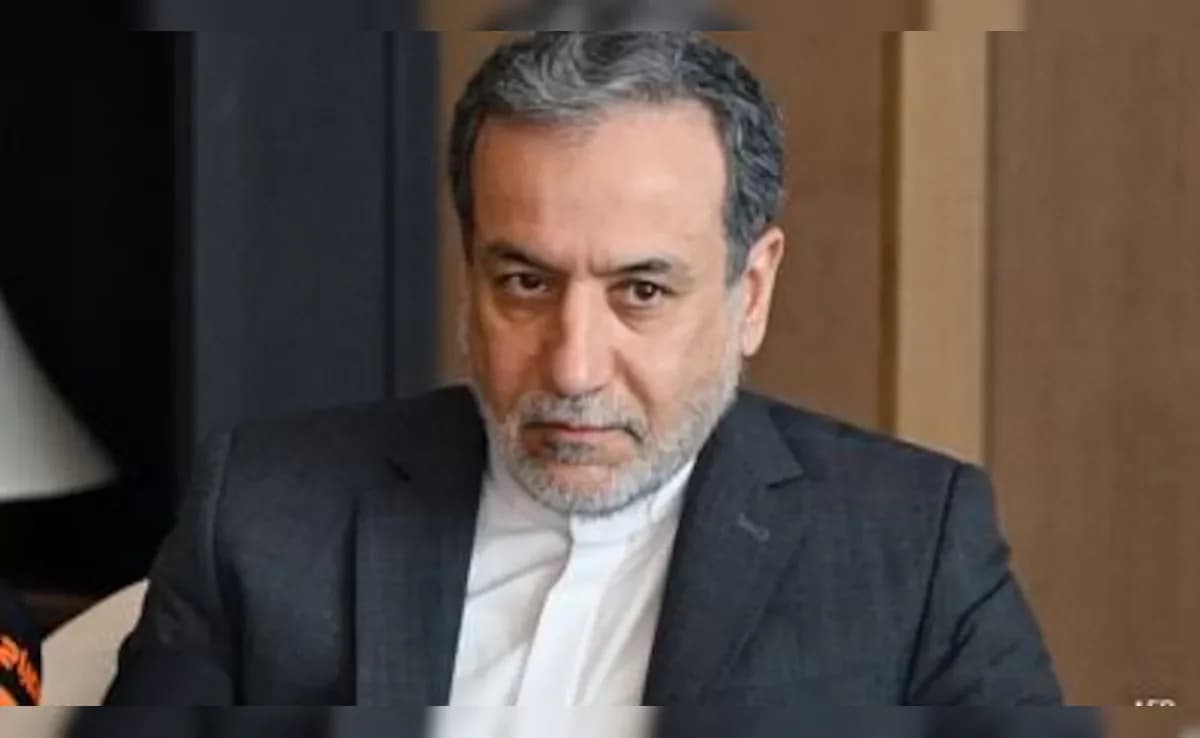
Iranian Deputy Foreign Minister Kazem Gharibabadi has revealed that a demand by 'one member country' of the BRICS grouping to condemn Iran has prevented the bloc from reaching a unified position on the West Asia crisis. According to reports from Business Standard, Gharibabadi, currently in New Delhi, told journalists that 'one country is insisting to condemn Iran' and expressed concern about sending signals to the world that the BRICS is divided. He praised India's 'impartiality' as chair of the BRICS, emphasizing that 'We have not attacked neighbouring countries. They handed their territories to the US to launch an attack on us.'
Despite diplomatic tensions, Iran has welcomed India's efforts to bring peace to West Asia. As reported by Business Standard, Gharibabadi stated that 'India has always supported peace. It is in favour of peace and stability in the region. We will welcome whatever initiative India takes for peace.' The Iranian official also responded positively to Pakistan's potential role as mediator, saying 'Pakistan is only a facilitator. We will welcome all such initiatives.' This comes as Iranian Foreign Minister Abbas Araghchi and Russian counterpart Sergey Lavrov are among those attending the two-day BRICS conclave expected to extensively deliberate on the West Asia crisis.
Iran is developing a new service-and-payment-based framework for merchant vessel passage through the Strait of Hormuz in line with international norms. According to Business Standard, Gharibabadi explained that Oman and Iran will provide navigational and other services to merchant vessels, with fees charged depending on cargo quantity and ship size. He emphasized that 'The Strait of Hormuz will be better than before once peace returns. There will be transparency, and we will not allow any discrepancy.' Iran has already allowed several Indian vessels to transit through the Strait of Hormuz, with more ships potentially granted permission to return home.
The West Asia conflict has significantly impacted global energy markets, with global oil and gas prices surging after Iran virtually blocked the Strait of Hormuz. As reported by Business Standard, the Strait of Hormuz handles roughly 20% of global oil and LNG through its narrow shipping lane between the Persian Gulf and Gulf of Oman. The International Energy Agency (IEA) has projected global oil supply to drop by 3.9 million barrels per day throughout 2026 as a result of disruptions caused by the Middle East conflict. The agency also expects global oil demand to fall by 420,000 bpd this year, but that is far outpaced by the expected loss in supply. As of May 14, 2026, Brent Crude oil is trading at approximately $105.60 – $108.28 USD per barrel. Gharibabadi claimed that if the Strait of Hormuz is opened now, it could be used for military purposes against Iran.
The Iranian comments come ahead of India's hosting of a two-day BRICS conclave of foreign ministers before the annual summit in September. According to Business Standard, sharp differences between Iran and the UAE over the US-Israel war on Iran stalled India's efforts to build consensus during a meeting of the grouping's deputy foreign ministers and special envoys last month. The expanded BRICS bloc now includes countries such as Iran and the United Arab Emirates, placing opposing sides of the conflict in the same diplomatic room. The meeting will be chaired by External Affairs Minister S Jaishankar, with the grouping representing 11 major emerging economies that bring together around 49.5% of global population, 40% of global GDP, and 26% of global trade.