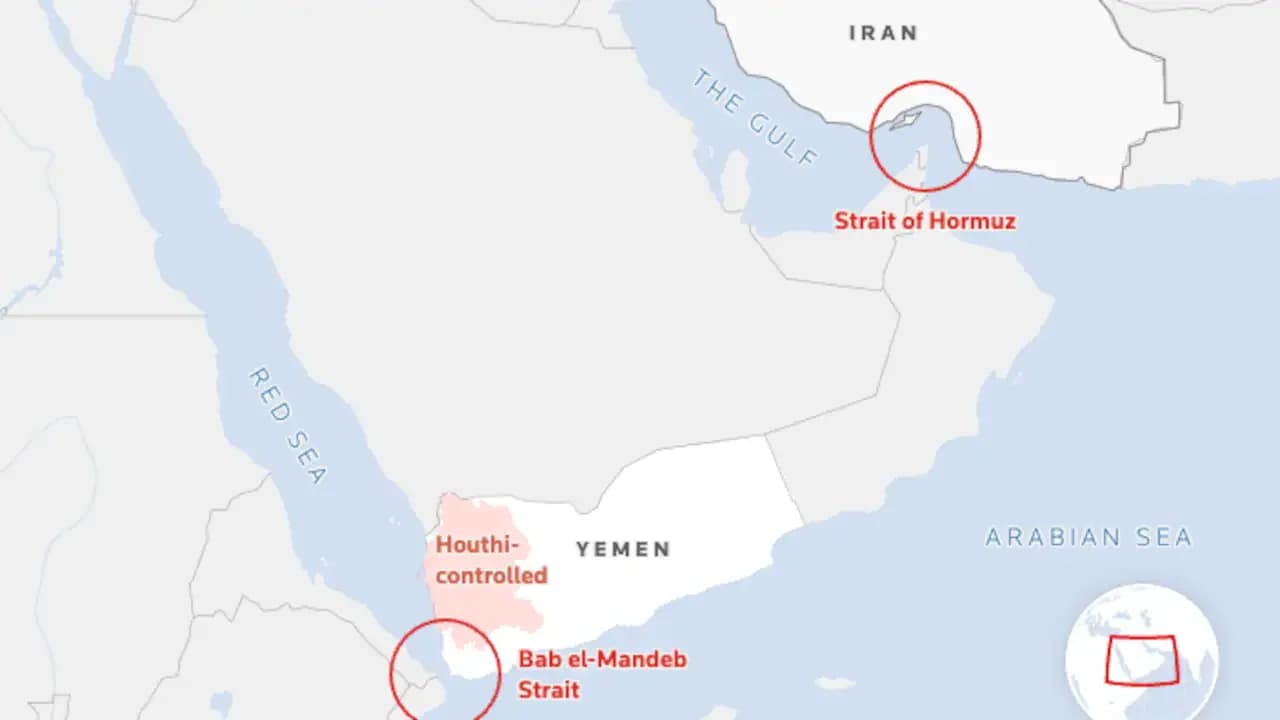
Explosions were reported along Iran's southern coast on Saturday night, with Iranian state media suggesting the blasts were related to Iranian military activities rather than US strikes. Iran's state television said officials had not confirmed any missile strikes on Iranian territory following blasts heard in several areas, including on Qeshm Island in the strait. According to Reuters, Iran's Revolutionary Guards Navy said two oil tankers had caught fire after hitting mines while attempting to pass through an 'unauthorized route' in the Strait of Hormuz, with a third tanker also suffering an explosion and catching fire. The IRGC Navy reported that both ships switched off their tracking systems, caught fire, and were badly damaged, though it did not name the vessels or specify their destinations. Tasnim news agency had initially reported two missile strikes on Qeshm before later carrying a source who denied any missile strike, with The Wall Street Journal reporting that Iran's air defense force shot down two US MQ-9 drones during the incident, marking the second US drone strike against the Iranian island this week following Monday's attack.
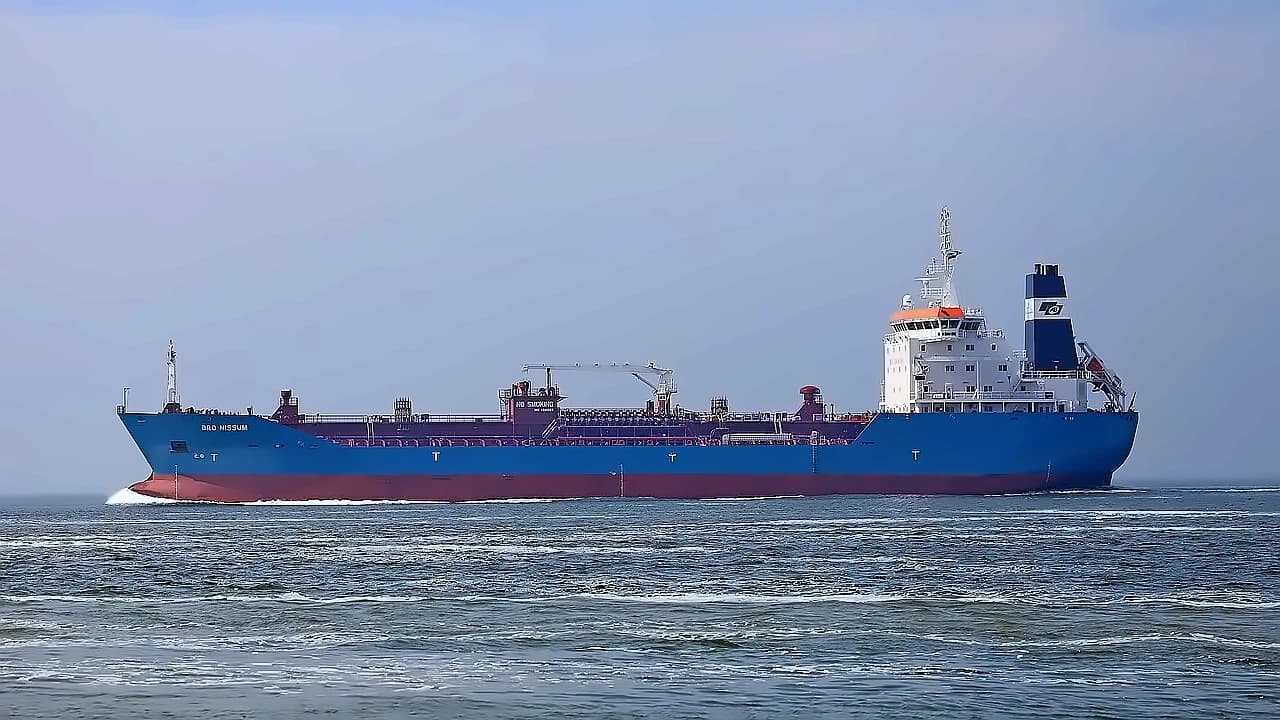
US Central Command (CENTCOM) reported that a US military aircraft fired precision-guided munitions at the M/V Huda in the Gulf of Oman on Saturday. As reported by Al Jazeera, the St. Kitts and Nevis-flagged ship had ignored repeated warnings and attempted several times to breach Washington's naval blockade of Iran. CENTCOM stated that its forces first instructed the crew to abandon targeted spaces on board, and the ship had called at an Iranian port before trying to leave regional waters. The 24,993-deadweight-tonne dry bulk carrier, built in 1999 and managed from Turkey, was placed approximately 18 nautical miles east of Khor Fakkan by UK Maritime Trade Operations, with no confirmation of crew condition. US President Donald Trump announced on Friday that US forces launched 'minor' strikes targeting Iran's air defense systems, describing the military action as 'minor' while the US Army reportedly carried out 'minor' attacks targeting Iran's southern Qeshm Island. The US military said on Saturday evening that its air force had fired at the stern of a commercial vessel in the Gulf of Oman, disabling it as it tried to get through the blockade.
Iran's Islamic Revolutionary Guard Corps (IRGC) announced significant military developments amid the escalating tensions. IRGC spokesman Hossein Mohebbi told a press conference that Iran's aerospace division has established underground missile and drone production facilities and is continuously increasing the range of its missiles. Mohebbi stated that the corps is prepared to defend the country "without any geographical limitation" if the enemy renews strikes. This comes as Iran's air defense force successfully shot down two US MQ-9 drones during Saturday's incident. The IRGC's aerospace division has been actively developing capabilities to counter potential US military action, with the corps maintaining readiness for comprehensive defense operations across Iranian territory. Since the US and Israel began attacks on Iran in February, Tehran has sought the upper hand by hitting vessels in the Strait of Hormuz to block Gulf energy exports, while US forces began blockading movements to and from Iranian ports in April.
Regional countries have stepped up diplomatic efforts to ease the situation amid the escalating tensions. Iraqi Foreign Minister Fuad Hussein proposed on Friday the establishment of a regional foreign ministers' committee to visit Tehran and Washington to help de-escalate regional tensions and resolve existing differences. Meanwhile, Egyptian Foreign Minister Badr Abdelatty and his Saudi counterpart, Prince Faisal bin Farhan Al Saud, held phone calls on Thursday and Friday to review joint efforts to defuse tensions, calling for restraint and dialogue to avoid further escalation. Despite the diplomatic flurry, Iranian officials maintained that progress depends on concrete US actions, with SNSC Deputy Secretary Ali Bagheri Kani stating on Friday that Iran needs to see practical measures by the United States rather than mere 'paper commitments,' stressing that efforts must be made to make the United States implement Iran's proposed plan for reopening the Strait of Hormuz. Qatar, which has been mediating in talks to try to end the conflict that has shaken the world economy, on Saturday denied reports that the US and Iran had failed to reach a deal, with the Qatari prime minister affirming that both sides were continuing to work toward an agreement.
Yemen's Iran-aligned Houthis claimed responsibility for six missile and drone attacks on Saturday, targeting Saudi Aramco installations, Riyadh's main airport, and Saudi military positions. According to reports from Al Jazeera, Houthi military spokesman Yahya Saree listed the group's targets as King Khalid International Airport, Aramco oil storage tanks and a distillation tower in Riyadh, an Aramco facility at Khurais in the Eastern Province, and Pumping Station No. 8 at Dawadmi. Saree stated the group used a large number of ballistic and cruise missiles along with drones, with other attacks targeting a Saudi National Guard camp in Najran and Saudi-backed forces in Yemen's Al-Jawf and Marib provinces. On Sunday, Saudi Arabia's energy ministry said an administrative building belonging to state oil company Saudi Aramco in Riyadh had been damaged by falling debris after an attempted attack, with no injuries or fatalities reported. The weekend's events occurred just as oil markets had begun pricing in an end to the eight-month US-Iran war, with the US having reported disabling five vessels that refused to comply since the blockade restarted in mid-July, with 147 commercial vessels redirected during the same period.