Sharp differences between Iran and the United Arab Emirates over the West Asia conflict were on full display during the opening day of the BRICS foreign ministers' meeting in New Delhi. According to reports from Business Standard, there were heated exchanges between Iranian Foreign Minister Abbas Araghchi and the UAE's Minister of State for Foreign Affairs Khalifa Shaheen Al Marar during the first sessions at the meeting. As the situation appeared to deteriorate, Russian Foreign Minister Sergey Lavrov intervened to calm the situation and prevent the discussions from deteriorating further, demonstrating the challenges the bloc faces in reaching a consensus position on the crisis. Iranian media have raised doubt as to whether the participants at the BRICS foreign ministers' meeting will manage to issue a final communique as a result of these differences, with Deputy Foreign Minister Kazem Gharibabadi being cited as saying there were 'problems and communications' due to the UAE's presence.
Addressing the expanded BRICS grouping, External Affairs Minister S. Jaishankar warned that the West Asia crisis threatens global energy supplies and maritime security routes. As reported by NDTV, Jaishankar stressed that uninterrupted movement through major sea routes was essential for global stability and prosperity, without directly naming any country. He emphasized that 'dialogue and diplomacy' were the only sustainable methods for resolving conflicts and that India was prepared to support initiatives aimed at de-escalation, civilian protection, and restoring regional stability. The Delhi gathering also witnessed unusually sharp exchanges between Iranian and Emirati officials, with the confrontation reflecting growing tensions amid allegations of attacks on UAE energy infrastructure and wider instability linked to the ongoing regional conflict. Iran has disrupted shipping through the Strait of Hormuz following joint US and Israeli strikes on its territory, issuing warnings to commercial vessels and tankers in the strategic waterway. Traffic through the strait, which carries roughly one-fifth of global oil and gas trade, declined sharply as tanker operators suspended transit and vessels rerouted over security concerns.
In his address, Araghchi accused the UAE of direct involvement in military operations against Iran during the BRICS meeting in New Delhi. As reported by Iranian state media, 'I didn't name the UAE in my (BRICS) statement for the sake of unity. But the truth is that the UAE was directly involved in the aggression against my country. When the attacks started, they didn't even issue a condemnation,' Araghchi stated on Thursday. The Iranian foreign minister accused Abu Dhabi of providing bases, airspace, territory, intelligence and other facilities to the United States and Israel during the attacks. Araghchi said Iran had not attacked the UAE, but had targeted US military bases and facilities on Emirati soil. He urged the UAE to reconsider its policy toward Iran, saying neither the US military presence nor ties with Israel had protected it. In a post on Telegram, Araghchi accused the UAE of playing an active role in the US-Israeli war against his country, stating 'The UAE is an active partner in this aggression, and there is no doubt about it.' He also referred to what Israel has described as a 'secret' meeting in the UAE during the war between Netanyahu and UAE President Mohammed bin Zayed Al Nahyan — a visit Abu Dhabi has denied took place.
In his statement, Al Marar mentioned Iran and criticised Tehran for its attacks on several neighbouring countries, according to people familiar with the matter as reported by Business Standard. Soon after, Araghchi sought to respond to the UAE minister's remarks, referring to the UAE allowing its territory to be used by the US to carry out attacks on Iran. The UAE minister sharply responded to Araghchi's remarks, escalating the diplomatic tensions between the two countries. The spat comes a day after the UAE denied a statement by Israeli Prime Minister Benjamin Netanyahu that he visited the Gulf country during the Iran war, to which Araqchi already reacted by saying that 'those colluding with Israel to sow division will be held to account.'
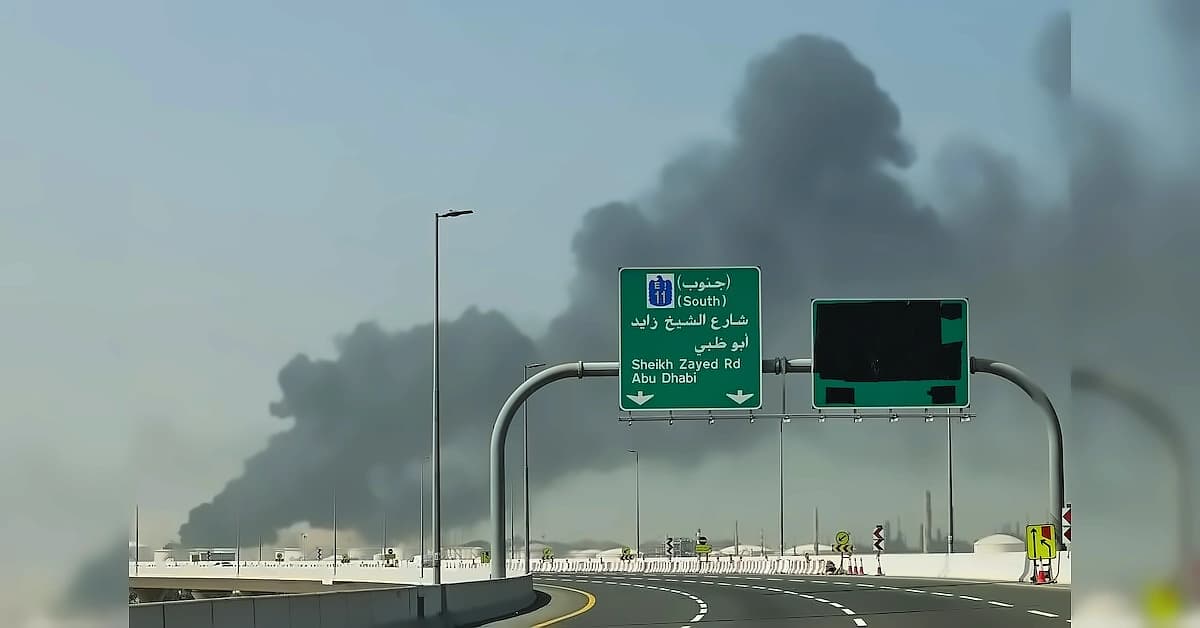
Iran and the UAE have been sparring in recent weeks over Tehran's alleged attacks on energy infrastructure in the UAE, which has resulted in BRICS failing to issue a consensus statement on the West Asia crisis. As reported by Business Standard, diplomatic sources indicated that disagreements between Iran and the UAE prevented the ministers from issuing a unified statement on the West Asia crisis. Despite the divisions, diplomats said discussions were continuing toward a possible joint statement before the meeting concludes on Friday. The diplomatic clash has raised concerns over divisions within the expanded BRICS bloc as member nations struggle to reach consensus on the Iran war and regional security issues. The Iran war began with U.S. and Israeli strikes against Iran on February 28, with Tehran responding by firing missiles and drones at U.S. bases and other targets in Gulf countries. Iran targeted the UAE more than any other country during the conflict, which was sparked by US-Israeli strikes on the Islamic Republic at the end of February. Relations between Iran and the UAE have been strained since February 28 when US-Israeli attacks triggered Iranian retaliatory strikes against Israel and US allies in the Gulf, including the UAE, with a fragile ceasefire in place since April 8. The current tensions highlight the challenges facing the influential bloc as it grapples with the economic consequences of the West Asia crisis, particularly severe energy-supply disruptions, and Washington's policy on trade and tariffs.
BRICS, originally comprising Brazil, Russia, India, China and South Africa, expanded in 2024 to include Egypt, Ethiopia, Iran and the UAE, with Indonesia joining in 2025. According to Business Standard, the India-hosted meet assumes greater significance as the influential bloc grapples with the economic consequences of the West Asia crisis, particularly severe energy-supply disruptions, and Washington's policy on trade and tariffs. The latest diplomatic tensions also exposed the challenges facing the rapidly expanding BRICS bloc, with the confrontation reflecting growing tensions amid allegations of attacks on UAE energy infrastructure and wider instability linked to the ongoing regional conflict. Iran targeted the UAE more than any other country during the conflict, which was sparked by US-Israeli strikes on the Islamic Republic at the end of February. Iranian state television has featured analysts alleging UAE involvement in the attacks on Iran, while the UAE earlier this month blamed Iran for a drone strike at an energy installation in its eastern emirate of Fujairah, a claim Iran denied.