Iran is now signaling it could target another critical global artery — the subsea internet cables carrying financial transactions, cloud services and digital communications between Europe, Asia and the Gulf. According to CNN, Iranian military spokesperson Ebrahim Zolfaghari declared last week on X: 'We will impose fees on internet cables'. Iranian officials and state-linked media outlets have floated plans to impose fees on submarine internet cables linked to the strategic waterway, while warning that companies refusing to comply could face disruptions. The proposal marks a potentially dangerous expansion of Tehran's pressure tactics as fears grow that the conflict could reignite following US President Donald Trump's return from China and renewed speculation over possible military action against Iran.
The threat carries unprecedented economic implications, with Fars, an Iranian news agency affiliated with the regime, claiming that a significant share of the undersea cables carrying data to Europe, the Middle East and Asia pass through Hormuz and handle transactions worth more than $10 trillion. Iran's geographic position allows it to exercise sovereign jurisdiction over the infrastructure and collect fees. Around seven major submarine cable routes currently cross the Strait of Hormuz, with the majority positioned near Omani territorial waters. Among the subsea systems crossing the strait are FALCON, Gulf Bridge International (GBI) and Gulf-TGN, all of which provide connectivity to Gulf states and traverse Iranian territorial waters. These undersea links are essential to global digital infrastructure, enabling internet services, cloud operations, financial transactions and defence communications. The cables form part of a wider network connecting data centres across Asia, Europe and the Middle East, with the Strait of Hormuz serving as one of the world's most strategically important maritime chokepoints.
The cable fee proposal has created an unresolvable legal dilemma for major US technology companies. Iranian parliamentary Industries Commission member Mostafa Taheri put potential fee revenue at up to $15 billion, though that figure is speculative given the legal and sanctions barriers. American sanctions explicitly prohibit US companies from making payments to Iranian state entities, leaving Google, Meta, Microsoft, and Amazon in an unresolvable bind: comply and break federal law, or refuse and risk infrastructure disruption. As reported by CNN, Isik Mater, director of research at the London-based internet monitoring group NetBlocks, noted that Iran's awareness of this legal impossibility is deliberate, making the demand come off as more of a 'protection' fee, similar to what they've been doing with tankers. CNN reached out to all four companies named in the Iranian proposals; none had publicly responded as of Saturday. The legal framework is further complicated by UNCLOS Article 79, which permits coastal states to establish conditions for cables entering their territorial seas, though submarine cable ownership is typically international and governed by complex multilateral agreements.
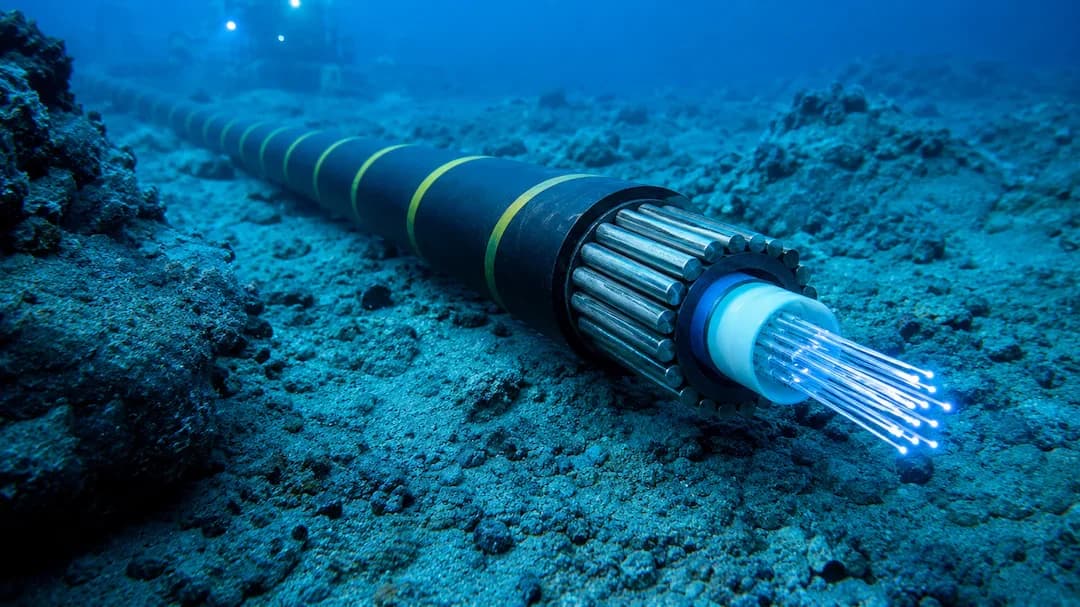
Security analysts say Iran's Revolutionary Guards possess capabilities that could threaten underwater infrastructure through combat divers, mini-submarines and underwater drones. Mostafa Ahmed warned that any attack on subsea communications infrastructure could trigger a cascading 'digital catastrophe' across several regions. The concerns are not theoretical, as in 2024, three submarine cables in the Red Sea were severed after a vessel struck by Yemen's Iran-aligned Houthi militants dragged its anchor across the seabed while sinking, disrupting nearly 25 per cent of internet traffic in the region. On May 10, Iran confirmed it had deployed Ghadir-class vessels inside the strait itself under heightened readiness conditions. Repair ships must hold stationary position for extended periods to fix cable faults — a significant vulnerability in any contested maritime environment — and the Stimson Center assessed that only two to four cable repair vessels operate in the Middle East region, with war risks having already halted new cable construction across the Persian Gulf.
The digital infrastructure threat has already produced significant economic damage beyond energy markets. Both the Strait of Hormuz and the Red Sea are now effectively closed to commercial traffic, trapping billions of dollars in US cloud infrastructure built across Gulf data centers behind two simultaneous war chokepoints. Iran has maintained a nationwide internet blackout now past its 76th day, which its own communications minister acknowledged is costing Iranian businesses 600 billion tomans daily. For the broader industry, the announcement surfaces a structural vulnerability that has been theorized but never stress-tested at this scale: the concentration of the world's critical digital infrastructure in a handful of geographically exposed maritime corridors, protected by no dedicated legal framework and no established military doctrine. As noted by Bloomberg Economics Middle East lead Dina Esfandiary, 'It aims to impose such a hefty cost on the global economy that no one will dare attack Iran again'. Not all cables through the strait fall within Iranian jurisdiction, with Alan Mauldin, research director at TeleGeography, confirming that the vast majority of cables traverse the Omani side of the waterway, leaving only the Falcon network and Gulf Bridge International (GBI) running through Iranian territorial waters, meaning targeted disruption would hit regional connectivity hard while leaving the global internet largely intact.