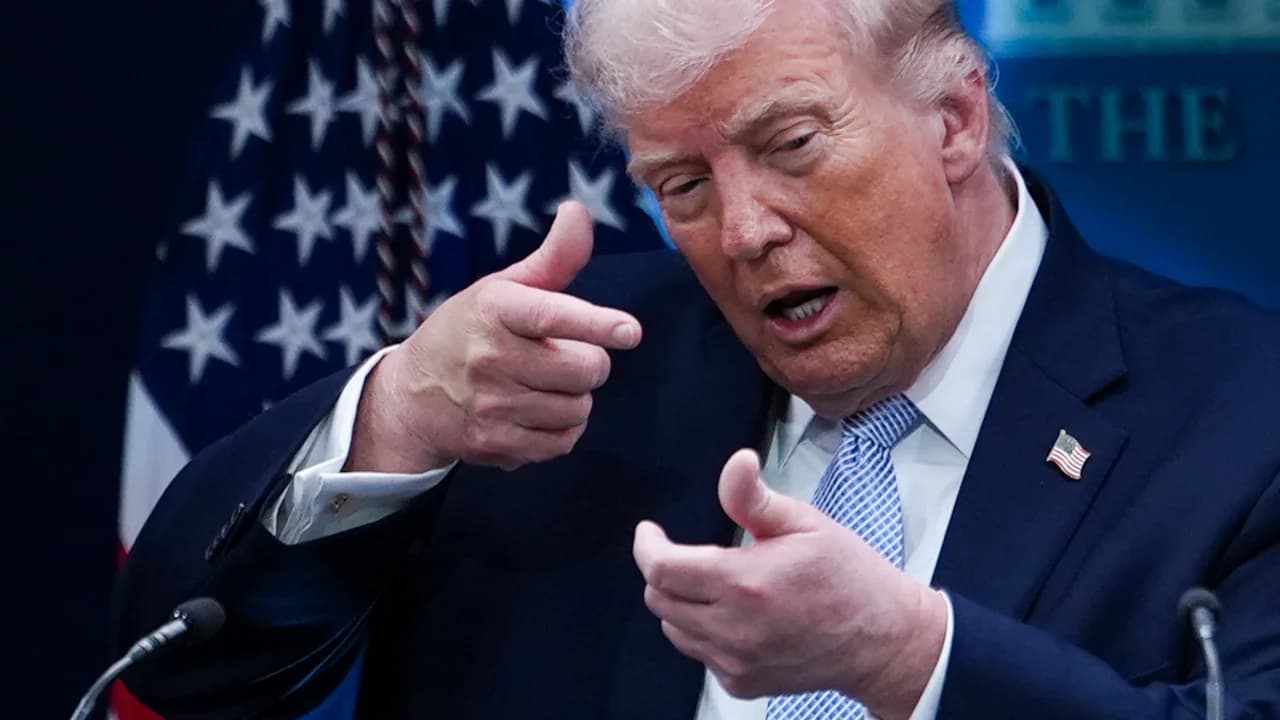
US President Donald Trump on Wednesday dismissed reports that the United States was planning a $300 billion investment fund for Iran, calling the claims "false" and asserting that Washington has no plans to invest in the country. "The US is not having a fund to invest in Iran. We are not investing 10 cents in Iran," President Trump said while speaking to reporters in France. Trump also said that a memorandum of understanding (MoU) related to Iran had not yet been finalised, indicating that negotiations and discussions remain ongoing. The President reiterated his assessment of the recent military campaign against Iran, claiming that the country's military infrastructure had been significantly degraded. Trump expressed confidence that the Strait of Hormuz, one of the world's most critical oil shipping routes, would soon be fully operational, with the waterway already partially open and should return to normal operations shortly. "Market is very happy with the Iran deal," Trump said, pointing to the performance of financial markets as evidence that investors were encouraged by the developments surrounding Iran.
The interim agreement includes a 60-day ceasefire 'on all fronts,' including Lebanon, which will begin upon signing. As reported by Bloomberg News, the deal would reopen the Strait of Hormuz immediately without Iran levying any fees for passage, ensuring the free flow of energy and commercial goods with traffic returning to prewar levels after 30 days. Vice President Vance told CBS News that the agreement could eventually provide Iran access to a reconstruction fund worth as much as $300 billion, financed by Gulf Arab countries, provided Tehran complies with commitments related to its nuclear programme. Iran's Mehr news agency reports that the US has agreed to release ₹1,00,000 crore ($12 billion) in frozen Iranian assets during the 60-day negotiation period, with half of this amount made available to Iran before the start of negotiations. However, a senior US official told Axios that no frozen funds will be released without Iran implementing its commitments, stating "This is a pay-for-performance deal." Under the final draft, the US Treasury Department will issue waivers for exports of Iranian crude oil, petrochemical products and their derivatives immediately after the memorandum is signed. The US will lift its naval blockade and the two countries will work to ensure that traffic in the Strait of Hormuz returns to its prewar level within 30 days. The draft agreement states that the US and its partners would ensure financing of the $300 billion amount, with the US President previously denying that Washington would pay Iran $300 billion directly.
A source with direct knowledge of the deal has revealed to Reuters that the $300 billion reconstruction fund is entirely private-sector funded and more than half of the amount has already been committed. The fund, to be named the Reconstruction and Development Fund, will not include any government money or grants, with companies from the US, Gulf Arab states, Asia, South America and Africa having agreed to commit financing. Investments pledged span energy, logistics, manufacturing and transport sectors, according to the source. A senior Iranian source told Reuters that Tehran had originally sought $400 billion as compensation for war damages from the US but Washington had said it would not provide it. The fund will not be created or become operational until a final and satisfactory deal is concluded, with the memorandum of understanding intended to structure the process over the next 60 days. During these 60 days, fund administrators will work with Iranians and investors to plan and scope projects, as confirmed by the source. The source named companies from South Korea, Japan, Singapore, Malaysia and the United States among those that had made commitments, but declined to provide a comprehensive list. The source identified companies from South Korea, Japan, Singapore, Malaysia and the United States among those that have already made commitments, however, a complete list of participating firms was not disclosed.
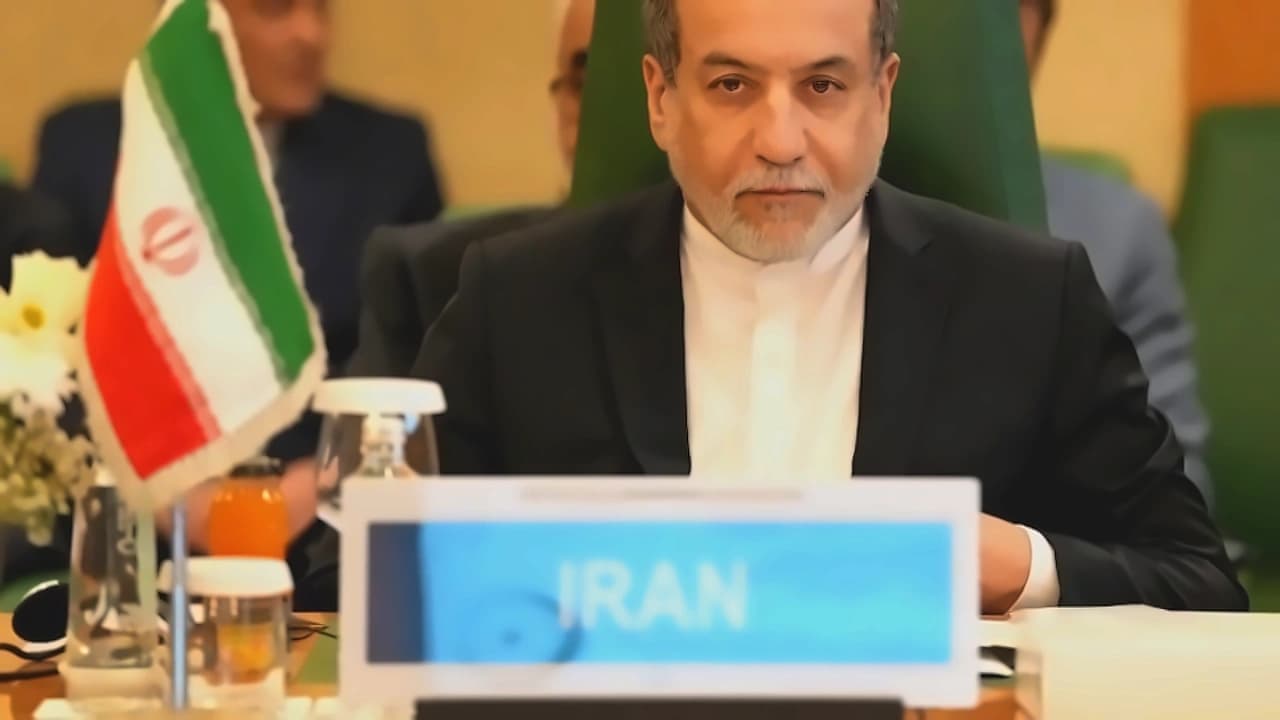
A source close to Iran's negotiating team has shared the contents of the 14-point draft memorandum of understanding with Mehr news agency, providing the most detailed public account yet of the document's proposed terms. The text has not yet been finalised, with Iran's Foreign Ministry spokesperson reportedly stating it still requires review by relevant institutions in Tehran. Critically, Iran's missile programme and its support for Resistance groups 'have been definitively removed from the agenda,' according to the draft MOU. The draft opens with a permanent and immediate end to hostilities across all fronts, including Lebanon, as reported by Mehr. The US also commits to non-interference in Iran's internal affairs and full respect for the Islamic Republic's sovereignty, a provision that Tehran has long demanded as a baseline for any diplomatic engagement with Washington. On the military side, the document reportedly commits Washington to lifting its naval blockade within 30 days and withdrawing its forces from around Iran. The draft also provides for the eventual lifting of US sanctions on Iran, although this would only occur as part of a final agreement negotiated during the next two months. The US would withdraw military forces 'from the surrounding areas' within 30 days of a final settlement, according to the draft agreement.
The US official said the emerging agreement includes provisions for reopening the Strait of Hormuz, a vital shipping lane for oil and natural gas that has been effectively closed by Iran's blockade. US Central Command late Friday said in a social media post that it intercepted several Iranian attack drones that were targeting commercial ships in the Strait of Hormuz. Trump announced that he is 'fully authorising' the opening of the Strait of Hormuz and allowing the 'immediate removal of the United States naval blockade,'' writing on social media: "Ships of the world, start your engines. Let the oil flow." Trump confirmed at the G7 summit that ships were already moving through the Strait of Hormuz, which will be fully reopened on Friday, with Vance confirming the immediate impact: 'You're already seeing oil and gas prices come down just over the past 24 hours.' The Strait of Hormuz handles nearly one-fifth of the world's oil supply, making it one of the most critical chokepoints for global energy trade. The memorandum of understanding calls for the strait's reopening within 30 days under 'Iranian arrangements,'' according to Iran's state-run Mehr News Agency. The US military indicated that restrictions on Iranian ports had not yet been fully lifted, despite the naval blockade being removed.
Despite progress between Washington and Tehran, uncertainty remains over the situation in Lebanon, with Iran insisting that any agreement must include a halt to Israeli military operations against Hezbollah. In the first reported strike since the agreement was announced, an Israeli drone targeted a vehicle in the southern Lebanese town of Kfar Tebnit, killing the driver, according to Lebanese state media. Israel's military did not immediately comment on the incident. Iranian Foreign Minister Abbas Araqchi said there must be a complete cessation of Israeli attacks in Lebanon and stressed that the United States bears responsibility for implementing the framework agreement. Iran's parliament speaker and chief negotiator Mohammad Bagher Ghalibaf said Israel 'must withdraw from occupied territories' in Lebanon, according to the semi-official Mehr news agency. The draft states that the war will be ended 'on all fronts, including in Lebanon,'' a provision that would require the approval of Israeli Prime Minister Benjamin Netanyahu, who has so far refused to end Israel's campaign against Hezbollah along the country's northern border**. 'It's crucial that Israel stays in southern Lebanon for the time being, cleaning after the Hezbollah infrastructure,'' Mark Regev, former Israeli Ambassador to the UK, told Bloomberg. Privately, Israeli officials expressed reservations about the deal, with one senior Israeli official describing it as 'terrible for Israel,' saying concerns were shared across the government.