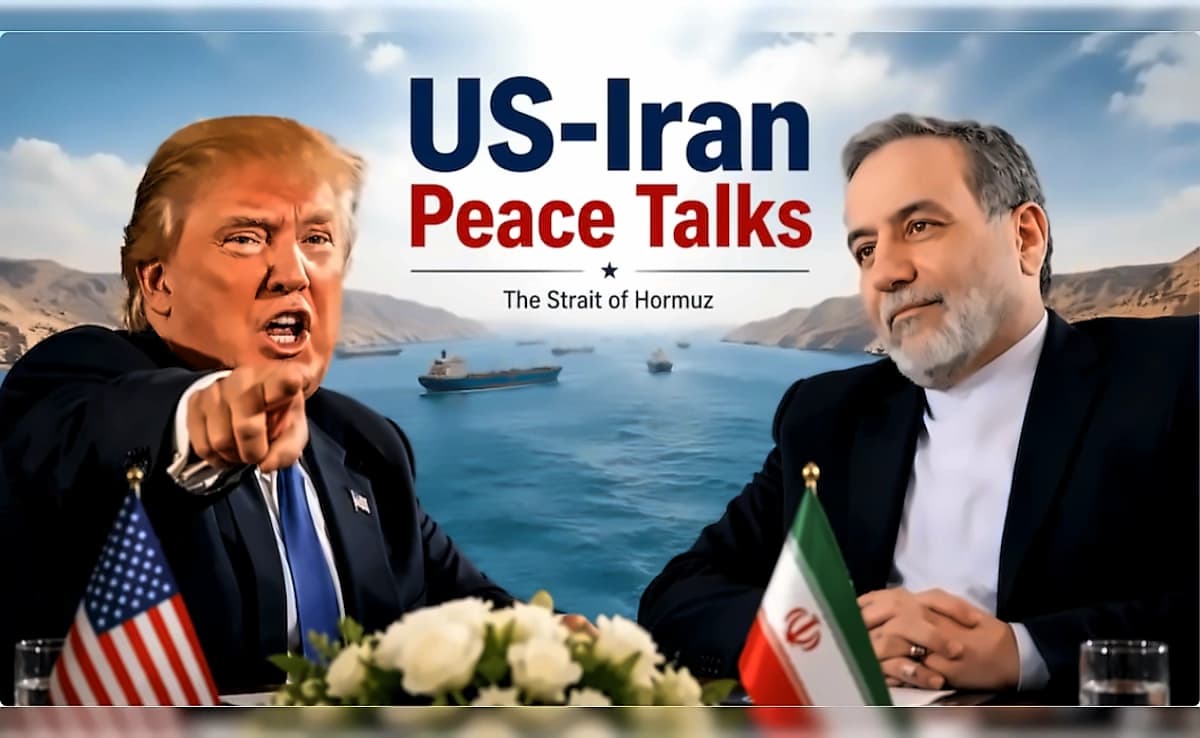
US and Iranian officials are closing in on a preliminary agreement that would end the current conflict, with a 60-day ceasefire extension as the initial framework. According to reports from The New York Times, the agreement would include a nonaggression pact between Washington and Tehran with a regional component, including a halt to fighting in Lebanon. The draft memorandum under discussion is closer to gaining approval from both sides, though President Trump has not yet signed off on the terms. The preliminary agreement would allow for negotiations between the two sides, with the possibility for extension beyond the initial 60-day period. As per The New York Times, the proposed agreement would serve as an initial framework for broader and more difficult negotiations on Iran's nuclear programme, US sanctions, regional security and a formal end to hostilities.
The most contentious issue remains the Strait of Hormuz reopening, which has been effectively closed since the war began in February. Under the latest draft, the strait would reopen immediately with the US naval blockade remaining but reduced in stages depending on prewar ship traffic restoration. As per The New York Times, Iranian officials reportedly want the blockade removed within 30 days, while Iran has agreed to allow maritime traffic to return to prewar levels for 30 days while negotiations continue. However, Iranian negotiators are sticking to their contention that Iran and Oman have the right to determine service fees for passing vessels after that period. President Trump has repeatedly asserted that the international waterway should remain open without tolls or fees, while some US negotiators suggest pushing the longer-term strait status into a second round of talks. Diplomats said resolving the Hormuz issue is central to the wider negotiations because any long-term investment plan for Iran would depend heavily on stable oil exports and uninterrupted shipping access.
One of the most striking aspects of the latest draft agreement is the inclusion of a possible international investment and reconstruction fund for Iran worth as much as $300 billion. According to officials involved in the talks, the proposal is being discussed as part of a broader effort to rebuild Iran's damaged economy following months of conflict, sanctions and bombardment. Iranian officials view the proposal as a reconstruction mechanism and partial compensation for war-related destruction, with some Iranian estimates placing the overall economic damage caused by the conflict between $300 billion and $1 trillion. The plan is believed to be linked to earlier proposals floated by Trump's Middle East envoy Steve Witkoff and Jared Kushner, both of whom have reportedly discussed future real estate, infrastructure and energy investments in Iran if relations improve. Iran has also proposed allowing major US oil and energy companies to enter the country through investment partnerships and joint ventures should sanctions eventually be lifted. However, discussions remain at a preliminary stage with many details including the structure of the investment mechanism, participating countries and timelines unresolved.
Another major pillar of the discussions involves billions of dollars in frozen Iranian assets held abroad, which Tehran considers essential for any meaningful economic recovery. Iran is believed to have nearly $24 billion frozen in overseas banks and has insisted that negotiations cannot progress without at least partial access to those funds. Iranian officials are pushing for access to as much as $20 billion in frozen assets during the negotiations period, arguing that the money is needed for reconstruction, stabilising the economy and restoring critical infrastructure. The issue remains politically sensitive for Trump, who has repeatedly criticised former President Barack Obama over the 2015 transfer of $1.7 billion to Iran as part of a prisoner exchange agreement. To avoid accusations of direct US payments to Tehran, officials familiar with the talks said Washington is exploring mechanisms involving third-party countries, including Qatar, to gradually release Iranian funds. The phased release of frozen assets could become one of the key confidence-building measures in the negotiations, particularly as both sides attempt to balance economic relief with ongoing political and security concerns.
Asian stocks climbed significantly as the tentative ceasefire extension agreement emerged, with the MSCI Asia Pacific Index increasing by 0.7%. According to reports from CNBC TV18, Japan's Nikkei 225 rose over 1.60% while the South Korean KOSPI surged 1.70%, leading regional gains. The positive momentum was supported by falling oil prices and continued optimism around artificial intelligence stocks, with South Korea's KOSPI reaching a new record above 8,200 points, closing at 8,228.7. As per Reuters, the Taiwan Semiconductor Index also advanced during the trading session. The semiconductor sector emerged as a key driver of Asian market gains, with South Korea's semiconductor giants leading the charge. As reported by Reuters, Samsung Electronics gained nearly 3% while SK Hynix surged over 9%, with SK Hynix's rise lifting the South Korean company's market cap over $1 trillion for the first time. The semiconductor boom reflects the broader artificial intelligence boom, with chipmakers benefiting from increased demand for AI-related components.

The latest framework postpones the most sensitive issue of all, Iran's nuclear programme to a second phase of negotiations. According to diplomats familiar with the draft, the agreement would commit both sides to future talks over Iran's enriched uranium stockpile, including material that could potentially be converted to weapons-grade fuel. The discussions are expected to focus on how Iran's uranium reserves would be handled, whether through dilution under international monitoring or transfer to a third country. Trump had earlier suggested the stockpile should be moved to the United States, although he has recently signalled openness to other options. However, he reportedly remains opposed to Russia or China taking custody of the material. Iran, meanwhile, is seeking guarantees that Washington will not increase sanctions while negotiations continue and expects existing sanctions to be gradually lifted if a permanent agreement is eventually reached. Diplomats said progress on nuclear negotiations would likely determine whether large-scale international investments and sanctions relief could ultimately materialise.