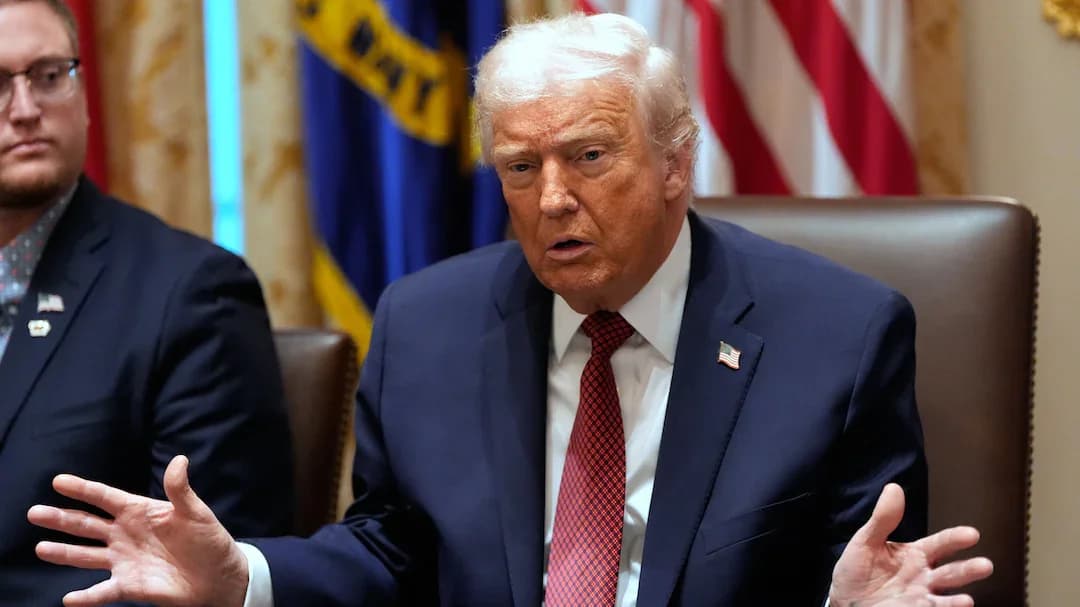
President Donald Trump confirmed on Tuesday that Iran shot down a US military helicopter patrolling the Strait of Hormuz, marking the first loss of a US military aircraft since the US and Iran declared a ceasefire on April 8. Trump stated that "The United States must, of necessity, respond to this attack" in a social media post, with the Pentagon confirming that a US Army Apache helicopter went down near the coast of Oman in the early hours Tuesday, local time, and that the two crew members were safe. This incident represents a significant escalation in the ongoing conflict, as it marks the first military loss since the temporary truce was established. The helicopter crash occurred about 3:30 a.m. local time Tuesday off the coast of Oman while the helicopter was on patrol, according to U.S. Central Command.
In a historic first for the US military, an unmanned boat located the two aviators after they spent about two hours in the water, marking the first known drone rescue at sea by the U.S. military, as reported by U.S. Central Command spokesman Capt. Tim Hawkins. The drone used for the rescue was a 24-foot (7.3-meter) vessel called a Corsair, manufactured by Saronic Technologies, and was assigned to the Navy's Task Force 59, established in 2021 as the Navy's first uncrewed and artificial intelligence unit that focuses on maritime security in the Middle East, including the Strait of Hormuz and the Suez Canal. Military officials did not say what caused the Apache helicopter to go down, saying the crash was under investigation. AH-64 Apache helicopters have been a key asset for the American military as it enforces a blockade on Iranian crude oil shipments and tankers, seeking to pressure Tehran into a deal.
Low-intensity fighting between US and Iranian forces has flared up repeatedly since late May, with the latest incident marking a concerning development in the ongoing standoff. The US has targeted Iranian military infrastructure around the strait of Hormuz while Iran has responded with missile and drone attacks against vessels passing through the strait and US bases in Kuwait and Bahrain. The helicopter incident represents the first military loss since the ceasefire, raising questions about the effectiveness of the temporary truce and the sustainability of the current negotiations. Despite the ongoing fighting, Trump has repeatedly described a US-Iran peace deal as practically finalized since May 22, suggesting that diplomatic efforts continue despite the military tensions. The downing of the helicopter further strained a two-month ceasefire a day after Iran and Israel exchanged fire for the first time since the fragile truce took effect.
US President Trump has expressed renewed optimism over negotiations with Iran, stating "We have a good chance" of signing a deal in "two or three days," as reported by Axios. However, he didn't provide any details on why there was reason for new optimism. In the two months since the U.S. and Iran agreed to an initial ceasefire, Trump has repeatedly predicted that a deal is near, stating "We're very close to having a very, very good, strong, powerful deal." However, the situation has become more complex as an American AH-64 Apache attack helicopter crashed near the Strait of Hormuz, with both crew members rescued. If the Apache was shot down by Iranian fire, it would represent the closest point this war has come to Trump's private "red line" - the death of American soldiers. Trump has emphasized that negotiations with Iran have reached critical stages and that there is a possibility of reaching a favorable agreement, as he obviously does not want military tensions to disrupt this process. However, he has also warned that "If we do the bombing, you know, a lot of people are going to be killed. Who wants to do that? I don't."

An Iranian official has stated that "There will be no agreement without the release of frozen funds and the lifting of sanctions." According to the Iranian official, Washington has made some changes to the draft memorandum of understanding, and this is unacceptable. The official emphasized that "Stability and security in the region cannot be achieved except through the existence of a real deterrence mechanism against aggression." This represents an unprecedented development as Iran has responded directly to Israel after an Israeli attack on Lebanese territory, showing that an attack on Lebanon could also trigger an Iranian response. The expansion of Iran's deterrence to regional allies could have significant implications for the security and political balance of the region, potentially deepening the rift between Netanyahu and Trump. Mediators, led predominantly by Pakistan, have been trying for weeks to get a deal across the line, but both Iran and the U.S. have taken hard-line positions. The U.S. wants to see Iran give up its stockpile of highly enriched uranium, which is believed to be entombed in the aftermath of American airstrikes that happened during the 12-day war in 2025, but Iran is refusing that and demanding relief from sanctions.