Global energy transition readiness has declined for the first time in more than a decade amid a surge in geopolitical risks, according to the World Economic Forum's Energy Transition Index 2026. Despite record clean energy investment of $3.3 trillion in 2025, including $2.3 trillion in clean energy, overall energy security deteriorated and transition readiness weakened. The report highlighted the disruption in the Strait of Hormuz, which exposed vulnerabilities in energy systems already strained by rising demand and infrastructure bottlenecks. Only 24% of countries managed to advance across all core performance areas simultaneously, down from 28% in 2025, while 56% of countries improved their ETI scores overall. System performance scores increased on average by 0.43%, driven by equity and sustainability gains, but overall ETI scores remained broadly flat, moving by just 0.03%. Geopolitical and economic disruptions directly affected these shifts, with geopolitical fragmentation, rising demand and concentrated investment flows widening the gap between leading and lagging economies. While capital commitments reached unprecedented levels, they did not translate uniformly into systemic stability, with finance and investment recording the sharpest fall, dropping by 1.8%. The report noted that more than 2,500 gigawatts of renewable-energy, energy-storage and large electricity-demand projects, including data centres, are currently awaiting grid connections worldwide, highlighting widening gaps between project development and infrastructure readiness.
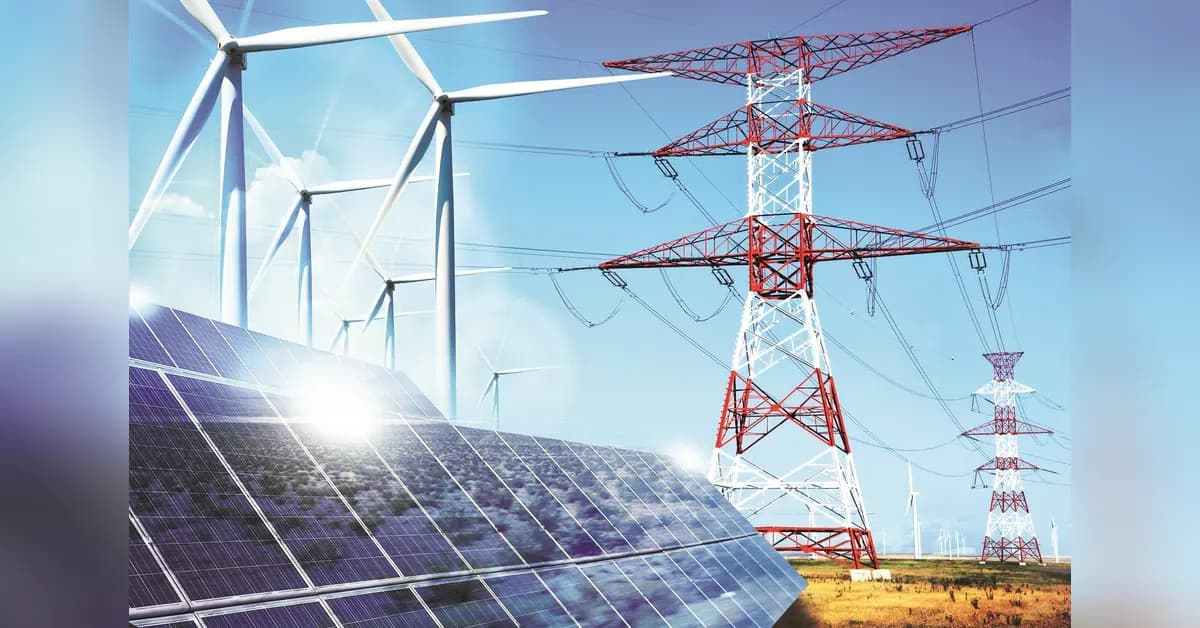
India advanced two places to rank 70th globally on the Energy Transition Index 2026, emerging as one of the strongest global improvers driven by renewable energy growth, infrastructure expansion, and rising low-carbon jobs. As reported by the World Economic Forum, India recorded one of the greatest improvements in readiness, driven by significant gains in infrastructure and human capital, positioning it as a key player in the next phase of global energy transition. The improvement was attributed to stronger energy transition readiness and broad-based system gains, driven by a sharp rise in infrastructure alongside improvements in equity, sustainability and financial investment. The WEF specifically noted that "India was one of the strongest improvers globally in the Energy Transition Index 2026, recording one of the largest gains in transition readiness and strengthening its position as a key player in the next phase of the global energy transition." Within South Asia, Sri Lanka emerged as the region's top performer at 68th place, followed by India at 70th, Pakistan ranked 90th, while Nepal stood at 111th. India's infrastructure-led clean energy strategy, including rapid expansion of renewable energy capacity, grid development and green hydrogen initiatives, was identified as a key factor behind the country's improved performance. Despite the global decline, India's performance stood out among emerging markets, with the country ranking among the stronger readiness gains among major economies, driven by investment in energy security and affordability.
The proportion of low-carbon jobs increased by 24 per cent in India in 2024, with renewable energy jobs reaching 1.3 million, up 25 per cent over 2023. According to the World Economic Forum report, hydropower emerged as the largest employment source in India's renewable energy sector. The report also underlined scaling renewable capacity, grid expansion and green hydrogen as key focus areas for India's infrastructure-led clean-energy strategy, with hydropower being the largest employment source in the renewable energy sector. India's infrastructure-led clean energy strategy, including rapid expansion of renewable energy capacity, grid development and green hydrogen initiatives, was identified as a key factor behind the country's improved performance.
Sweden, Finland and Denmark retained their top three positions globally, while Singapore was among the biggest climbers, rising 10 places to 42nd on the Index. Advanced economies held 14 of the top 20 positions, but progress was uneven with overall average scores rising by just 0.2 per cent year-on-year. Among G20 nations, Germany ranked ninth, followed by France (10th), the United Kingdom (11th), China (14th), Brazil (17th) and the United States (19th). Among major economies, China continued to scale clean energy investment at record levels, India recorded one of the strongest gains in transition readiness, while the United States maintained strong energy security performance despite slipping modestly overall. The report found that 75% of global clean-energy investment is concentrated in a small number of economies, while countries expected to account for roughly 80% of future electricity-demand growth continue to face financing costs two to three times higher than those in advanced economies. Despite record global investments in clean energy, the WEF noted that the overall pace of energy transition has slowed, with the study pointing to a widening gap between investment levels and actual transition readiness, indicating that financial commitments alone are no longer sufficient to sustain momentum.
One of the report's most significant findings was the deterioration in transition readiness, which measures countries' ability to sustain the energy transition through policy frameworks, financing, innovation and infrastructure. Although overall Energy Transition Index scores increased marginally by 0.03%, gains in energy-system performance were offset by a 0.76% decline in transition readiness, marking the first such decline in more than a decade. Finance and investment recorded the sharpest deterioration, falling by 1.8%, followed by regulation and political commitment at 1.2% and innovation at 1.1%. The report warned that countries are finding it increasingly difficult to balance energy security, affordability and sustainability simultaneously, with geopolitical tensions, infrastructure bottlenecks, financing constraints and rapidly rising electricity demand creating new challenges. The 2026 ETI identified three priorities for sustaining and accelerating the next phase of transition: Embed security, affordability and resilience as design principles; Unblock delivery by accelerating grid expansion and system integration; Restore investability through stable policy and targeted capital flows.