The Badr accord represents a significant development in regional defense cooperation, with India closely monitoring its evolution alongside the Mecca Accord currently under test against the Houthis. As reported by Air Power Asia, while the pacts are overtly visible, India should not initially view them through a religious prism until they prove otherwise, as these agreements are still at a very early stage. The Badr accord is expected to take a long time to evolve, making it a wait-and-watch stage for India, requiring continued diplomatic engagement with military and industrial growth as a deterrent. The obstacles remain substantial, as defence industries compete for export markets, protect proprietary technologies, and operate under varying financial and regulatory constraints.
The Nvidia probe involving Jensen Huang and Alice Huang has highlighted critical lessons for India's strategic autonomy, with the incident serving as a warning shot for nations outsourcing their technological future to global players. As reported by multiple sources, the allegations surrounding the Nvidia CEO and his association with Alice Huang demonstrate how technological power cannot be separated from national security in an age of hybrid warfare. The incident underscores that every executive is a potential target and every company is a potential vector for foreign influence, making India's focus on secure, transparent, and sovereign technological foundations more relevant than ever. The probe has exposed vulnerabilities in global tech supply chains and reinforced the need for robust due diligence frameworks that include the 'China factor' as a permanent fixture in risk assessment for Indian businesses partnering with global tech titans.
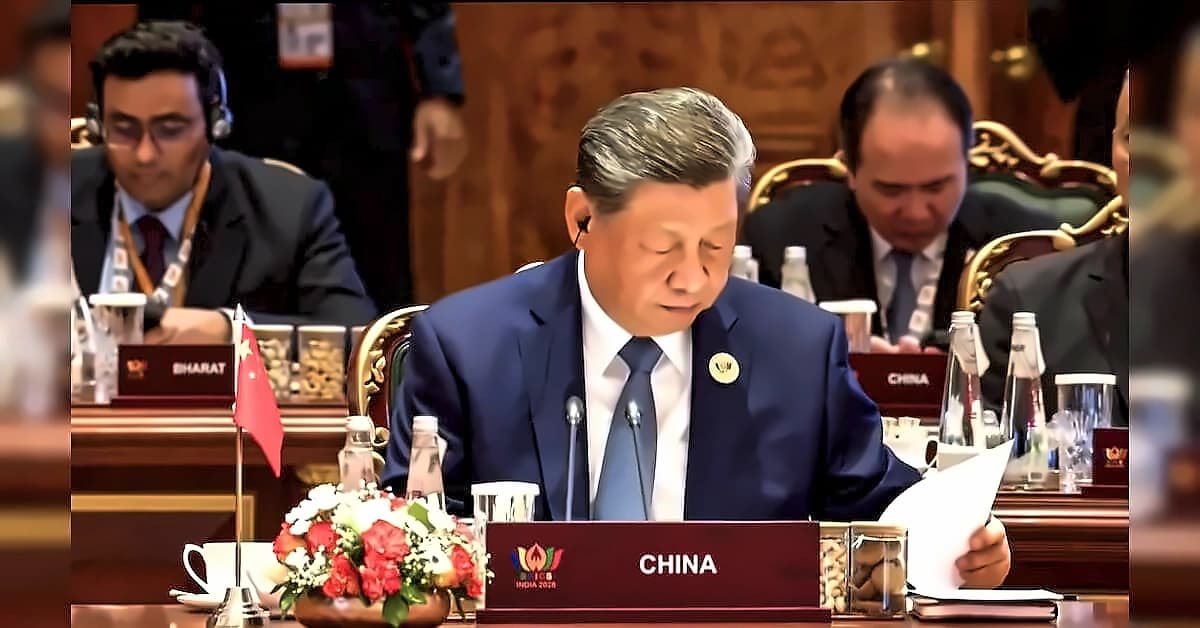
The September 2026 BRICS summit in New Delhi reflected both the grouping's ambition and its limits, with the declaration calling for more representative global governance, inclusive artificial intelligence, resilient supply chains and greater participation by developing economies in higher-value production. As reported by The Hindu, the summit endorsed cooperation on critical minerals, digital public infrastructure and global value chains, with India's position being described as 'strategic autonomy: preserving room to cooperate across rival camps'. The summit's outcomes demonstrate that declarations cannot change who owns fintech infrastructure, processes minerals or sets international standards, highlighting the practical challenges of institutional reform in multilateral forums.
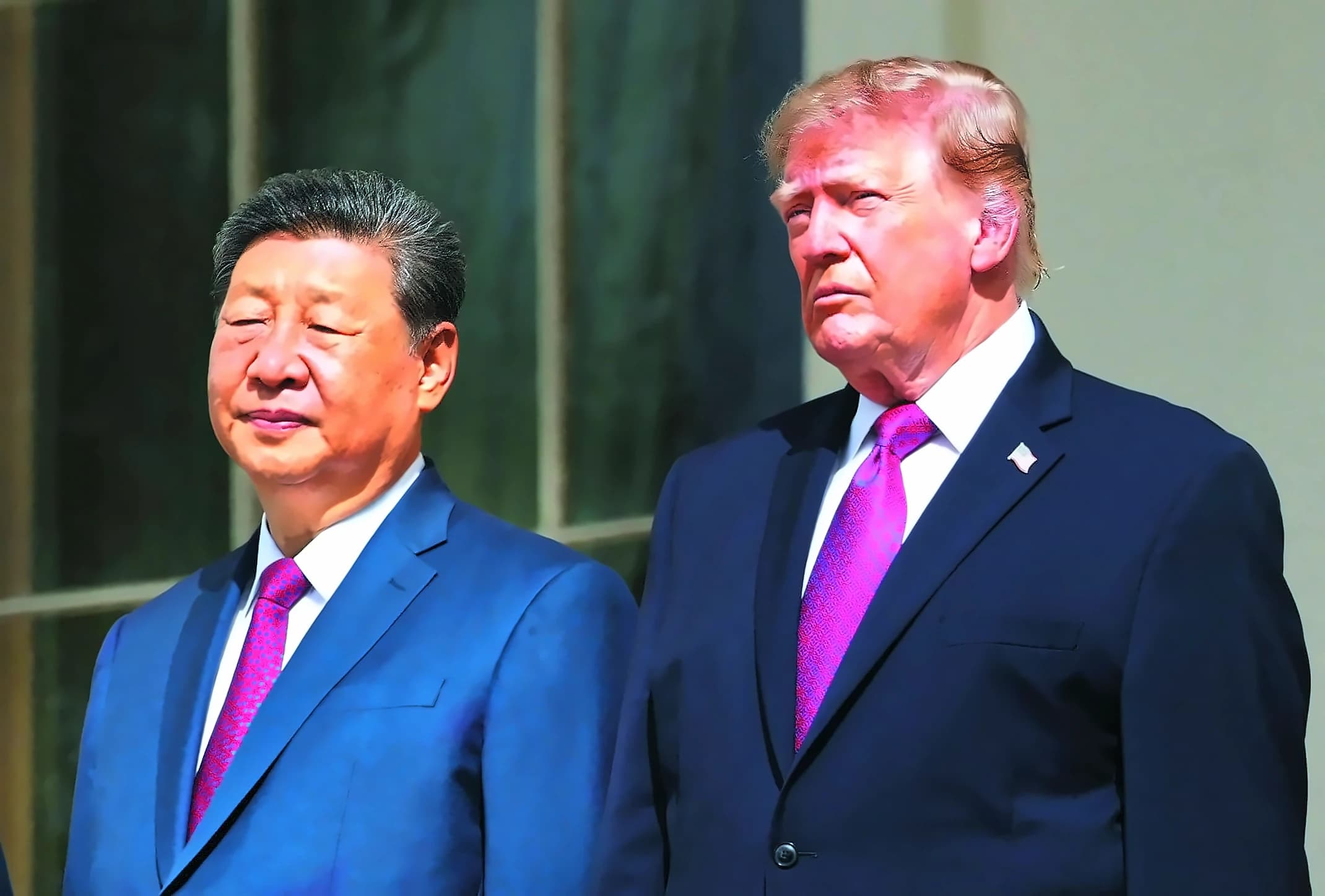
US President Donald Trump and Chinese President Xi Jinping met at the White House on September 23 for a three-day ceremonial visit, with Trump describing the relationship as a 'constructive relationship of strategic stability'. According to reports from Business Standard, the summit extended the trade ceasefire agreed at Busan last year until January 10, established a new Board of Trade to reduce tariffs on $30 billion worth of goods from each country, and promised continued work on rare earths. However, the leaders made no progress on Taiwan and export controls, with Xi asking Trump to 'oppose' Taiwanese independence and receiving no commitment in return.
Former Australian Prime Minister Kevin Rudd, who has extensive knowledge of Beijing, called the emerging 'G2' concept 'fanciful' in The Hindu this month, arguing that China's talk of managing 'strategic differences' is 'code language for Taiwan'. As reported by Business Standard, Rudd concluded that 'strategic competition is not going away' and noted that finding agreement on certain issues is different from trying to control a region jointly. The concept of a G2 was popularised during the 2008-09 financial crisis but lacks the structural conditions for joint regional control, with China wanting to reshape aspects of the current Asian order while the US still protects the status quo.
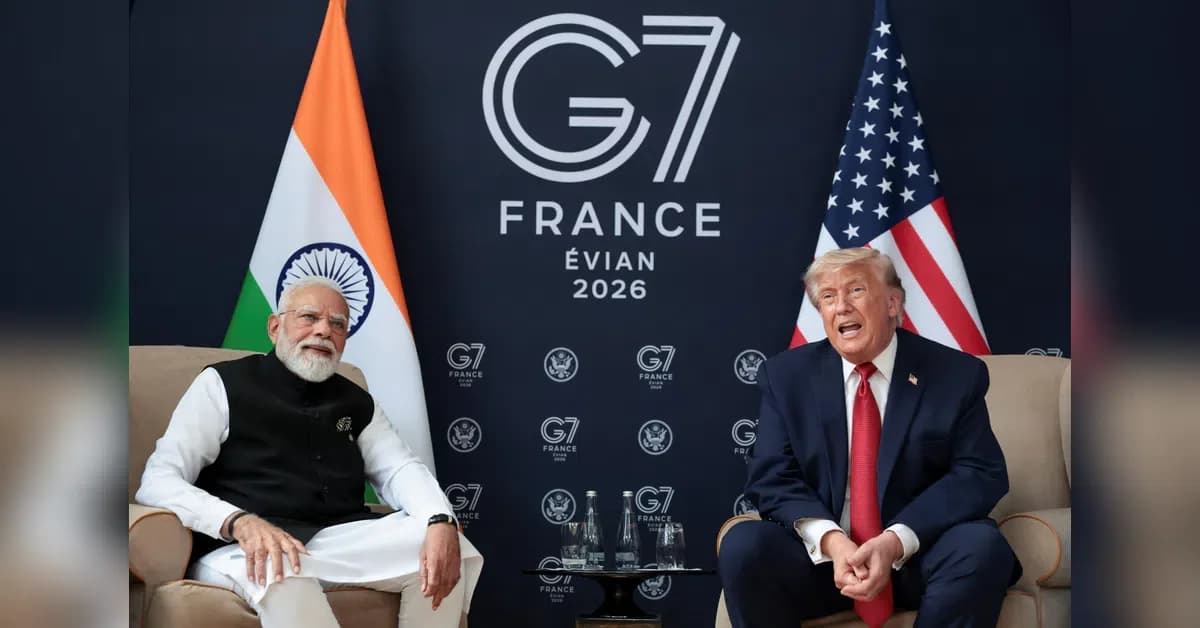
India faces concerns about being treated as an antagonist while Pakistan is embraced by the White House, with the country hit last year with a 25% penalty tariff for buying Russian oil after two decades of growing alignment with the US. According to Business Standard, India should not try to pit China against the US but should recognise that the ability to hurt the US earns more than patient relationship-building work. The article emphasises that India must be strong enough to be consulted in a world of small deals, where the weak are often traded and the strong are mostly consulted. India's G20 presidency offers a more practical model, with the African Union becoming a permanent G20 member and the New Delhi Leaders' Declaration calling for multilateral development bank reform and endorsing a voluntary framework for digital public infrastructure.
India needs to build strategic autonomy by becoming self-reliant in electronics, pharmaceuticals, and defence manufacturing, as reported by Business Standard. The country depends on Chinese inputs and has sizeable rare earth reserves that it cannot utilise effectively. The G20 foreign ministers' meeting in Atlanta on October 30 and 31, 2026 showed how difficult consensus has become, with the US presidency issuing a chair's statement, not a joint communique, after discussions on energy security and supply-chain resilience. AI presents similar questions of power, with India and Brazil having large digital markets but requiring computing capacity, quality data, skilled researchers, reliable energy, and investment to participate in the AI economy. Developing countries must help shape standards and safeguards, not merely comply with rules designed elsewhere, with India's digital public infrastructure experience contributing as an adaptable model, not exported as a template.