The Centre on Thursday granted High Commissioner Dinesh Trivedi the status equivalent to a Union Cabinet minister, signalling India's utmost importance to ties with Bangladesh. According to the Ministry of Home Affairs (MHA), the status was assigned as a measure personal to Trivedi, without amending the Table of Precedence. The memorandum specifically states that "Shri Dinesh Trivedi, high commissioner of India to Bangladesh, has been assigned the equivalent status of Union Cabinet Minister in the Table of Precedence (ToP) as a measure personal to him, without amending the Table of Precedence." This position in the Table of Precedence is for ceremonial functions only, as reported by Business Standard. The protocol elevation was announced through an Office Memorandum issued on Thursday, highlighting the move as underscoring the growing strategic importance of Bangladesh in India's regional diplomacy. The decision is being widely seen as reflecting the importance New Delhi currently attaches to its mission in Dhaka, especially at a time when ties with Bangladesh remain central to India's neighbourhood strategy in South Asia.
Trivedi, 76, a veteran politician and former Union minister, presented his credentials to Bangladesh President Mohammed Shahabuddin in Dhaka on Thursday and assumed office later in the day. He was appointed as India's high commissioner to Bangladesh on April 27, 2026, marking a departure from the long-standing practice of appointing career diplomats to one of New Delhi's most strategically significant diplomatic postings. A Bangabhaban presidential palace spokesman confirmed that "The new Indian high commissioner has presented his credentials to the honourable president, beginning his diplomatic assignment in Dhaka." Before the credential presentation ceremony, a contingent of the President's Guard Regiment welcomed Trivedi with a guard of honour. Trivedi succeeded Pranay Kumar Verma, a 1994-batch Indian Foreign Service (IFS) officer, as reported by Business Standard.
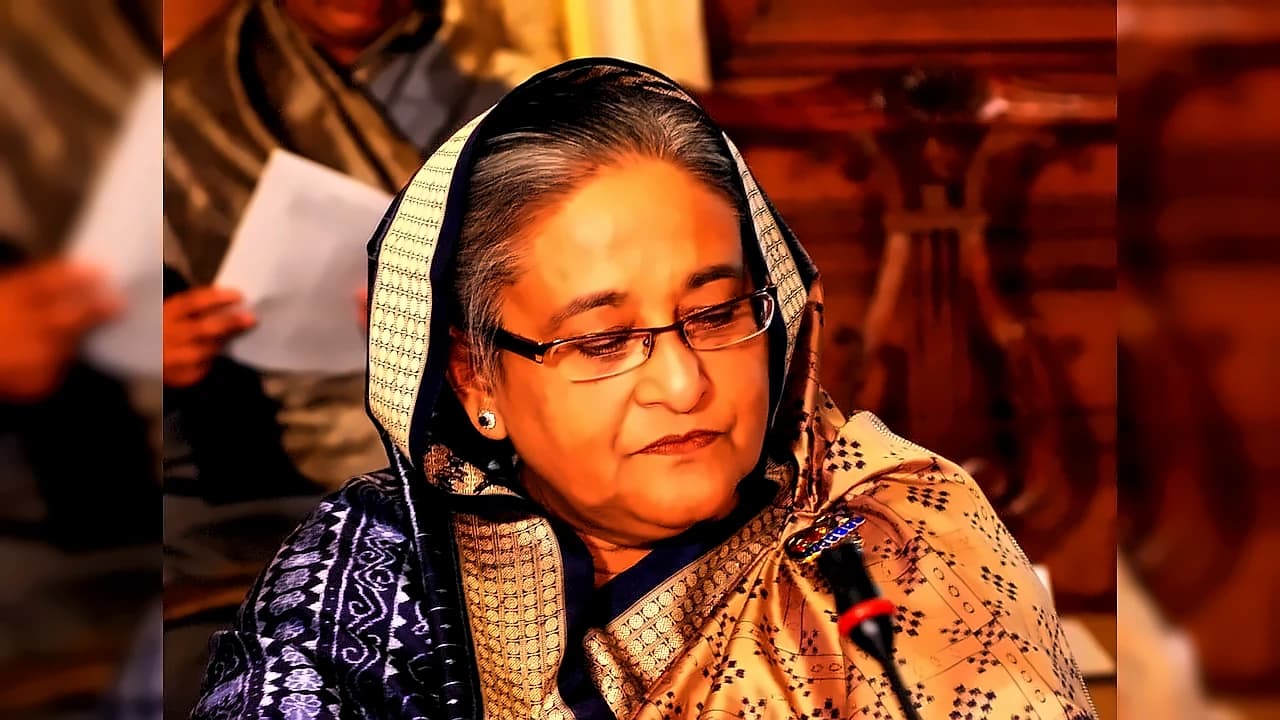
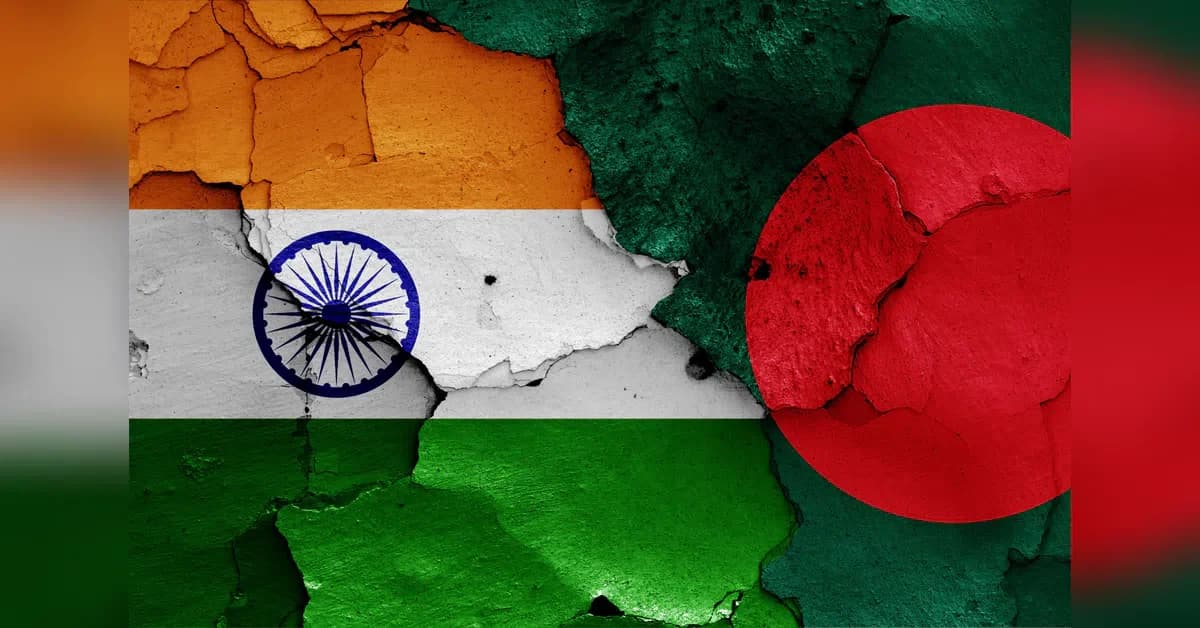
In his first decision as high commissioner, Trivedi announced the resumption of travel visas for Bangladesh nationals during his visit to the Indian Visa Application Centre (IVAC) in Dhaka. Speaking directly from the President's premises, Trivedi said "I am coming straight to the Indian Visa Application Centre (IVAC) from the Honourable Rashtrapati's (President) premises...I am very happy to announce that we are resuming our normal visa applications for tourist visas, which can be submitted from 28 June 2026." He added that applicants would be able to apply through all five Indian visa centres located in Dhaka, Rajshahi, Chattogram, Sylhet and Khulna, with the process to be expanded further in the future. The move comes as both countries seek measures to further improve ties following the India-Bangladesh relationship cratering after the ouster of former PM Sheikh Hasina in August 2024 due to a student-led uprising. India expressed its interest in stabilising ties with the new Bangladesh PM, Tarique Rahman, who was elected in February 2026, though ties remain frosty largely due to the issue of illegal immigration.
Trivedi's appointment as High Commissioner to Bangladesh represents an unconventional but strategic choice, with the government citing his deep roots in West Bengal and understanding of cross-border issues as important strengths in managing ties with Dhaka during a politically sensitive period. Born on June 4, 1950, Trivedi has had a parliamentary career spanning more than three decades, serving as a member of both the Rajya Sabha and the Lok Sabha, representing West Bengal's Barrackpore constituency in the lower house from 2009 to 2019. Earlier, he was elected to the Rajya Sabha for two terms between 1990-96 and 2002-08. He served as Union Railway Minister and earlier as Minister of State for Health and Family Welfare in the Manmohan Singh-led government, and was recognised for his legislative contributions with the Outstanding Parliamentarian Award for 2016-17. A long-time leader of the All India Trinamool Congress, Trivedi resigned from the party and his Rajya Sabha seat in February 2021 before joining the Bharatiya Janata Party the following month.
The decision does not make Trivedi a Union Cabinet Minister, nor does it alter the existing protocol hierarchy. Instead, it grants him the ceremonial rank and precedence enjoyed by Cabinet ministers while representing India at official events and state functions. Such special protocol elevations are relatively rare and are often interpreted as a diplomatic signal indicating that an envoy carries the confidence of the Prime Minister and the Government of India. The MHA memorandum makes it clear that the elevation applies specifically to Trivedi and does not amend the broader Table of Precedence, which determines the order of seniority for constitutional authorities, ministers, judges, diplomats and senior officials during state ceremonies. Under the existing protocol framework, Union Cabinet Ministers occupy one of the highest positions in the hierarchy, while ambassadors and high commissioners are placed considerably lower. By conferring Cabinet Minister-equivalent status on Trivedi without altering the overall framework, the government has effectively elevated his ceremonial stature while keeping the formal protocol structure unchanged. Such measures often serve to signal political trust and diplomatic weight rather than administrative promotion. The move comes at a time when India and Bangladesh are working to restore momentum in their bilateral relationship after a period of strain, with both sides discussing ways to normalise ties and deepen cooperation across trade, connectivity, energy and people-to-people exchanges.
Previous instances of India's envoys being granted Cabinet rank include L M Singhvi, who was granted Cabinet rank when he was India's High Commissioner to the United Kingdom from April 1991 to December 1997, and former prime minister Inder Kumar Gujral, who was granted Cabinet rank during his ambassadorship to the erstwhile USSR from 1976 to 1980, as reported by Business Standard.