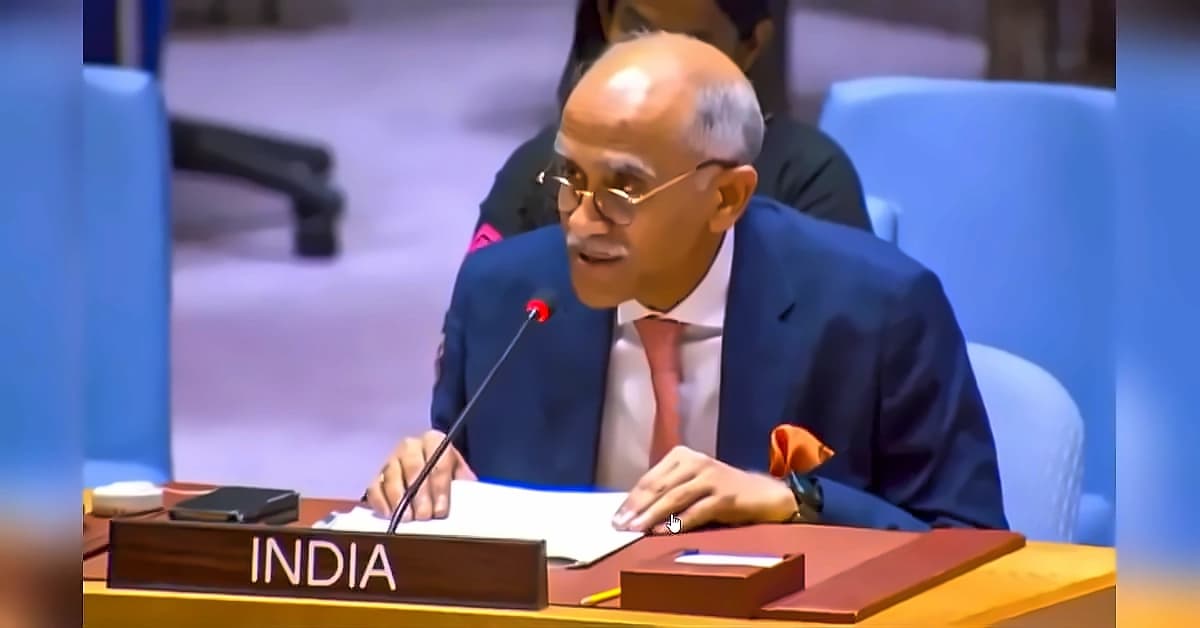
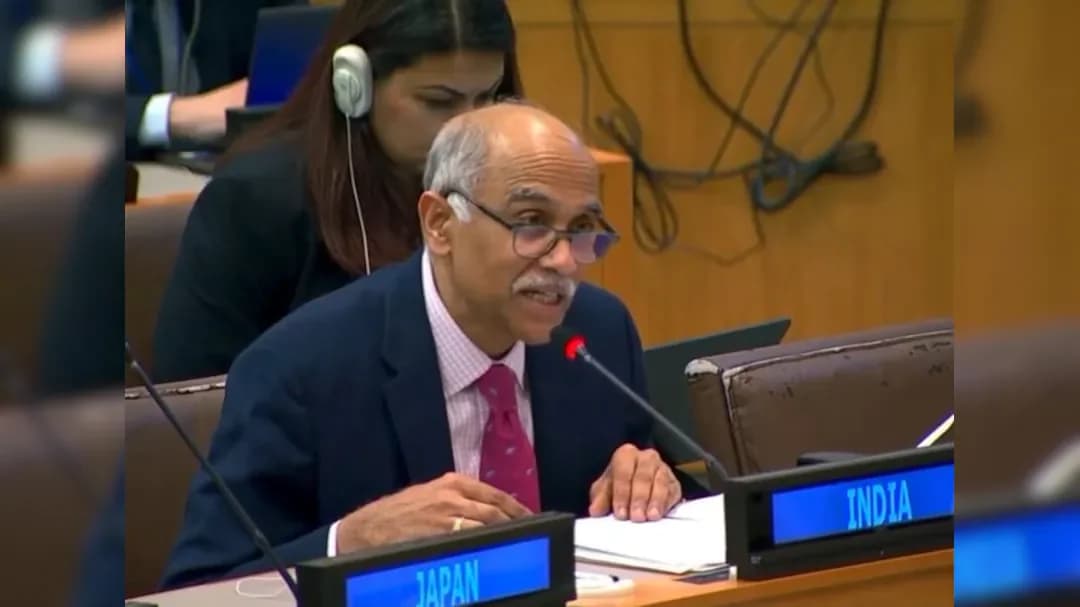
India has strongly condemned recent attacks on maritime vessels in the Strait of Hormuz, with several Indian citizens injured, including some seriously, one Indian tragically lost his life, and one is missing in these attacks. According to reports from Business Standard, Permanent Representative of India to the UN Ambassador Parvathaneni Harish addressed a UN Security Council open debate on the Situation in the Middle East Tuesday, describing the worrying escalation of hostilities in West Asia as "deeply concerning." The attacks targeted vessels including GFS Galaxy, MT Al Bahiyah and MT Mombasa during their transit through the Strait of Hormuz this month. As per Business Standard, Harish warned that "after a brief pause in the ongoing conflict in the region, there has been a worrying resumption of attacks and escalation of hostilities."
India emphasized the significant economic and security implications of the Strait of Hormuz situation, with bilateral annual trade of around ₹180 billion dollars, cumulative Foreign Direct Investment of over ₹31 billion dollars, and remittances of more than ₹52 billion dollars from Gulf Cooperation Council alone. As reported by Business Standard, Harish noted that India's trade and energy supply chains are strongly linked to the West Asia region, with around 10 million Indians living and working in the Gulf region whose safety and well-being are a key priority for the country. The UN Economic and Social Commission for Asia and the Pacific reported that daily transits, which had been above 100 before the conflict and had recovered to 49 by July 7, fell to as low as 8 to 15 by mid-July. Harish underscored that India's stakes in the security and stability of the region are high, with these linkages having direct implications for India's economy and energy security.
India called for immediate de-escalation of tensions and restoration of free navigation through international waterways in the region. According to Business Standard, Harish stated that "the targeting of commercial shipping and civilian infrastructure in the region must end, and free and unimpeded navigation and commerce through the international waterways in the region, in keeping with international law, must be restored at the earliest." The UN has noted that following attacks on commercial vessels from July 6, Iran declared the Strait of Hormuz closed again on July 11, with daily transits falling to as low as 815 by mid-July from over 100 before the conflict. India strongly advocates a return to dialogue and diplomacy in the interests of peace, security and stability in the region, with Harish emphasizing that India has consistently condemned acts of violence targeting seafarers and disrupting free and safe navigation through international waterways.
India also addressed broader regional security issues, reaffirming its commitment to the unity, sovereignty, and territorial integrity of Yemen while rejecting any interference in its internal affairs. As reported by Business Standard, Harish condemned attacks by Houthis on maritime navigation and emphasized that "the protection of the Bab al-Mandab Strait and the Southern Red Sea is a shared international responsibility and is a global interest." On Lebanon, India stressed that UN Interim Force in Lebanon (UNIFIL) peacekeepers must never become targets, with India strongly condemning all attacks on UNIFIL peacekeepers. Harish added that "it is important to be ready for a post-UNIFIL scenario, and in this context, the Lebanese Armed Forces must receive requisite support and assistance."
India also addressed the humanitarian crisis in the Gaza Strip, with Harish noting that "the loss of civilian lives and destruction of civilian infrastructure are pressing concerns that the international community must act on immediately, with a deep sense of urgency." According to Business Standard, India is firmly committed to efforts that make a tangible impact on the daily lives of Palestinians, with Delhi's development assistance amounting to around ₹175 million dollars. The country believes that "a sovereign, independent and viable State of Palestine living side by side in peace with Israel, within secure and recognised borders, is essential to a comprehensive and lasting solution." India linked the need for de-escalation in West Asia with the protection of shipping lanes, concern over the humanitarian crisis in Gaza, support for a two-state solution, and the safety of peacekeepers and civilians across the region.