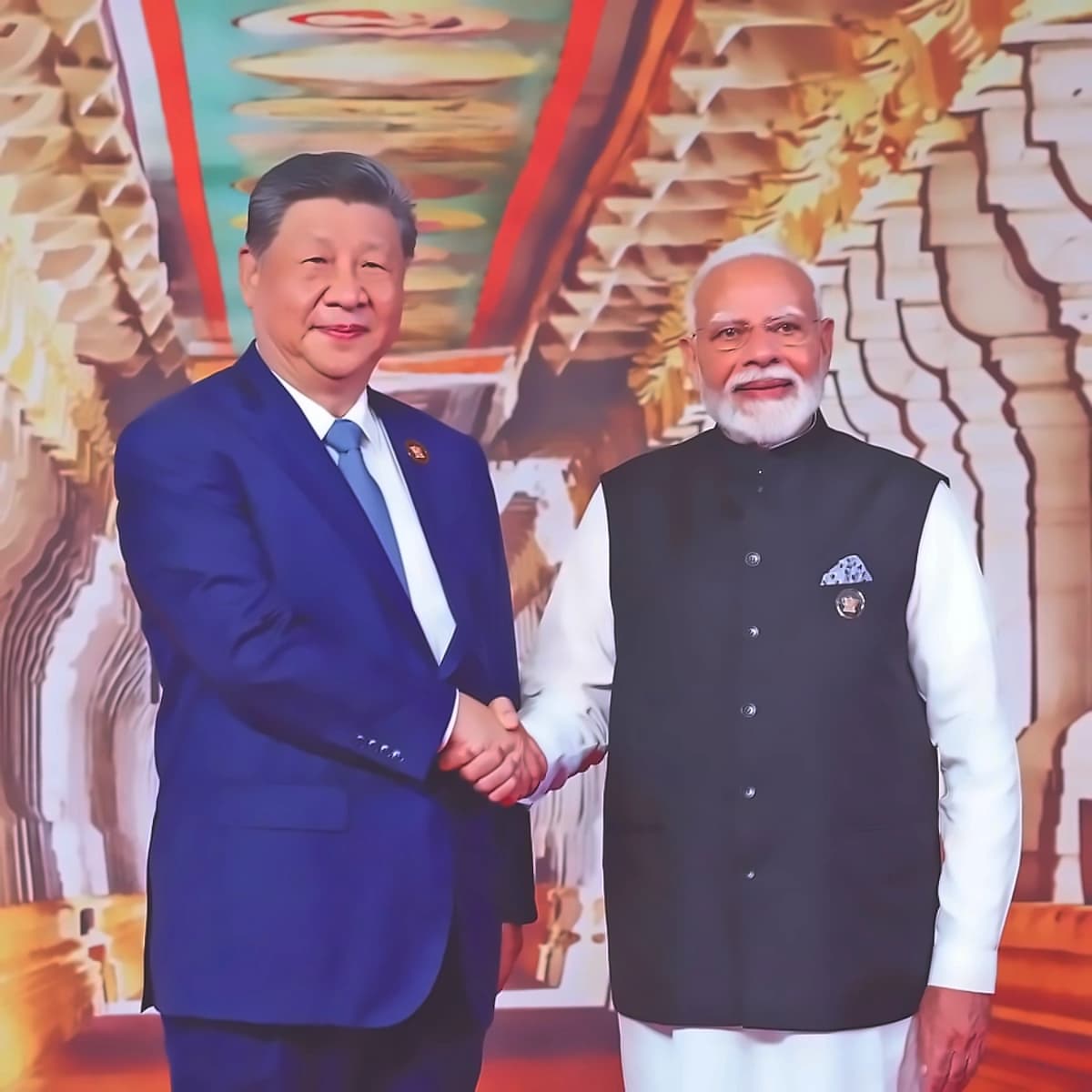
India has updated its official map of Arunachal Pradesh, giving greater prominence to strategically significant passes, lakes, settlements and a war memorial along the frontier with China, including several locations associated with the 1962 India-China war. The cartographic update comes at a significant time, with India preparing to host the BRICS Summit in New Delhi on September 12-13, where Chinese President Xi Jinping is expected to attend. The move assumes significance because the India-China boundary remains disputed even as bilateral ties enter a phase of cautious stabilisation. The revised map gives greater visibility to locations carrying both strategic and historical importance, including areas around Tawang and sites linked to the 1962 conflict, with the government stating the update aims to ensure accurate recognition of these locations and improve public awareness.
The government has added or formally identified 27 locations and geographical features in the updated map. Four mountain passes have been included: Dzo La, Riza La, Pukur La and Thag La. The inclusion of Thag La is particularly significant because of its association with the opening phase of the 1962 India-China war and its location in a strategically sensitive part of the eastern sector. The map also identifies Sambho Sarovar, a high-altitude lake, by its standard Indian name. Another 21 geographical entries have been added: Longju, Maja, Bisa, Bara Kundun, Chhota Kundun, Dhan Bari, Pritnagar, Buddhamandir, Jairampur, Teritnagar, Ramnagar, Jaswant Garh, Sagar, Padma, Jyotinagar, Baisakhi, Chhota Ropuk, Bara Ropuk, Shivaji Nagar, Sunpura and Kamlang Nagar. The Sher-e-Thapa Memorial has also been formally marked, commemorating Havildar Sher-e-Thapa and his role in India's resistance during the 1962 war. Along a contested frontier, maps are more than geographical documents - the identification and standardisation of settlements, passes and other geographical features can reinforce a country's official territorial and administrative position.
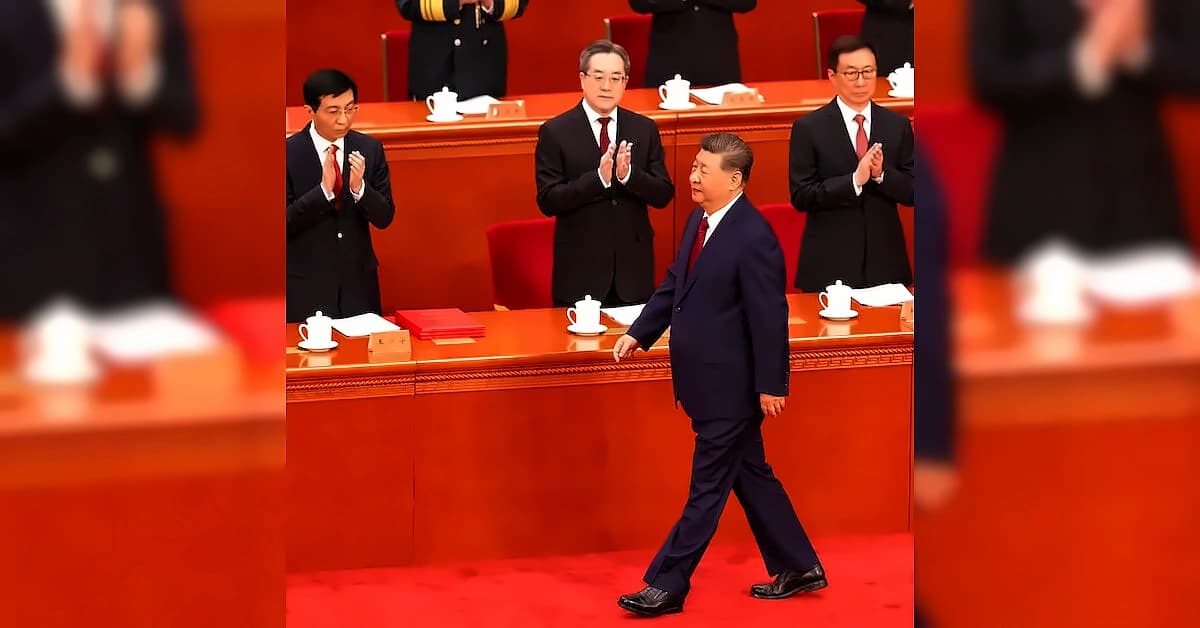
Chinese President Xi Jinping has framed the Communist Party of China's (CPC) 105-year history as the most magnificent epic in the nation's annals, organizing it into three self-perceived stages: Mao Zedong's China 'standing up', Deng Xiaoping's China 'growing prosperous', and Xi's China 'becoming strong' measured against the 2049 centenary of the People's Republic. The analysis suggests that India's China challenge is structural and civilisational, rooted in the scale of a historically hegemonic neighbour recovering from relative weakness, rather than contingent on communist rule. A counterfactual examination reveals that a Guomindang China would very likely have pressed Tibet and carried the same restorative ambition into the neighbourhood, differing perhaps in methods and achievements but not in fundamental orientation.
The absorption of Tibet remains a defining issue in India-China relations, with the People's Liberation Army crossing into eastern Tibet by October 1950 following the Seventeen-Point Agreement of May 1951 that Lhasa signed under duress. The 1962 border war, which occurred during Mao's domestic crisis after the Great Leap Forward famine, served as an external crisis to reunify the party and discredit pragmatists, while consolidating China's territorial claims and diluting Jawaharlal Nehru's Third World leadership. The analysis notes that China's approach since 1949 has been driven less by ideology than by calculations of regime security and relative power, which would have applied to a Guomindang state as well. Recent developments show that China's Ministry of Civil Affairs has released six batches of standardized names for locations in Zangnan since 2017, with a total of 112 names announced as of April 2026, covering villages, mountain passes, rivers and peaks with standardized Chinese and Tibetan names. Recent developments in Arunachal's Taksing sector have also renewed attention on Chinese claims in the region.
Despite border tensions, China and India have made significant progress in recent months toward stabilizing relations. In December 2024, China and India's representatives for boundary affairs reached a six-point consensus during talks, marking a positive development in bilateral relations. Most notably, the Nathu La Pass, which was closed for six years, officially resumed operations last week, signaling a new phase of mutually beneficial cooperation and development in cross-border trade. During a meeting between Chinese Foreign Minister Wang Yi and Indian Foreign Minister Subrahmanyam Jaishankar on July 22 in Manila, the Philippines, both sides agreed that China and India are partners rather than rivals, with their development viewed as opportunities rather than threats. The 36th meeting of the Working Mechanism for Consultation and Coordination on China-India Border Affairs (WMCC) was held on August 6 in New Delhi, where officials discussed boundary delimitation, border management, mechanism building, and cross-border cooperation, agreeing to maintain communication through diplomatic and military channels.
The analysis suggests that India's task is to respond to the China in front of it rather than the China of its fears or hopes, keeping open the possibility that shifts in relative strength and geopolitics could yet produce a more accommodative China. The report emphasizes that India's response should focus on firmness on the frontier, differentiated derisking, and steady investment in India's own comprehensive national power, while recognizing that the current difficult phase cannot be considered fixed for all time. The historical record counsels dealing with China as it actually is, its stated claims and demonstrated willingness to use force or economic leverage, rather than imagining China as either an implacable civilisational rival or a partner merely awaiting the right diplomatic gesture. As Qian Feng from Tsinghua University's National Strategy Institute noted, 'any unilateral action by India that escalates the border situation shows no point and will not serve the broader interests of bilateral relations' at a time when China-India relations are showing signs of improvement. The developments point to a calibrated Indian approach: keep the LAC stable and diplomatic channels open while continuing to reinforce New Delhi's territorial position.