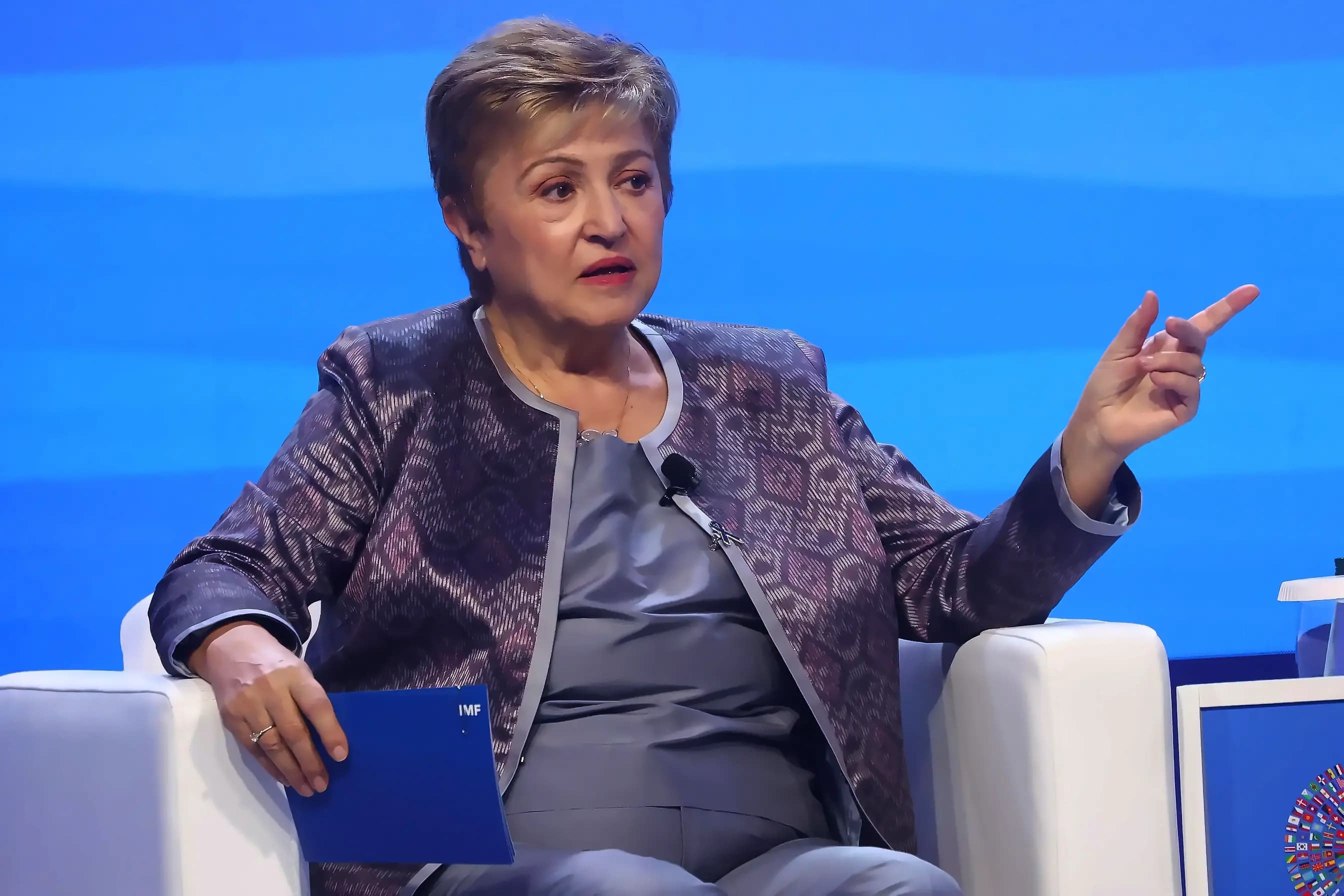
International Monetary Fund Managing Director Kristalina Georgieva has expressed serious concerns about the world's preparedness for mounting economic shocks. According to reports from Business Standard, Georgieva stated on Bloomberg's podcast that she is worried the world is not completely internalizing that shocks will continue to be frequent. She emphasized that the global economy will not reach a place where shocks are gone, requiring immediate attention to building foundations that can withstand these recurring challenges.
Georgieva, who has led the Washington-based lender since 2019, has navigated multiple major global crises including the Covid pandemic, the war in Ukraine, tariff tensions, and the current conflict in West Asia. As reported by Business Standard, the IMF maintains a lending capacity of just under $1 trillion and her role involves keeping the fund's 191 members focused on collaborative efforts for global economic stability. She described the IMF's primary strength as objective analysis in addressing these complex challenges.
One significant transformation underway is the spread of artificial intelligence and its potential impact on labor markets and local economies. According to Business Standard, Georgieva acknowledged that organizations, including the IMF, failed to recognize inequalities arising from globalization and wants to prevent similar mistakes with AI. She explained that while the world economy improved overall, many communities were hollowed out due to job displacement, and the fund must ensure this doesn't happen again with artificial intelligence adoption. The World Economic Forum's Future of Jobs Report 2025 states that technological change, economic uncertainty, geoeconomic fragmentation, demographic shifts and the green transition will together transform the global labour market by 2030, based on views of more than 1,000 large employers representing over 14 million workers across 55 economies.
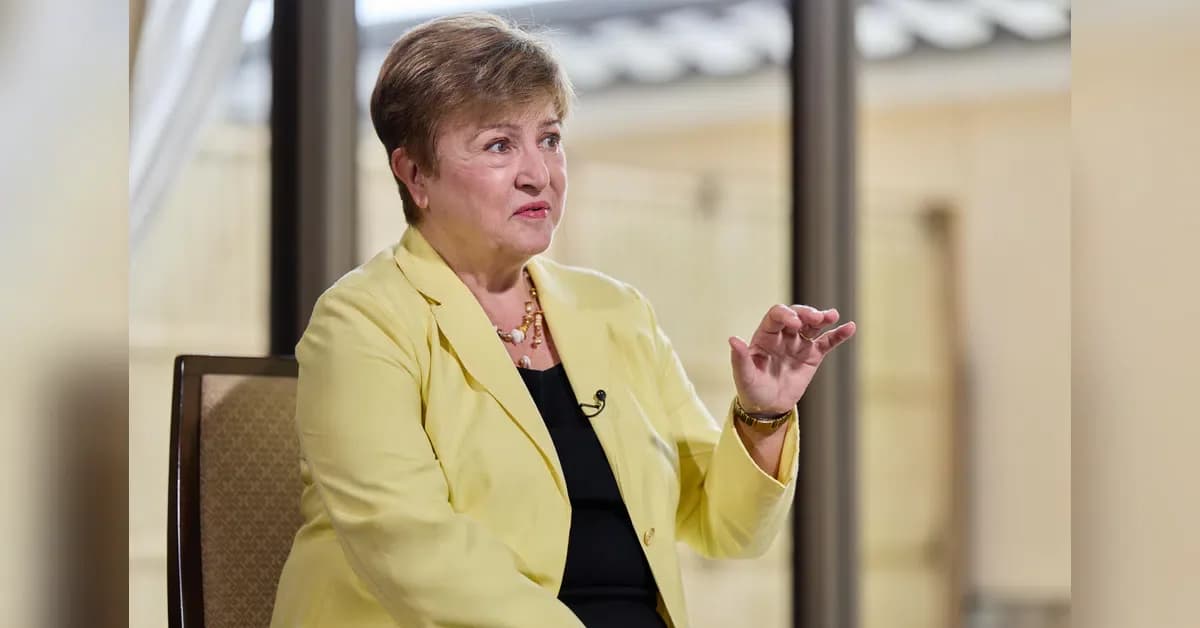
The IMF will update its global economic outlook in July 2026, following a downgrade of growth projections in April amid the West Asia conflict. As reported by Business Standard, the fund also performs annual economic revisions of member countries under its surveillance mandate. In 2024, the IMF announced it would restart its annual review of Russia's economy for the first time since the Ukraine invasion, though this plan faced backlash from European Union countries concerned about legitimizing Kremlin efforts to evade sanctions.
The IMF has maintained its support for Ukraine with $23.7 billion in financing tied to key reforms since Russia's invasion, including $15.6 billion in 2023 and $8.1 billion in 2024. According to Business Standard, the fund has been supporting Kyiv with these programs while Russia remains reluctant to provide trade data for economic assessments, with regular Article IV reviews expected to resume at some point in the future.