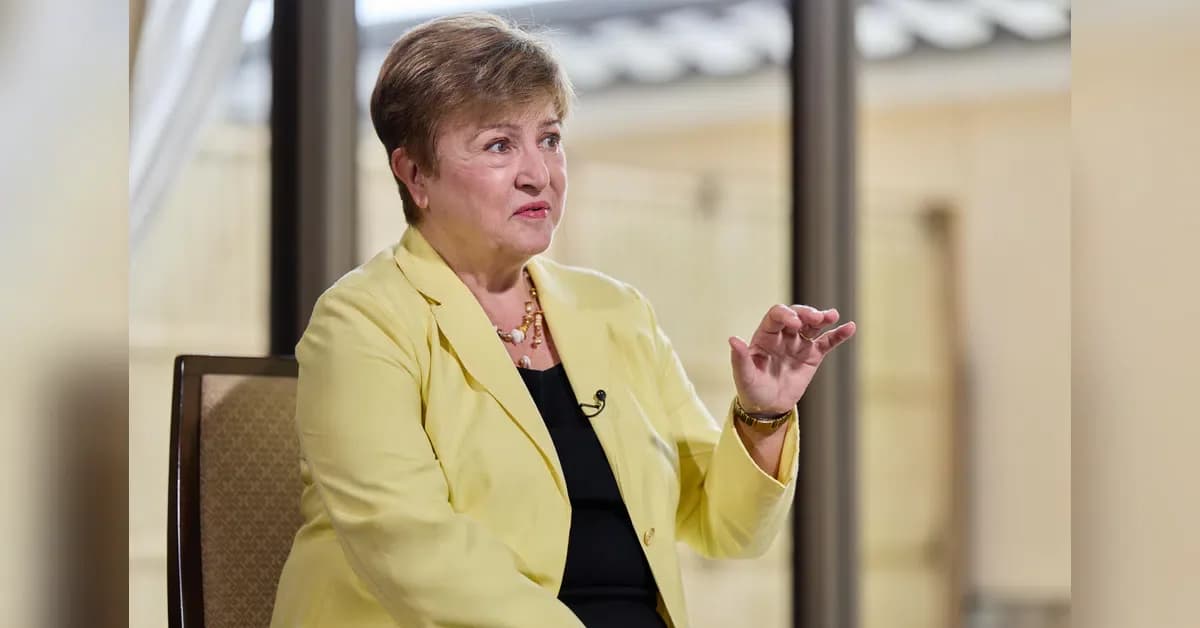
IMF Managing Director Kristalina Georgieva called for stronger safeguards and an ethical framework for artificial intelligence (AI), warning that the technology's risks could outweigh its benefits without adequate oversight. Speaking during a panel discussion at the IMF and World Bank annual meetings in Bangkok on Friday, Georgieva emphasized that "If there are no safeguards, then the risks may exceed the opportunities. And above all, we do need an ethical foundation, and I'm not sure we are there as a society." She noted that while AI was already strengthening the global economy, it could deliver negative shocks if it failed to deliver major productivity gains as quickly as hoped. The discussions come as governments and technology companies debate how to manage AI's impact on economic growth, employment, productivity and financial stability, though the IMF did not outline specific proposals from India or China for a global AI framework.
Georgieva outlined several preconditions needed for global AI benefits, including access to digital infrastructure, access to electricity and adequate regulation. She described the bigger challenge as "how to create guardrails for a technology that was evolving so rapidly, likening AI developments to Formula One race cars careening around with no barriers to protect the audience." The IMF chief stressed that certainty was needed for people everywhere to benefit from the rapidly evolving technology. Bundesbank President Joachim Nagel added that AI has the potential to increase global imbalances, citing the large investments required for AI in both hardware and software development. The stance sparked debate among financial leaders, with some U.S. officials arguing that international institutions like the IMF should focus more heavily on unlocking AI's immense growth opportunities rather than solely emphasizing downside risks.
Anthropic co-founder Jack Clark supported industry self-regulation, arguing that governments were not well-placed to regulate the constantly changing sector but should include engagement with society. Clark noted that "Yes. We need common sense standards, and that's how you ultimately give confidence in the technology and build the economy," when asked whether he favoured regulation by countries that produce AI. He welcomed a statement from Elon Musk that his firm SpaceX might bring third-party evaluators into their business, stating "That's ultimately what we think many others need to do." Clark emphasized that his company regularly tests systems, publishes test details and shares information, but doesn't believe it should be completely voluntary. Harvard economist Dani Rodrik highlighted the double-edged sword of AI productivity benefits, noting we don't know if the gains will materialize, creating potential for substantial job losses or heavy investment in data centres triggering costly financial corrections.
US Treasury Undersecretary Erin Browne argued that the IMF was too fixated on AI risks and should give more weight to opportunities for positive economic shocks, such as AI, which the US government is now calling "super intelligence." Browne told Reuters that "President Trump has been really clear on this, and he's, you know, using the term SI, and I think it's a clear priority for the US to use that term, and we think that more appropriately encapsulates the technology at hand." She said Washington was negotiating with other IMF shareholders over the wording of a statement by the fund's steering committee, the International Monetary and Financial Committee (IMFC). Browne said the IMF was too focused on risks facing the global economy and should give more weight to opportunities for positive economic shocks, such as AI, with Washington viewing the technology as a driver of productivity and economic growth and believing other countries looked to the US for leadership on standards.
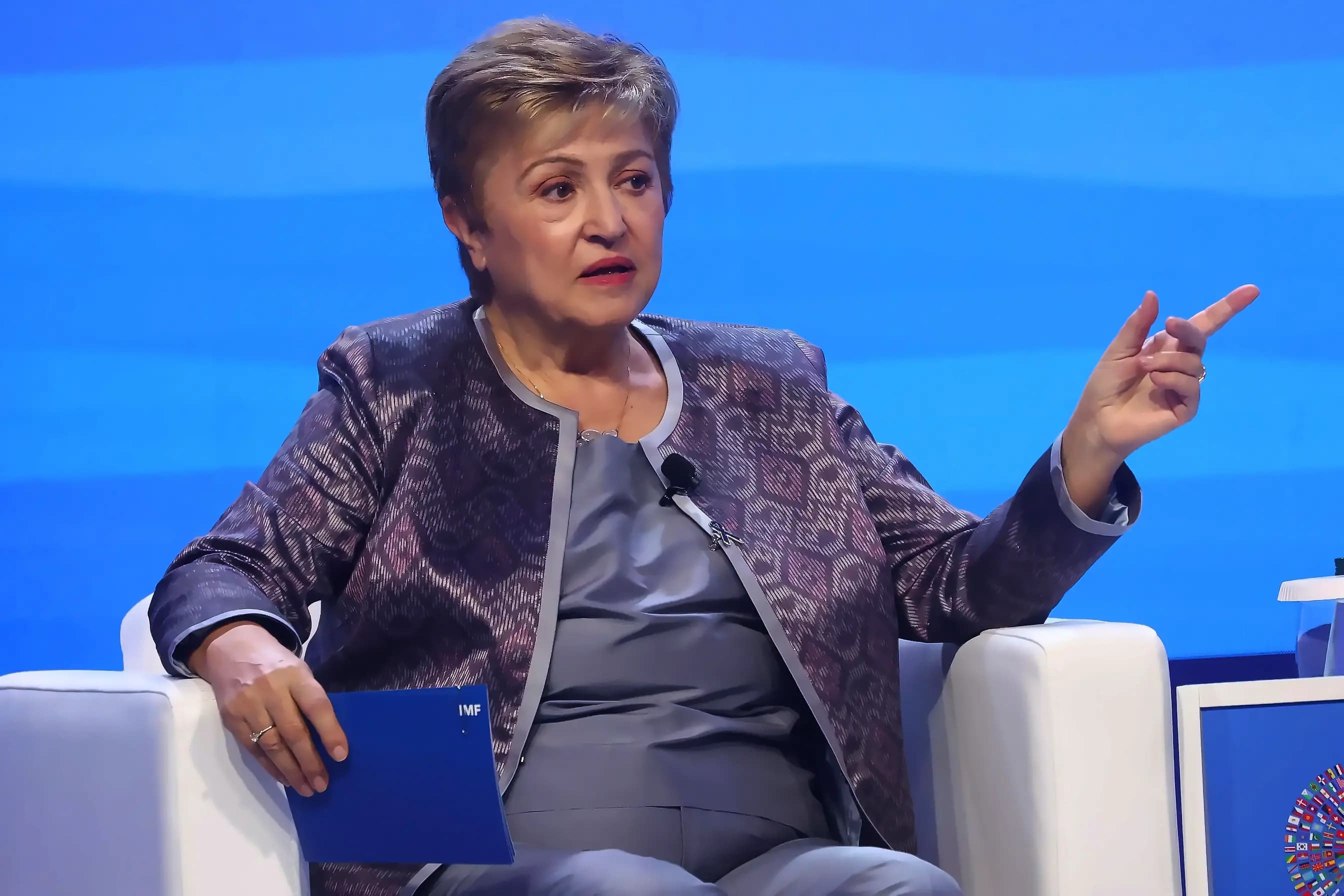
The IMF's official programme for its October 16 seminar, "AI and the Global Economy: From Risk to Opportunity," identified productivity, employment, financial stability, public policy and economic resilience as key areas for discussion. It also highlighted the need to prepare workers for an AI-driven economy, encourage innovation and ensure that the benefits reach a wider share of society. Georgieva said countries with major AI industries and those that form part of the technology's supply chain should participate in discussions on safeguards, putting India, the US and China among the economies expected to have a role in shaping the debate. Clark noted that setting standards was possible and was already starting through early policy frameworks in the European Union and voluntary commitments in the US, suggesting that coordinated international approaches are emerging to address the rapidly evolving AI landscape.