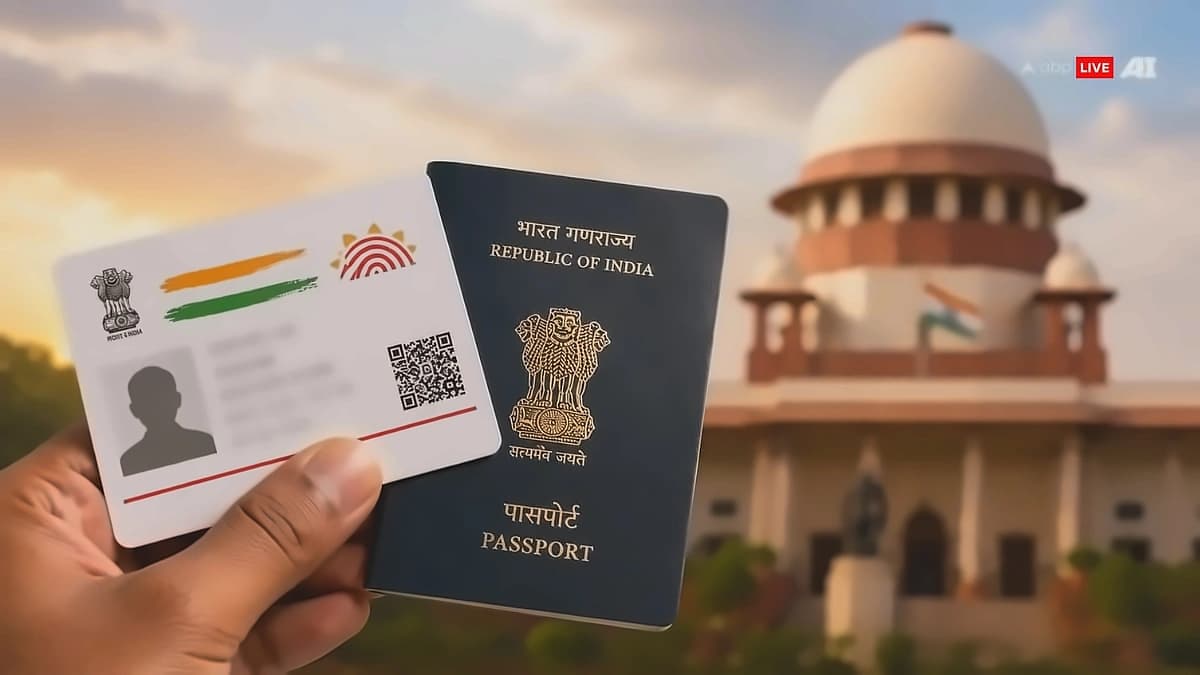
The Centre's recent clarification that an Indian passport is a travel document and not conclusive proof of citizenship has triggered widespread confusion, with many questioning how a document issued after extensive government verification can suddenly be seen differently. The Federal's Editor-in-Chief S Srinivasan described the clarification as 'bizarre' and 'confusing', stating that 'to an ordinary citizen, it looks bizarre. People will simply conclude that the government is no longer recognising the passport.' The controversy began after a Ministry of External Affairs official, responding to a question linked to the ongoing Special Intensive Revision (SIR) of electoral rolls, stated that a passport establishes identity and facilitates travel but is not, by itself, proof of citizenship. According to Srinivasan, the distinction between nationality and citizenship may exist legally, but it has little practical relevance for the overwhelming majority of Indians. While Section 20 of the Passports Act allows passports to be issued to non-citizens in exceptional cases and in public interest, he noted that such instances are exceedingly rare - applying to a minuscule fraction of people, while for 99.999 per cent of Indians, passports are issued only after rigorous scrutiny.
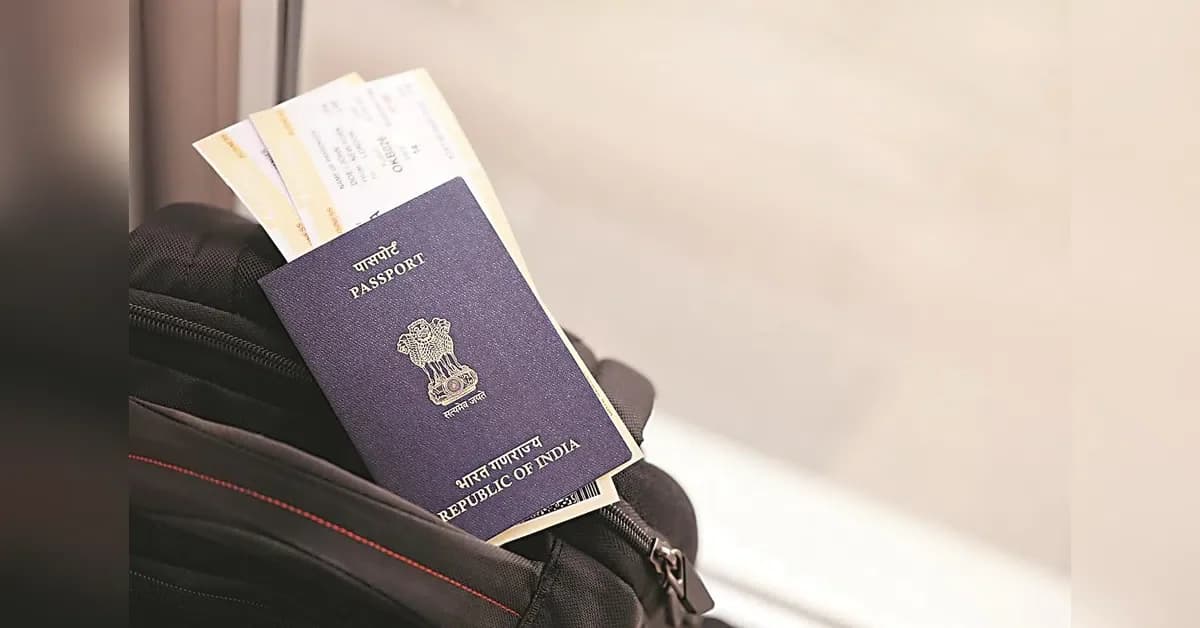
The Indian government made a stunning claim on June 24, 2026 at the 14th Passport Seva Divas, stating that the passport Indians carry is 'not a document of citizenship' - merely a travel document to cross borders, nothing more. However, The Probe's investigation reveals that the government's own official documents contradict this stance. The Ministry of Home Affairs, which administers citizenship law, lists the Indian passport as the first document on its official OCI FAQ at ociservices.gov.in under 'Evidence of Being a Citizen of India,' requiring no corroboration and stating that 'Indian Passport is given only to an Indian citizen.' A senior External Affairs Ministry official reiterated this legally precise but politically consequential distinction, emphasizing that a passport is evidence that the state accepted a claim of citizenship at the time of issuance, but it is not a legal declaration that cannot be questioned under any circumstance. The MEA's clarification appears counter-intuitive to many citizens because a passport is widely treated as strong proof of nationality in everyday contexts, but the government maintains it is not conclusive proof of citizenship in all legal scenarios.
The MEA's own passport application process reinforces the citizenship link, with Annexure E requiring applicants to solemnly declare 'I am a citizen of India by birth/descent/registration/naturalization.' Citizenship is the foundational precondition for receiving the document, and false declarations invite criminal prosecution. The MEA's Passport Manual states plainly that the passport 'provides evidence of the holder's nationality' and places this evidence 'in the same category as any other evidence of the citizenship status of an individual.' Section 5 of the Passports Act, 1967 empowers authorities to issue passports only after verifying an applicant's credentials and conducting such inquiries as deemed necessary. More importantly, Section 6(2)(a) mandates that a passport must be refused if the applicant is not a citizen of India, creating an ordinary and reasonable assumption that anyone holding an Indian passport has already been found to be a citizen by the government after due scrutiny. The same ministry that made the June 24 statement cannot claim ignorance of its own governing document.
Despite the MEA's recent clarification, court judgments such as Maneka Gandhi vs Union of India and S Nalini Srikaran vs Union of India, along with various government documents like the MEA's Passport Manual, suggest a stronger link between passports and citizenship. The MEA's Passport Manual explicitly states that passports provide evidence of nationality, placing them in the same category as other citizenship status evidence. Data on passport ownership reveals a trend: Passport-holders in India remain a small group compared to those having other government-issued documents. As of March 2025, over 99 per cent of Indians possessed Aadhaar, 68 per cent held voter IDs, 56 per cent had PAN cards, 15 per cent carried driving licences, while only 7.7 per cent held passports. Among major economies, China issued the highest number of passports in 2024, while the US's issuance rose from 18 million in 2018 to 20 million in 2024, and India's numbers grew from 11 million to 13 million in the same period. This data pattern suggests that passports remain a specialized document for travel and diplomatic purposes rather than a universal identity document for all citizens.
The timing of the government's June 24 statement coincides with the Election Commission's Special Intensive Revision of electoral rolls currently underway across 16 states and 3 Union Territories, with over 3.94 lakh Booth Level Officers going door to door verifying citizenship of crores of voters. For ordinary Indians facing citizenship questions during this exercise, the passport should have been the ultimate safeguard. However, the government's statement undermines this confidence. Election Commission officials have clarified that passport continues to be one of the 12 valid supporting documents applicants may submit during the ongoing Special Intensive Revision (SIR) to establish their eligibility for inclusion. They also stressed that a passport has never been treated as conclusive proof of citizenship on its own but as one of several supporting documents considered by the Electoral Registration Officer, who examines the overall evidence before taking a decision. The National Register of Citizens (NRC) provision under Section 14A of the Citizenship Act, inserted in 2003, has sat on the books for 22 years and has never been operationalised outside Assam, with the government placing the burden of proving citizenship on every individual Indian while refusing to create the required documentation. The real issue is not the passport; it's the system around it, as India's civil registration architecture evolved unevenly over decades, with birth records remaining incomplete or inconsistent in many parts of the country.