Global demand for electric vehicles demonstrated sustained momentum in May, marking the third consecutive month of growth according to data from consultancy Benchmark Mineral Intelligence. Registrations of new battery-electric vehicles and plug-in hybrid electric vehicles rose 3% from a year earlier to around 1.8 million units in May, representing a proxy for sales. This continued growth pattern has pushed the total registrations 0.9% higher than last year for the first five months of the year, as reported by Reuters. The sustained growth reflects the ongoing transition away from combustion-engine cars, driven by subsidies and high petrol prices that continue to accelerate the shift toward electric mobility.
Europe emerged as the primary driver of global EV growth, with registrations climbing 23% to about 415,000 units in May according to BMI data manager Charles Lester. As reported by Reuters, this surge was attributed to government subsidies and high petrol prices that have been pulling forward purchases. 'Europe really is the driving factor towards this growth at the moment,' Lester stated, highlighting the region's significant contribution to the global EV transition. The strong European performance continues to be a key factor in the global EV market's sustained growth trajectory.
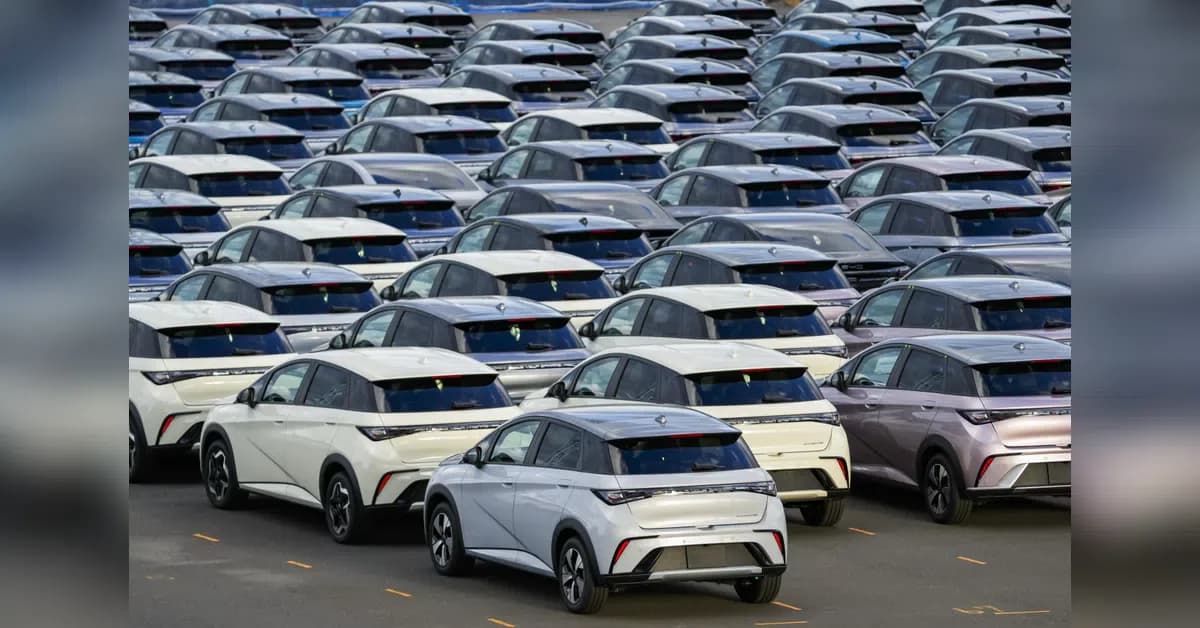
The global EV landscape showed stark regional variations in May performance. China experienced a 9% decline in registrations to roughly 987,000 vehicles following the withdrawal of auto trade-in support and expiration of electric vehicle tax breaks in early 2026, as reported by Reuters. In North America, sales dropped 26% to around 123,000 units due to the end of U.S. tax credit schemes and proposals by the Trump administration to ease carbon dioxide emissions rules. The pivot in the U.S. has been toward producing internal combustion engines and hybrid electric vehicles, reflecting changing policy priorities and consumer preferences in different markets.
The uneven global performance has prompted significant strategic adjustments among automotive manufacturers. More and more Chinese OEMs have looked to expand further into the global market following weaker domestic sales, according to BMI. Lester noted that 'the trend that we've been seeing over the last couple of months is joint ventures and the potential for Chinese OEMs to produce in underutilised capacity in Europe.' Additionally, Canada's move to open its market to some Chinese OEMs will not be enough to significantly shift the trajectory of the North American EV market, as reported by Reuters. These strategic pivots reflect the global automotive industry's adaptation to varying market conditions and policy environments across different regions.