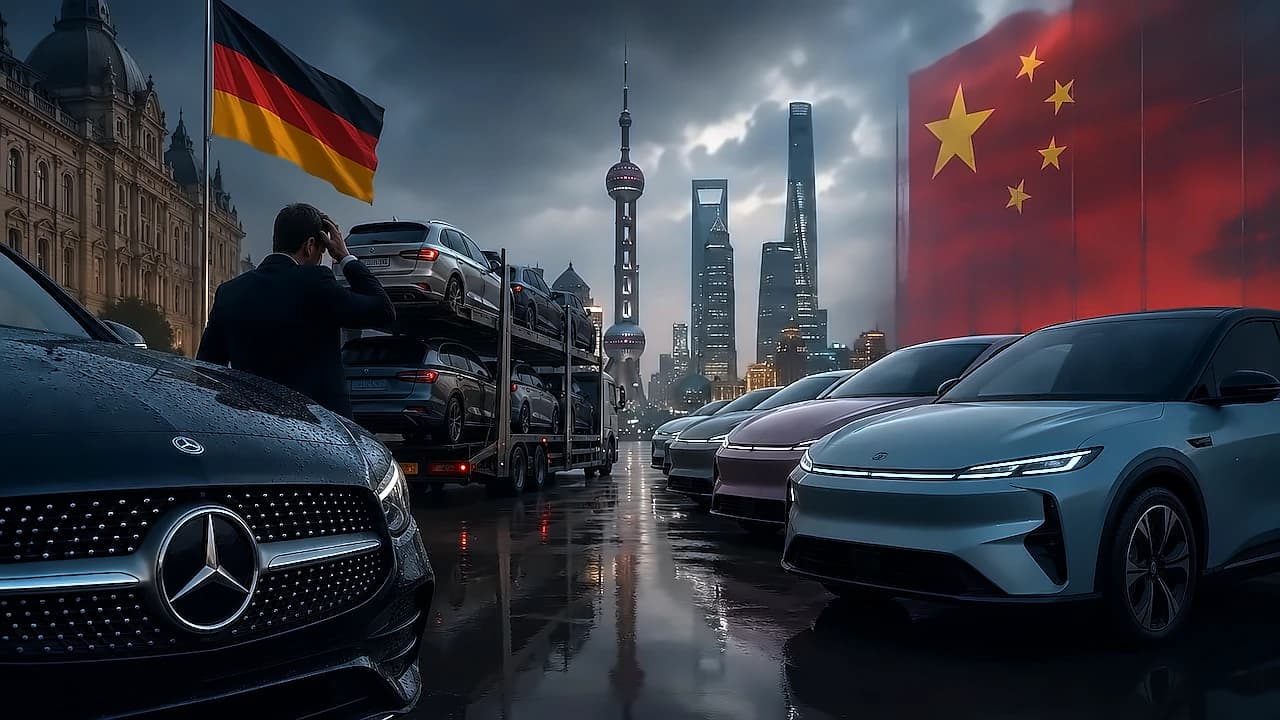
Chinese automakers are experiencing unprecedented global growth as soaring fuel prices drive electric vehicle adoption worldwide. According to Associated Press, global exports of Chinese EVs hit a record $9.4 billion in April, with shipments surging to countries including Australia, Brazil, and regions across Southeast Asia and East Africa. China exported about 435,000 passenger EVs and plug-in hybrids in May, more than double from a year earlier, according to the Chinese Association of Automobile Manufacturers. The surge is particularly pronounced in developing markets, with Africa importing around 44,000 Chinese EVs in 2025, a 130% jump from the year before, as reported by Chinese Commerce Ministry data. One in four new cars sold worldwide last year were electric, with global electric car sales expected to grow further in 2026 and reach 23 million units, making up nearly 30% of all cars sold worldwide.
Chinese automakers achieved a historic milestone in European automotive markets, capturing 11% of new vehicle sales in May according to analysts at Dataforce. This represents the first time Chinese cars have made up more than one in ten new purchases in Europe, as reported by Business Standard. The breakthrough was primarily driven by hybrid and plug-in hybrid vehicles, with Chinese manufacturers capturing nearly a quarter of all new hybrid car sales during the month. As Bloomberg reports, Chinese carmakers "recognized early that European consumers were not ready to go fully electric and adapted their portfolios accordingly — faster than most Western incumbents." Chinese automakers supplied around 60% of electric cars sold globally, according to the IEA, with companies like Geely Auto planning to "accelerate overseas expansion" in the next five years.
Chinese carmakers have strategically positioned themselves to serve European consumers seeking value-oriented vehicles. As reported by Dataforce analyst Julian Litzinger, Chinese brands offer consumers significantly more car for their money compared to Western competitors. The most successful models include the MG S9 sport utility vehicle, which offers buyers savings and superior horsepower compared to established European brands like the VW Tayron, while maintaining quality standards. According to Bloomberg, "The most powerful driver, however, is value: Chinese brands offer consumers significantly more car for their money." This value proposition is particularly attractive as fuel costs rise, with drivers switching to EVs to save money while governments from Laos to Ethiopia embrace electrification to curb oil imports.
Despite the surge in EV imports, charging infrastructure remains a critical bottleneck across developing markets. Thailand has around 4,600 public charging locations to serve more than 424,000 battery EVs and plug-in hybrids, according to the Electric Vehicle Association of Thailand, representing approximately one charger for every 92 vehicles. The country currently has roughly 12,000 public chargers, as reported by the IEA. In Malaysia, public fast chargers were up more than 70% in 2025 after the government rolled out incentives, while Indonesia has more than 4,500 public charging stations set up by state-owned power utility PLN. "When a nation lacks sufficient charging infrastructure and EV fleet size, it is a 'classic chicken-and-egg problem' regarding what comes first," said Paul Gong, head of UBS bank's China automotive industry research. Governments and state-owned utilities in Africa are taking a leading role in building charging networks, a model analysts say could help other emerging markets accelerate the shift away from fossil fuels.

Chinese brands have demonstrated exceptional growth in key European markets, particularly in the UK where they achieved above 16% market share in May. As reported by Business Standard, the Chery Automobile Co.'s Jaecoo 7 SUV became Britain's fourth best-selling model, helping drive Chinese carmakers' overall performance. In Germany, MG and BYD recorded average gains of between 50% and 75% since the government's subsidy program launch, according to VAD car dealership surveys. The success comes as global automobile demand declined by around 5% between January and May, while Kia Corp. managed to grow by more than 4% during the same period, lifting the company's global market share above 4%. In Vietnam, automaker VinFast logged stronger sales with demand from Southeast Asia helping drive a 42% year-on-year increase in the company's January-March quarterly revenue.
China's new energy vehicle market is experiencing unprecedented growth, with NEV retail penetration reaching a record 62.9% in May, according to the China Passenger Car Association. Battery electric vehicles dominated this growth, contributing 67.1% of NEV retail sales as consumers accelerate their shift toward pure-electric models. Nio founder William Li projects that BEV models will make up over 90% of China's NEV market by 2030, based on rapid advancements in charging infrastructure, battery technology, and full-stack vehicle development. Despite this optimism, the broader NEV market faces near-term challenges, with retail sales declining 7.5% year-on-year to 950,000 units in May, marking the fifth consecutive monthly decline.