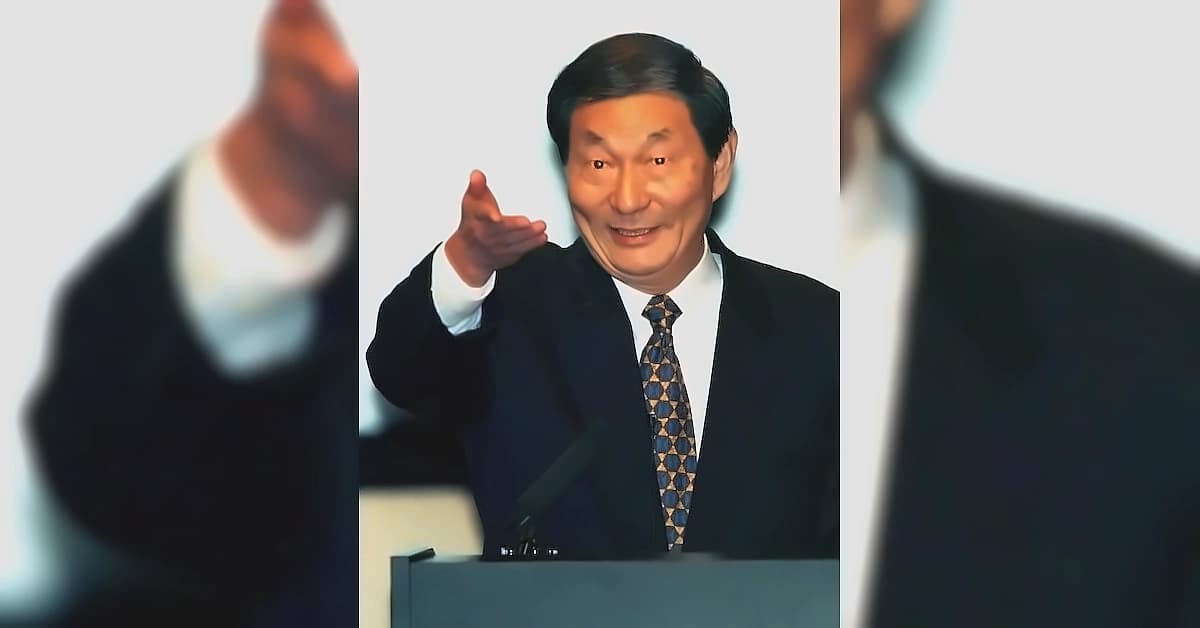
Zhu Rongji, the former Chinese premier who played a pivotal role in guiding his country toward a market-based economy in the 1990s, died on Wednesday in Beijing at the age of 97. According to Associated Press, Zhu died at around 11 a.m. on Wednesday, as reported by the official news agency Xinhua. A young Communist star in the 1950s, Zhu was expelled from the party in one of Mao Zedong's ideological purification campaigns and spent 22 years in obscurity, including five years as a farm labourer during the Cultural Revolution. Politically rehabilitated after Mao's death in 1976, he soared to the top levels of government under Jiang Zemin's leadership. Despite staying almost completely out of the public eye after retiring from the premiership in 2003, he remains both loved and reviled in the country indelibly shaped by him. Zhu was married to Lao An, a fellow Hunan native, and their son, Yunlai (known as Levin Zhu), is a former CEO of China International Capital Corp., while their daughter Yanlai led a charity organization supporting schoolchildren that was backed by Zhu Rongji.
As reported by Associated Press, Zhu was renowned for far-reaching economic reforms throughout the 1990s that sought to transition China from the chaos of its post-Maoist years to a more global market-oriented financial system, without completely ceding the Communist Party's control over the economy. His initiatives propelled rapid growth in China that lasted until the housing market began to crash in 2021. According to Associated Press, Zhu launched China's boom in 1998 with an initiative to sell apartments owned by state companies, with families rushing to buy and within a decade the majority of urban housing was privately owned. His measures also set the stage for China's recent problems with excessive debt and its huge trade surpluses, which have led to trade wars with the United States during President Trump's terms in office. Zhu's campaign to secure WTO membership nearly derailed when he went to Washington in 1999 with market-opening concessions to win U.S. endorsement, but the Clinton administration rejected the offer as inadequate, while his political enemies at home accused him of offering too much - but Zhu survived and China went on to join the body in December 2001. The ruling Communist Party's official obituary hailed Zhu's role during a "crucial stage" when the country was "transitioning from a planned economy to a socialist market economy".
According to Associated Press, Zhu's negotiations with Western countries secured China's place in the World Trade Organization (WTO). The 6 1/2-year process allowed Zhu to show off his flinty personality, striking U.S. officials as inquisitive and flexible. Kenneth Lieberthal, a China expert who was national security adviser for then-President Bill Clinton, described the negotiations as 'a lot of give and take' rather than talking points. In order to join the WTO, China first needed to get preferential trading status with the United States — which in turn demanded hard concessions and that it open up its closed economy to American companies. Zhu was under huge pressure to find compromise, and he let his views be known. In 2000, the U.S. Senate voted to give China that preferential trading status, and the following year, China joined the WTO. The agreement was a windfall for the nascent Chinese economy, with the country becoming an export powerhouse and foreign businesses rushing to China to establish a foothold. Joining the WTO was a watershed moment in China's integration into the world economy, opening the country up to more global trade and investment that spurred unprecedented growth in years to come.
As reported by Associated Press, Zhu oversaw many domestic policies aimed at making China more efficient and competitive as vice premier and then premier. The two most important policies involved the privatisation of thousands of inefficient state-owned enterprises and a far-reaching tax overhaul. Zhu was born on October 23, 1928, in Changsha, the capital of Hunan Province in southern China, and was orphaned as a small child before being raised by two of his father's older brothers. He excelled in school and passed the rigorous entrance exam to the elite Tsinghua University, where he studied electrical engineering, before joining the Communist Party in 1949. As central bank governor, Zhu successfully tamed runaway inflation, while as vice premier, he led a dramatic centralization of the tax system that incentivized land sales and huge wealth creation, along with hugely unsustainable levels of debt. After being appointed premier in 1998, he entered office with a bold promise: He would reform the indebted state banks within two years and inefficient state enterprises within three. Unlike most Communist leaders, who read off staid and carefully prepared scripts, Zhu loved engaging with and ad-libbing to the press - as Rose Luqiu, a former journalist for Hong Kong outlet Phoenix News who spent 10 years covering Zhu during his international state visits, remembered: "He loved answering all the questions, no matter how tough or sensitive."
According to Associated Press, Zhu's most controversial legacy by far remains restructuring China's bloated state-owned enterprises, where he axed smaller, inefficient companies, leaving an estimated 40 million state workers suddenly jobless. Worker protests erupted all over China, with Dorothy Solinger, a professor emeritus of political science at the University of California, Irvine, noting that the central government decided that the laid-off worker problem could just be ignored and forgotten. Zhu had the willpower — or callousness, as his critics would say — to ignore them. He tried to offset the layoffs' impacts by creating a basic social welfare system that exists to this day and making steps to boost basic health care, which had crumbled in rural areas. However, pockets of China, especially in the northeast region of the country, where workers were reliant on state employment in heavy industry sectors, never fully recovered economically. "Their children also have a problem because they miss out on the things that the better-off part of the population could do, such as hiring tutors or going on extracurricular activities, going to the better schools," said Solinger. "It's a growing underclass." Zhu's efforts to reduce bad debt at China's state banks and reform the pension system floundered, as he never managed to cultivate the political patronage networks that would have allowed him to overcome fierce opposition within party ranks to his proposals. Zhu's uncompromising approach, tough pragmatism and firm stance against corruption earned him admirers as well as enemies in the party – and the nickname the "iron-fisted premier".