U.S. stock markets settled mixed on Tuesday following the release of April inflation data that exceeded expectations. The S&P 500 closed down 0.16%, the Dow Jones Industrial Average gained 0.11%, and the Nasdaq 100 fell 0.87%, as reported by MarketWatch. The 10-year Treasury yield rose 5 basis points to 4.46%, reflecting investor concerns about accelerating inflation pressures. June E-mini S&P futures fell 0.16% and June E-mini Nasdaq futures dropped 0.90%, indicating continued market uncertainty. The mixed performance came after Monday's rally that pushed the S&P 500 and Nasdaq 100 to new record highs, with technology stocks leading the decline. Treasury's $42 billion auction of 10-year notes had a bid-to-cover ratio of 2.40, below the 10-auction average of 2.49, adding pressure to bond markets.
Chicago Federal Reserve President Austan Goolsbee expressed significant concerns over the latest U.S. inflation data, stating that rising price pressures in the services sector were particularly troubling. Speaking at an event hosted by the Greater Rockford Chamber of Commerce in Illinois, Goolsbee noted that the April inflation report was more disappointing than expected, with the increase not limited to energy or tariff-related categories. Data released by the U.S. Bureau of Labor Statistics showed consumer inflation rose 3.8% in April from a year earlier, marking the sharpest annual increase in three years and stronger than the 3.7% y/y expected. As per Ainvest News, Goolsbee emphasized that the worst part of April's CPI is services inflation, highlighting this as a key concern for policymakers. The monthly CPI increased 0.6% in April, following a 0.9% rise in March, according to the latest BLS report. April core CPI rose 2.8% year-over-year, stronger than expectations of 2.7% and marking the largest increase in six months, as reported by MarketWatch.
As reported by Reuters, Goolsbee pointed to persistent inflation in services as a key concern for policymakers. The Fed President noted that inflation remains sticky despite a stable labour market, reinforcing caution among policymakers as the Federal Reserve continues to assess its rate path amid mixed economic signals. The current situation presents what Goolsbee described as not a difficult balancing act between employment and inflation because the job market is not deteriorating, whereas inflation is clearly worsening in the near term. According to Reuters, he emphasized that the labour market remains broadly stable, while inflationary pressures are strengthening. In his latest comments, Goolsbee stated that "the Fed has got to be thinking about how do we break the chain of escalating inflation," as reported by MarketWatch.
The latest BLS data reveals that energy costs surged 3.8% in April, accounting for over forty percent of the monthly all items increase, as reported by Reuters. The shelter index also increased 0.6% during the month, while food prices rose 0.5% with both food at home and food away from home contributing to the overall increase. Excluding food and energy, core CPI increased 0.4% for the month, indicating that while inflation remains well above the Federal Reserve's 2% goal, the core inflation trend shows some moderation compared to the overall headline figures. WTI crude oil prices rose more than 4% on Tuesday, as President Trump cast doubt over the ceasefire with Iran, saying the truce was on "massive life support," prolonging the closure of the Strait of Hormuz. The strait remains essentially closed, as about a fifth of the world's oil and liquefied natural gas transits through the strait. Goldman Sachs estimates that the current disruption has drawn down nearly 500 million barrels from global crude stockpiles, with the drawdown potentially reaching 1 billion barrels by June.
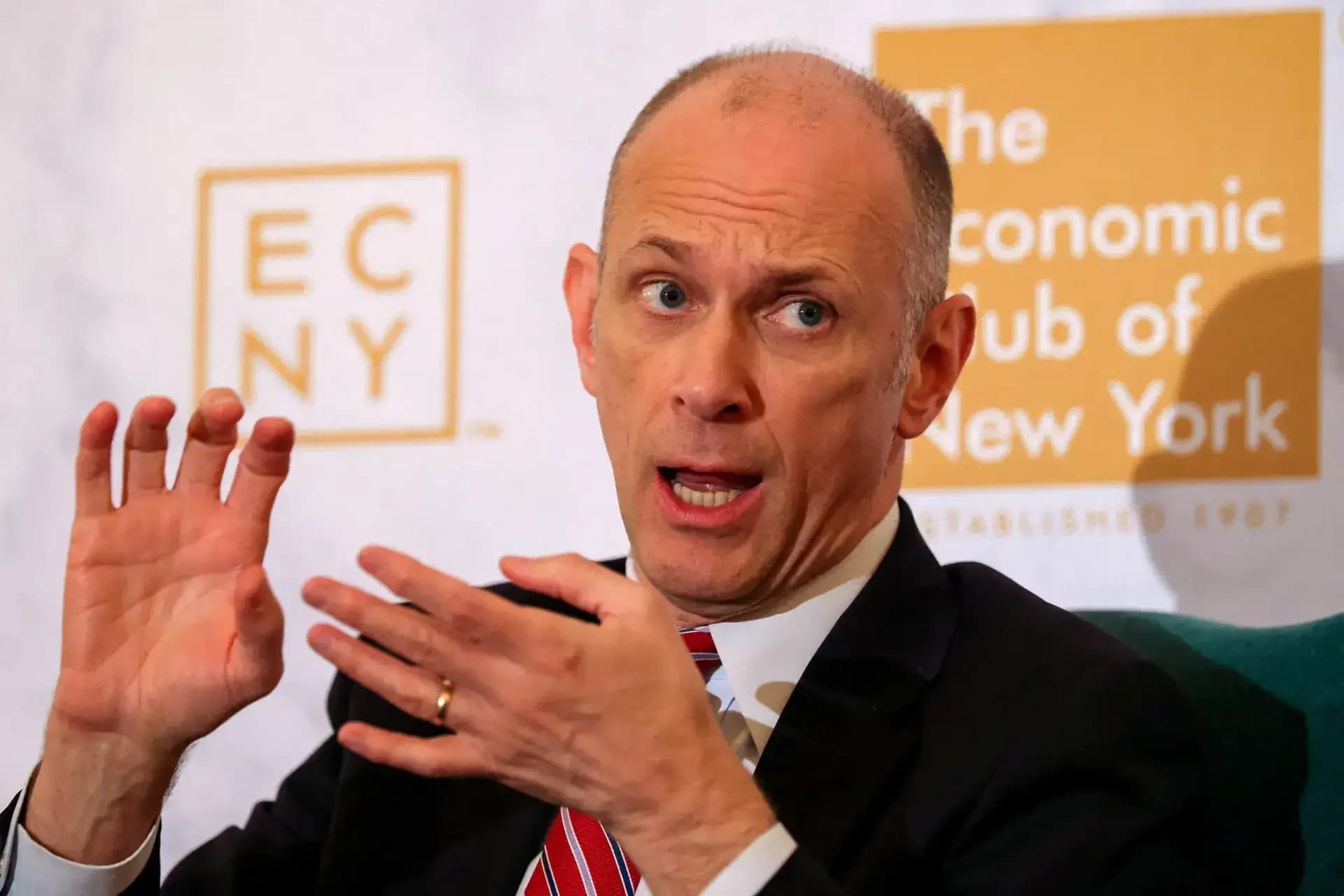
According to Reuters, the comments come after the Federal Reserve decided in April to keep short-term interest rates unchanged in the 3.5%-3.75% range. Goolsbee dissented from the policy statement issued after the meeting, objecting to language he believed signalled an unwarranted inclination towards future rate cuts. The figures have reinforced concerns within the Federal Reserve about the pace of disinflation in the U.S. economy, as reported by Reuters. The persistent services inflation adds another layer of complexity to the Fed's policy considerations, particularly given the sticky nature of these price pressures and the significant contribution of energy costs to overall inflation. Markets are discounting a 4% chance of a -25 basis point FOMC rate cut at the next FOMC meeting on June 16-17, as reported by MarketWatch. The ongoing Middle East tensions between the U.S. and Iran are also contributing to market volatility, with President Trump's comments about Iran's peace proposal response adding to geopolitical uncertainty.