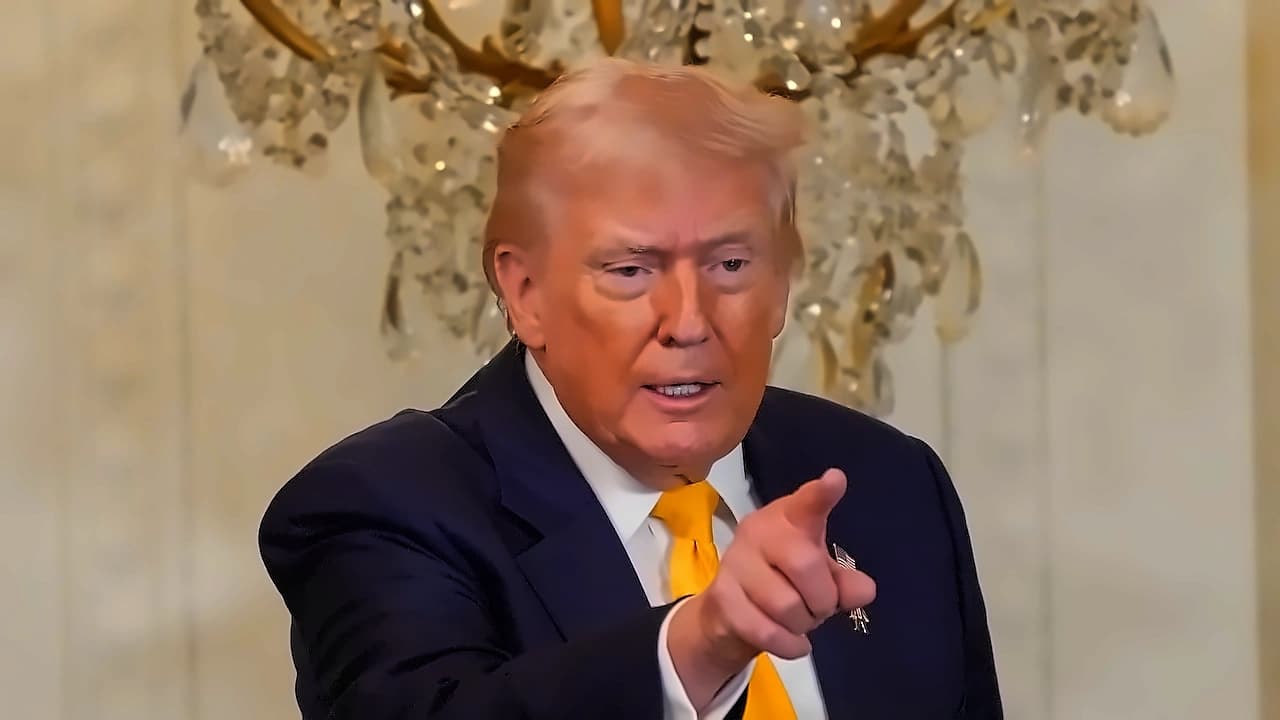
President Trump has escalated pressure on the Federal Reserve, demanding the US maintain the world's lowest interest rates just days before the central bank's critical policy meeting. Speaking to reporters at the Irish Open golf tournament, Trump said "No country should have lower interest rates than the US" and that "we should be paying the lowest interest rate in the world" regardless of inflation data. The president, who recently posted on social media "LOWER THE RATE OR I'LL STOP TRADING WITH COUNTRIES WITH WHICH WE HAVE A DEFICIT," has now reiterated this threat, stating "We don't want to have deficits with nations. We want to have surpluses or at least break-evens." Trump's demands come as the Labor Department's Consumer Price Index posted its largest increase in four months on Friday, reinforcing expectations that the Fed will raise rates at Wednesday's meeting. Trump's approval ratings have fallen as inflation has persisted, with the president arguing that "I know more about formulas than anybody, and with the best credit in the world, we make other countries rich."
The Federal Reserve is now locked into a rate hike at its September 16 meeting following hot inflation data, with CME FedWatch odds jumping to 86.9% from 72% yesterday, up from as low as 40% within the past two weeks. According to market analysis, political realities may force the Fed to hike in September despite the upcoming November midterm elections. The Cleveland Fed Nowcast provides the fundamental backdrop for a rate hike, with the only measure that remotely supports a pause being core CPI, but after being reliant on PCE for decades, that would be quite the switch. Former Chair Jay Powell is thrust into the role of ultimate swing vote in a rigid 5-5 gridlock, with historically Powell fiercely defending committee cohesion and never dissenting against a sitting Chair. The final hurdle is purely political and institutional, as delaying a mathematically justified hike to appease politicians would represent the ultimate failure of institutional independence. Market analysts note that Trump's midterm pressure campaign is one of the few forces still blocking a hike, despite hike odds going over 850 as of last week's inflation print.
Financial markets are betting heavily that Fed policymakers will lift their benchmark rate by a quarter of a percentage point to a 3.75-4% range and signal further tightening ahead, with markets seeing an 85% chance of a quarter-point increase as hotter inflation and oil above $100 test Fed Chair Kevin Warsh's stance on rates and forward guidance. The US central bank will announce its policy decision at 1800 GMT on Wednesday, following the end of a two-day meeting. Such a decision could land Warsh, who has run the Fed's rate-setting committee since starting the job in May, in a tight spot, as US President Donald Trump picked Warsh with the explicit expectation that he would cut interest rates, but so far has not blamed him for failing to deliver. It's not clear how the president would react to a rate hike so soon before the November elections, in which Trump's Republican Party is defending slim majorities in Congress. A decision to raise rates, especially if accompanied by policymaker projections for another increase this year, as some analysts now expect, could also force Warsh into delivering at least a bit of a steer on the rate path and his own expectations for the economy.
Energy prices were among the biggest contributors to August's CPI increase, with gasoline prices rising 3.9% during the month, accounting for more than one-third of the overall increase in consumer prices. The broader energy index rose 2.1% in August and was up 16.3% from a year earlier. US National Economic Council Director Kevin Hassett flagged diesel prices as a major concern for the US economy, highlighting the pressure from higher refined fuel prices. Coupled with oil prices that have soared above $100 a barrel amid renewed hostilities in West Asia, the latest data will not add to confidence that underlying inflation is moving towards 2% "clearly and at sufficient speed," as Warsh told global central bankers in Jackson Hole, Wyoming, last month. US consumer price inflation, excluding energy and food, rose 0.3% last month from the previous month, far more than is consistent with inflation at the Fed's 2% goal. Price pressures remain elevated as the economy deals with Trump's import tax increases and surging energy prices tied to the Iran war.
Federal Reserve Chair Kevin Warsh faces his first major test next week as markets bet on a rate hike while President Trump pressures the central bank to cut borrowing costs. The dilemma has become sharper after back-to-back inflation readings pointed to renewed price pressures. At Jackson Hole last month, Warsh clearly articulated that policymakers should be confident that underlying inflation was moving towards the central bank's 2% target; otherwise, they had "work to do." Friday's inflation data makes that promise harder to ignore, with "This is the test. This is what comes with that job, and now he has to decide how to handle it" according to David Wessel, senior fellow at the Brookings Institution. The pressure from the White House has been equally direct, with Trump posting on social media: "LOWER THE RATE OR I'LL STOP TRADING WITH COUNTRIES WITH WHICH WE HAVE A DEFICIT." That puts Warsh in an uncomfortable position, as cutting rates amid sticky inflation data will undermine the Fed's credibility, while hiking rates could intensify Trump's criticism against the central bank. Trump "will defend the independence of Kevin Warsh above all" no matter what the Fed does with interest rates, according to National Economic Council Director Kevin Hassett, though Hassett also noted that "if the Fed raises rates, I'm sure he's not going to be super happy about it." Whether the Fed hikes Wednesday may depend less on Trump's demands than on Warsh's political room to maneuver, as the ultimate decision may rest on the Fed's institutional independence and the chair's ability to navigate between political pressure and economic reality.
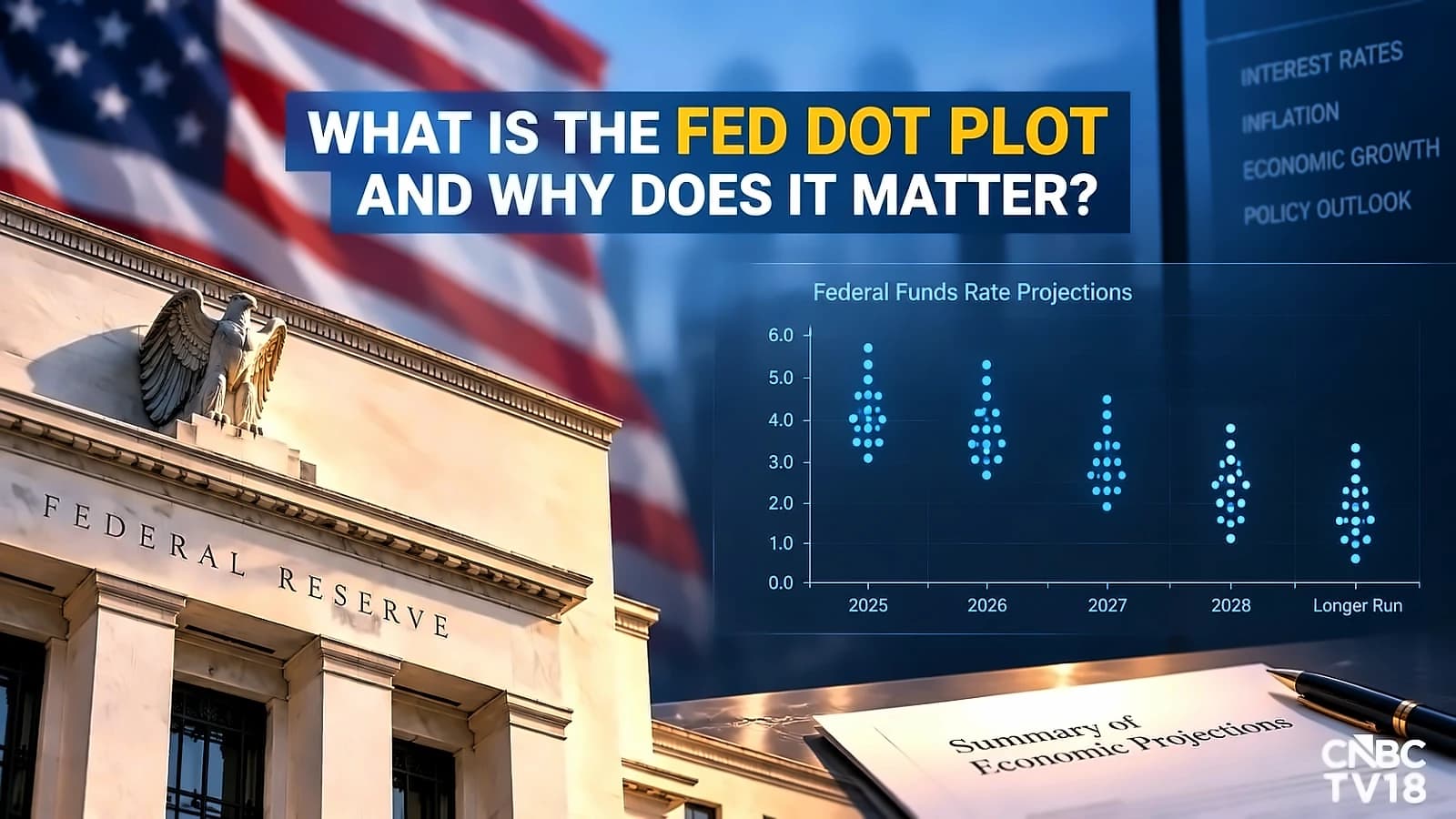
According to LPL Research analysis, initial Fed rate hikes have generally been well tolerated by the stock market over the past 30 years. During six tightening cycles since 1994, stocks typically struggled during the first several months following the initial rate increase, with average returns being negative through the first four months before improving significantly by five to six months after the initial hike. The analysis shows that while early challenges have not typically translated into longer-term losses, markets have historically faced temporary volatility before recovering. As reported by LPL Research, the average 12-month gain for the S&P 500 post-hike is 6.7% with a median of 10.7%, with the median statistic important due to the 42% gain in the S&P 500 after the initial rate hike in March 1997 during the dot-com boom. Policymakers on Wednesday will also release updated projections for economic growth, inflation and the outlook for rates, with the week's US data docket including retail sales expected to rebound in August, as well as fresh figures on housing starts and industrial production.
Inflation data shows headline CPI rose just 0.1% month-over-month with year-over-year rates of 3.4%, while core CPI rose 0.2% with year-over-year rates of 2.5%, both above the Fed's 2% target. However, the Dallas Fed Trimmed Mean PCE sits at 2.28%, close to the Fed's 2% target, and five-year inflation expectations at 2.4% are slightly below where they were before the Iranian conflict. Despite the renewed rate-hike expectations, US National Economic Council Director Kevin Hassett said inflation has been clearly decelerating over the past three months, though this comes against a backdrop of elevated energy prices. Fed Governor Waller argues against rate hikes, believing that forces pushing yields higher are largely outside the Fed's mandate, including deficits, dollar concerns, AI-related capital needs, and oil shock tied to shipping disruptions. Mark Higgins, senior vice president at Index Fund Advisors, emphasizes that history demonstrates that the most reliable way to restore price stability is to maintain sufficiently restrictive monetary policy until inflation is decisively tamed. Economists say that with most Fed policymakers likely to defer to the preferences of the still-new Fed chair, Warsh could bring along a majority to support a hold. However, given Warsh's own repeated declarations that inflation is the Fed's responsibility, the disappointingly hot inflation reading in August and Trump's recent signal that the war in Iran — and therefore high oil prices — may continue for another couple of months, he may not want to.