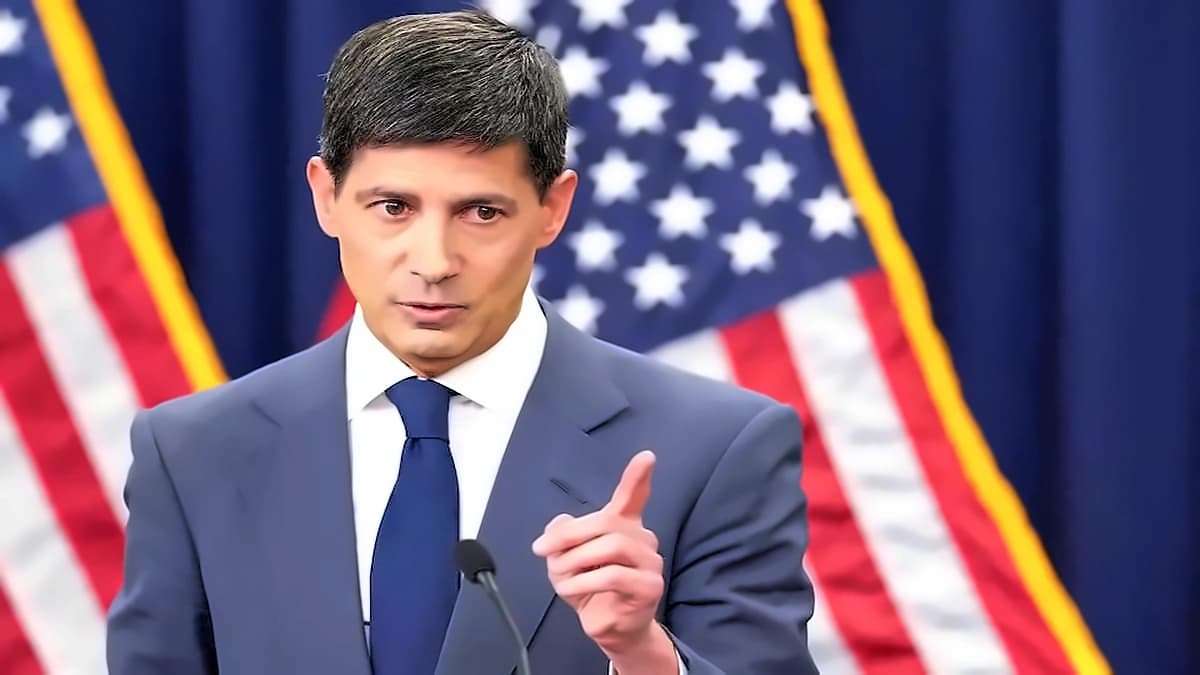
Kevin Warsh has officially been sworn in as 17th Federal Reserve Chair in a historic ceremony at the White House East Room, becoming the first Fed chair to be sworn in at the White House since former Fed chief Alan Greenspan in 1987. The ceremony was attended by Supreme Court Justices Clarence Thomas and Brett Kavanaugh, House Speaker Mike Johnson, and several Cabinet officials, with Justice Thomas administering the oath to make this transition particularly significant. Speaking at the ceremony, President Donald Trump called Warsh "one of the truly great chairmen of the Federal Reserve that we've ever had" and emphasized his desire for independence. "I want Kevin to be totally independent," Trump said, adding "Don't look at me, don't look at anybody, just do your own thing and do a great job." The ceremony highlighted Trump's close attention to the Federal Reserve despite repeated assurances that the central bank would function independently under Warsh's leadership.
Bond investors are betting that Warsh will prioritize the central bank's inflation-fighting credibility over President Trump's push for lower interest rates, with two-year Treasury yields climbing to as much as 4.14% Friday, the highest in more than a year and nearly 40 basis points above the top end of the Fed's benchmark rate range. Thirty-year yields briefly touched 5.2% last week, a level last seen in 2007, before retreating to 5.06%. This dramatic shift reflects the impact of turmoil in West Asia, the resilient US economy and an AI-investment boom pushing the stock market higher, all of which have fueled concerns that inflation could remain stuck above the Fed's 2% target for some time. With the Iran war unleashing the biggest inflation surge since 2023, traders are pricing in that the Fed is virtually certain to start raising rates by December, representing a sharp reversal from just three months ago when markets were betting on deeper cuts.
Warsh's confirmation to the Federal Reserve Chair position represents a historic milestone, with the Senate voting 54-45 to approve his nomination, marking the narrowest approval margin for any Fed chair in US history. President Donald Trump nominated Warsh on March 4, 2026, and his term as chair runs through May 2030, with his board seat extending to January 2040. Warsh previously served as a Fed governor from 2006 to 2011 under Chair Ben Bernanke, during which he helped coordinate the Bear Stearns sale to JPMorgan Chase, the Lehman Brothers proceedings, and the AIG rescue during the 2008 financial crisis. Jerome Powell will remain on the Fed's Board of Governors after stepping down as chair, having served in the role since 2018. The White House has grown critical of the central bank's cautious posture as inflation remains elevated.
The Federal Reserve faces growing internal division as one-third of the 12-member rate-setting committee now backs removing the easing bias language from policy statements. Governor Christopher Waller — a Trump appointee who earlier this year advocated for rate cuts to protect the labor market — said Friday that the Fed's next move is now just as likely to be a hike. With Waller's Friday comments, this represents a significant shift from the Fed's previous stance. The Fed held rates steady at the last meeting of its Open Market Committee (FOMC) in late April, but there was an outpouring of dissent among committee members. Incoming Fed chair Kevin Warsh -- due to be sworn in on Friday -- has backed interest rate cuts in the past, and will face a divided committee when he chairs the next meeting in June. Vice Chair Philip Jefferson and New York Fed President John Williams are scheduled to speak this week, with bond traders focusing on auctions of two-, five- and seven-year Treasury notes for signs of investor demand.
Core PCE inflation rose to 3.3% year-over-year in April, marking the highest level in more than two years and significantly above the Fed's 2% target. As reported by Federal Reserve Governor Waller, this represents a concerning broadening of price increases across the economy. The core PCE inflation measure excludes food and energy prices, which tend to be volatile, and provides policymakers with a better guide to underlying price trends. Waller noted that about half of goods and services categories have seen price increases of 3% or more this year, representing a historically large share of the economy. The energy price shock has created significant ripple effects throughout the economy, with purchasing managers reporting substantial input cost increases. The April reading of the personal consumption expenditures price index (PCE), the Federal Reserve's preferred inflation gauge, is scheduled for release on Thursday, with investors closely watching for further direction.
Some investors, including Chitrang Purani, a portfolio manager at Capital Group, are turning more bullish on short-term Treasuries as yields rise and rate hikes are priced in. Purani noted that "I do believe that the bar to hiking rates is still reasonably high because this Fed and Warsh may want to be a little bit more patient before taking that next step to fully understand how inflation is translating into labor markets and financial conditions." He added that "I personally don't believe the Fed's reaction function to economic data will be materially different under Warsh than it was in the past." The shift in market expectations reflects the Fed's growing concern about persistent inflationary pressures linked to the ongoing Iran conflict and surging oil costs. Philadelphia Fed President Anna Paulson has suggested it is "healthy" for financial markets to take on board the possibility of rate hikes, noting that "monetary policy is in a good place now" and keeping rates steady allows the FOMC to assess how the economy is evolving.