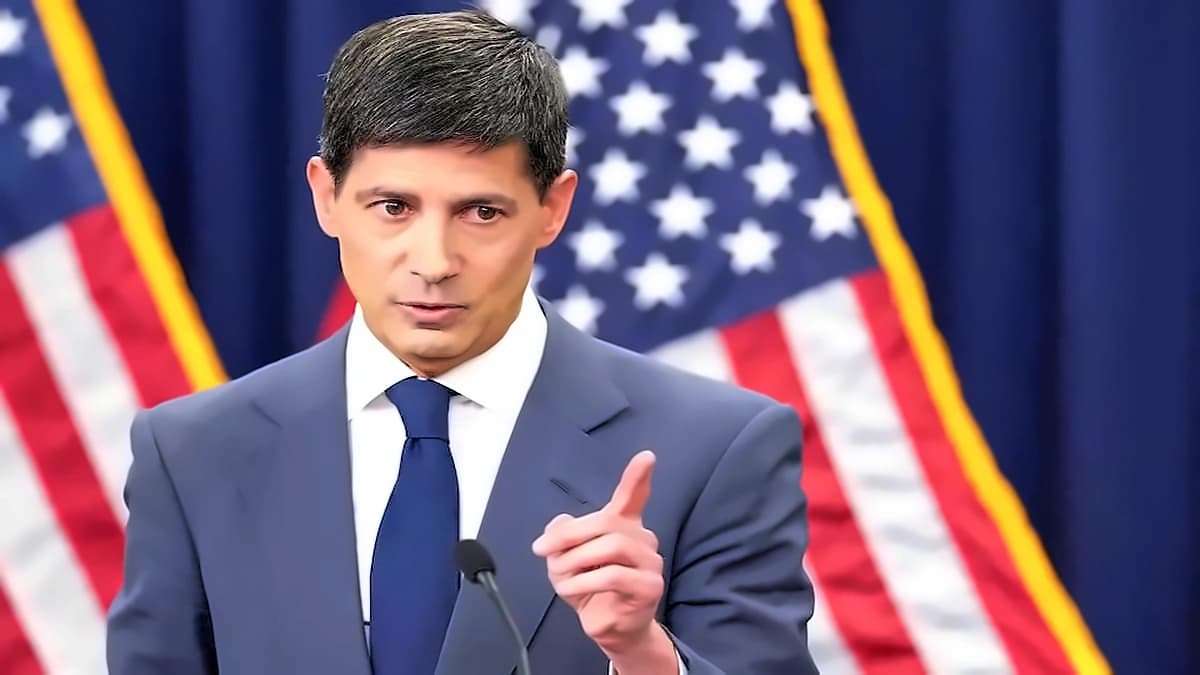
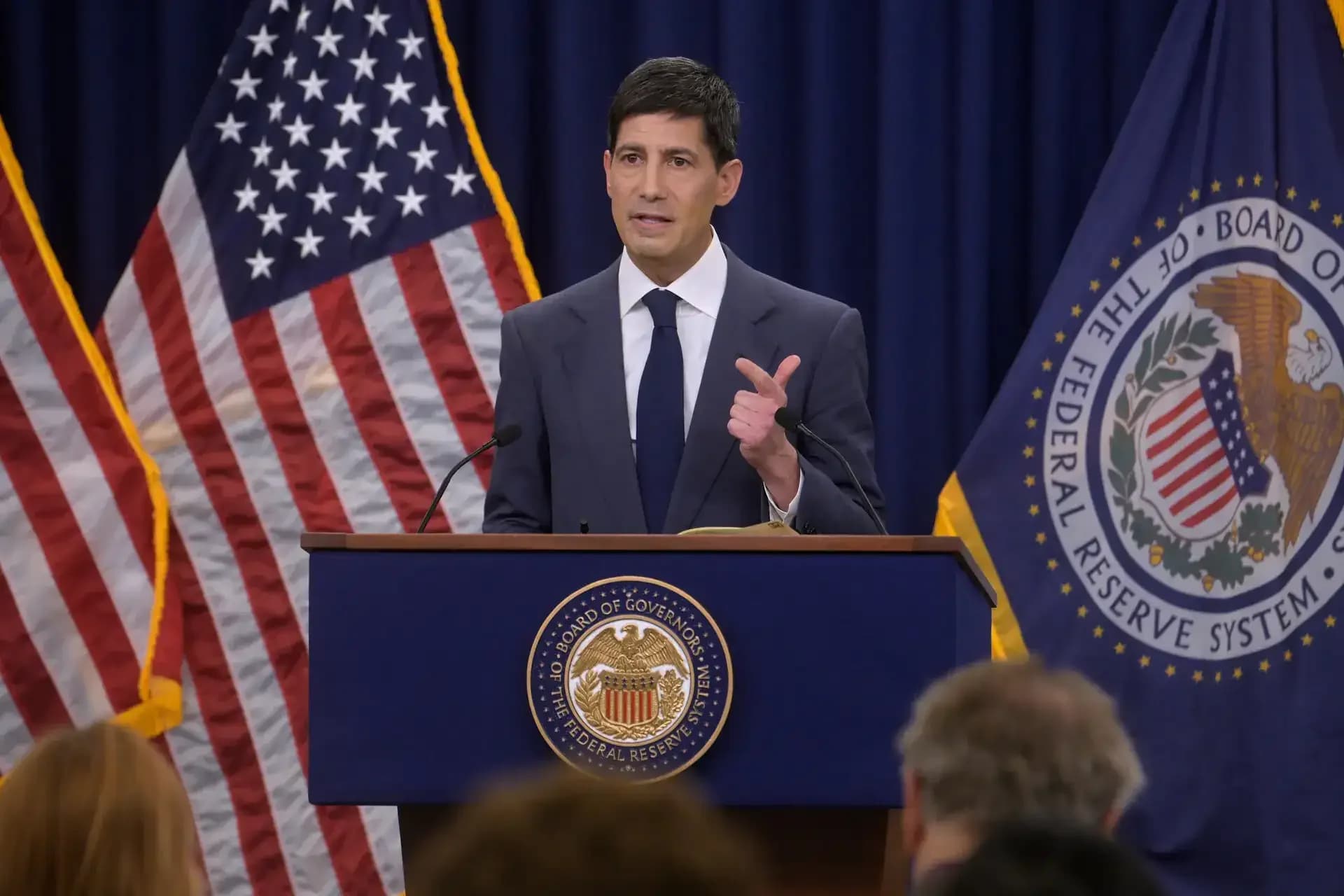
Federal Reserve Chair Kevin Warsh's embrace of financial markets to guide monetary policy has drawn criticism from economists and former officials, who warn it represents a trade-off between precision and effectiveness. As reported by Financial Post, Warsh plans to stick with his communications strategy even after an abrupt bond market selloff, despite acknowledging mistakes since taking up the position in May. The Fed chairman would be prepared to raise interest rates in September if inflation data comes in hot, according to the Financial Times. However, Warsh has taken his no-forward-guidance edict one step further by refusing to explain what he thinks about data and how the Fed might react to different developments, creating uncertainty in markets. Just seven weeks into his tenure, Warsh's approach is being closely watched as markets adjust to fewer signals from the Fed on the direction of monetary policy, with investors now being forced to interpret incoming economic data with less guidance from the central bank.
The Fed's abandonment of forward guidance has created significant market volatility, with 30-year bond yields jumping to the highest level in 19 years following Warsh's press conference. Before Warsh's press conference last week, markets were pricing in about a 70% chance of a rate hike in September, but those odds are now below 60%. The reaction was most visible in the Treasury market, with the 30-year Treasury yield touching its highest level since 2007, while the benchmark 10-year yield rose to levels last seen in January 2025. Market analysts note that Warsh's hawkish tone on inflation without signaling any imminent policy action has triggered a crisis of market confidence, with Douglas Porter of BMO Capital Markets observing that 'what truly surprised markets was Warsh's hawkish tone on inflation without signaling any imminent policy action.' Treasury Secretary Scott Bessent, who vetted Warsh, rebuffs the angst among Fed watchers, saying this is a period of 'detox' from years of forward guidance.

Economists warn that leaving markets to bring down inflation can stoke volatility or pricing overshoots that unduly damage the economy. Minneapolis Fed President Neel Kashkari pointed to a similar tradeoff, stating that 'if inflation remains elevated, in my view, a potential series of small policy moves would be better than waiting and eventually concluding that even bolder actions were necessary.' Brij Khurana of Wellington Management noted that 'one of the values of formal guidance is that you do not have to act if the market trusts your ability to act in the future, but if you remove that, then you do have to do much more with policy rates to get the same economic reaction.' With inflation still hovering near 4%, critics argue that less guidance could increase uncertainty at a time when investors are looking for clarity on the Fed's commitment to price stability. Three policymakers dissented at the July 28-29 FOMC meeting in favor of a rate hike, with St. Louis Fed President Alberto Musalem also backing a move, highlighting growing internal dissent.
The current situation draws parallels to Nixon's 1970s pressure campaign on Fed Chair Arthur Burns, as documented in The Wall Street Journal. Nixon told Burns in February 1972 that 'I really don't care what you do in [or after] April' ahead of his re-election bid. Burns subsequently cut the discount rate before the November election, but the federal funds rate jumped from 4.49% to 9.71% the following year as the Fed reversed course, contributing to inflation throughout the decade. Since the 1980s, communication between the White House and the Fed chair has gradually shifted to being coordinated through the Treasury Secretary. Trump's attitude toward Warsh stands in stark contrast to his treatment of former Chair Jerome Powell, with Trump often praising Warsh's appearance and viewing him as a 'valuable outside economic advisor.'
The Fed's abandonment of forward guidance—a strategic shift that is pushing interest rate markets into a structurally high-volatility era—has created significant market uncertainty. In the absence of clear policy reaction framework, every economic data release, every Treasury auction result, every oil price swing, and even every Fed official speech could have an outsized impact on the yield curve and overall market sentiment. The July employment report will be the next major test of whether markets can adapt to a Fed that provides less forward guidance and relies more heavily on incoming economic data. A reduced reliance on forward guidance means investors must assess inflation, growth and labour market data independently, potentially making market pricing more reflective of underlying economic conditions rather than Fed projections. Even with reduced forward guidance, markets continue to closely track every Fed statement, policy vote and press conference for clues about how policymakers may respond to economic data, ensuring that uncertainty over the Fed's communication strategy continues to weigh on investor sentiment.