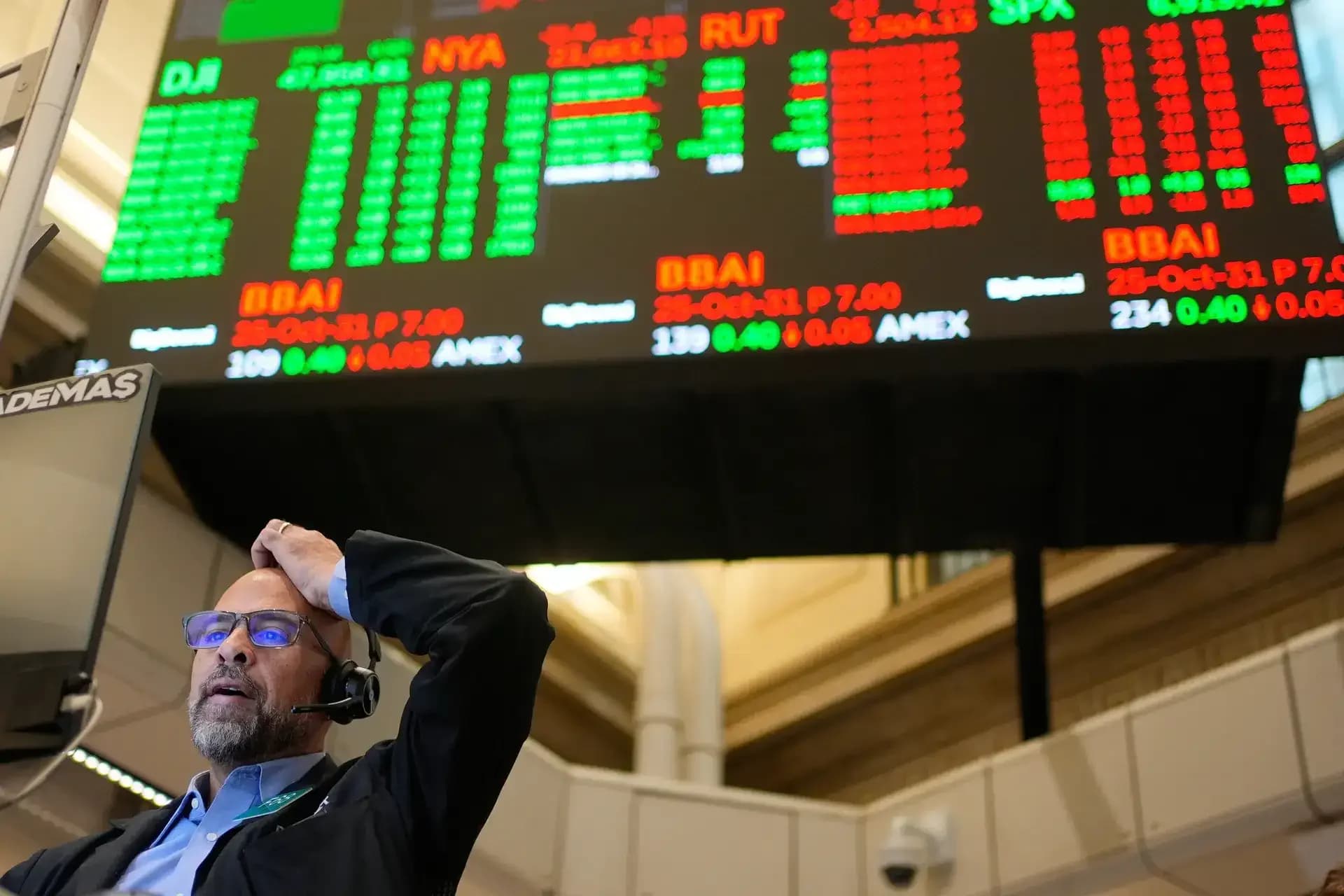
Global stock markets experienced widespread declines on Friday, with the U.S. S&P 500 falling 1.2% from its all-time high set the previous day, joining a worldwide drop for stocks. The Dow Jones Industrial Average dropped 537 points, or 1.1%, and the Nasdaq composite sank 1.5% from its own record, as technology stocks led the decline in a sharp turnaround from their meteoric rises throughout the year. Nvidia, the stock that quickly became the face of the AI revolution, dropped 4.4% and was the heaviest weight on the S&P 500, despite having gained more than 26% for the year so far. Micron Technology was another one of the heaviest weights on the market after falling 6.6%, though it remains up nearly 154% for the year. According to Brian Jacobsen, chief economic strategist at Annex Wealth Management, "To us, it looks like markets have pushed into overbought territory." He noted that while strong corporate profits and a durable U.S. economy remain intact, "the path is unlikely to be smooth. Periods like this call for discipline more than hope."
The market decline was triggered by escalating tensions in U.S.-Iran negotiations, with U.S. President Donald Trump stating he will not be much more patient with Tehran after wrapping up his three-day visit to China, as reported by RTTNews. According to the report, Trump indicated that China's President Xi Jinping agreed that Tehran must not be allowed to develop nuclear weapons and should reopen the Strait of Hormuz, but the meeting yielded little headway with regard to reopening the Strait of Hormuz. The war with Iran continues, and the Strait of Hormuz remains shut to oil tankers, which is preventing them from delivering crude to customers worldwide and driving up oil's price. Brent crude oil, the international standard, rose 3.3% to settle at $109.26, well above its level of roughly $70 from before the war. The longer closure of the strait is expected to have more significant effects on global energy prices and the economy. However, Iran's Revolutionary Guards claimed around 30 vessels had crossed the strait since Wednesday evening, though concerns persist about potential disruptions.
The rising oil prices are creating significant pressure on the bond market, with the yield on the 10-year Treasury rising to 4.59% from 4.47% late Thursday, well above its 3.97% level from before the war. The yield on the 30-year Treasury reached 5.13% and is back to where it was in 2007, before the financial crisis sent yields crashing toward zero. Higher yields can make mortgages and other loans more expensive for U.S. households and businesses, which slows the economy. They also tend to push downward on prices for stocks and other investments. The Russell 2000 index of the smallest U.S. stocks fell 2.4%, double the S&P 500's loss, as many smaller companies need to borrow cash to grow and higher borrowing costs hurt them more than their big rivals. Yields have been climbing since the war on worries about higher inflation and how it may tie the Federal Reserve's hands when it comes to short-term interest rates. Not only have traders abandoned virtually all expectations that the Fed will resume its cuts to interest rates this year, they've been building bets that it may even hike rates in 2026, according to data from CME Group.
European shares experienced significant declines on Friday, with the pan-European STOXX 600 falling 1.4% to 607.70 points as of 0836 GMT, as inflation concerns returned to investor minds following a week of hotter-than-expected U.S. price data and a jump in oil prices. The benchmark index snapped two straight days of gains and is now down for the week. Regional markets showed broad-based weakness, with Germany's DAX declining 1.7%, France's CAC 40 and Spain's IBEX 35 shedding 1.4% each, while the UK's FTSE 100 was down 1.3%. Technology and materials sectors led the decline, with Europe's materials index dropping 4.3% tracking weaker metal prices, while tech shares tumbled 3% after two consecutive sessions of gains. Semiconductor firms ASML, ASM International, BE Semiconductor and Aixtron were down between 3.4% and 7.3%, with the defence sector (.SXPARO) falling 3.6%, the worst weekly performance among individual sectors. Bank shares also declined 2%, with UK's Barclays and Lloyds losing 3% and 2.8% respectively.
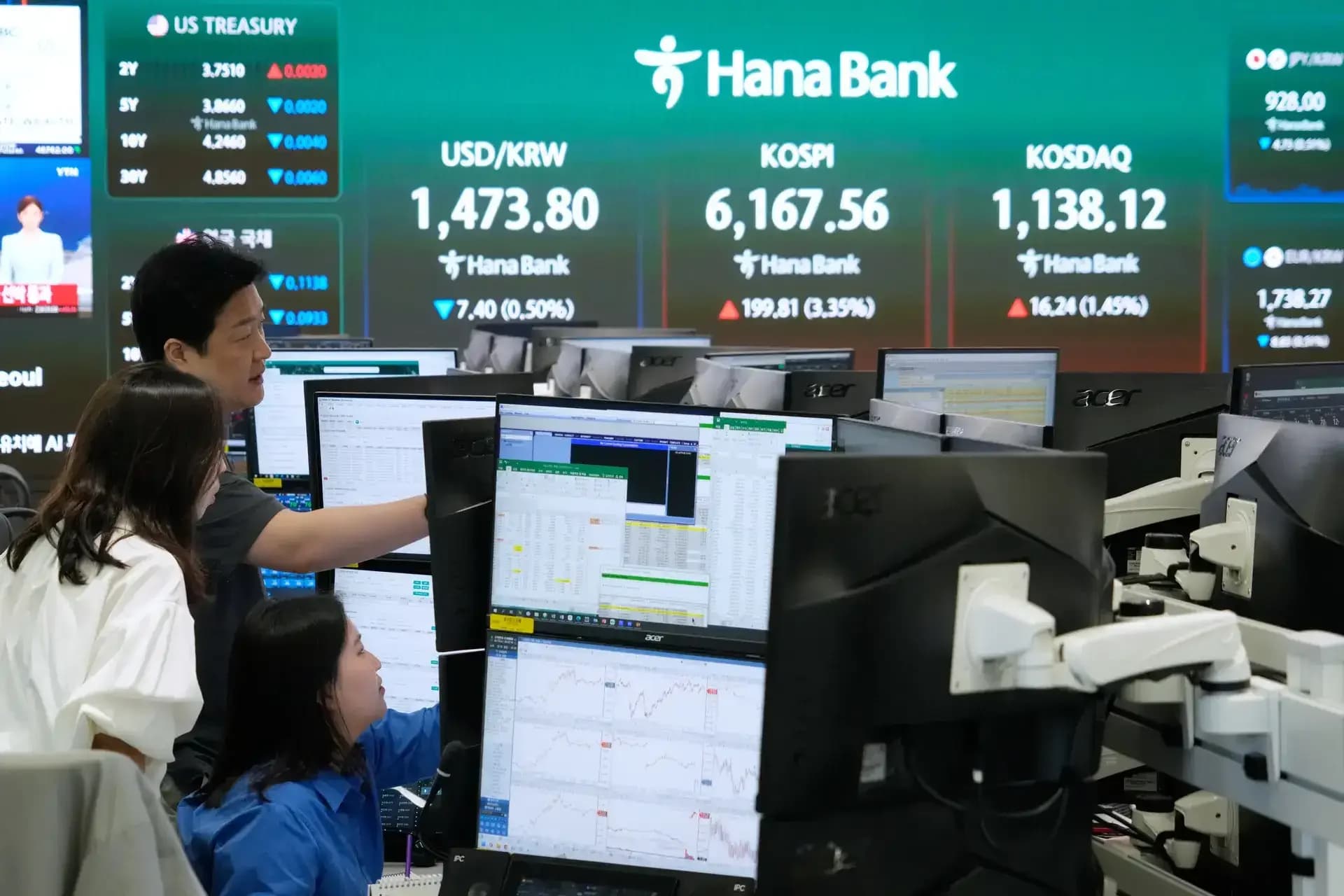
Shares in Europe are tracking Asian markets' overnight declines after South Korea's benchmark Kospi index dropped 6.1% for one of the biggest moves, retreating from a fresh record high above 8,000. Japan's Nikkei 225 declined about 2% and the Topix lost 0.4%, while Hong Kong's Hang Seng index slid 1.6% and the CSI 300 dropped 1.1%. India's Nifty 50 was down 0.2%. On Wall Street, the broad-based S&P 500 was down 1.1%, while the Dow Jones Industrial Average fell 1%, with the Nasdaq sliding 1.5% amid concerns over a resurgence in U.S. inflation. April's U.S. producer price index rose 1.4%, the biggest monthly increase since March 2022 and exceeding economists' 0.5% consensus estimate, with the index up 6% annually - the biggest increase since December 2022. In the U.K., Prime Minister Keir Starmer faces a fresh battle for his premiership after his Labour Party rival Andy Burnham was offered a route to parliament, with Burnham seen by the bond market as leaning more to the left, sending borrowing costs higher.