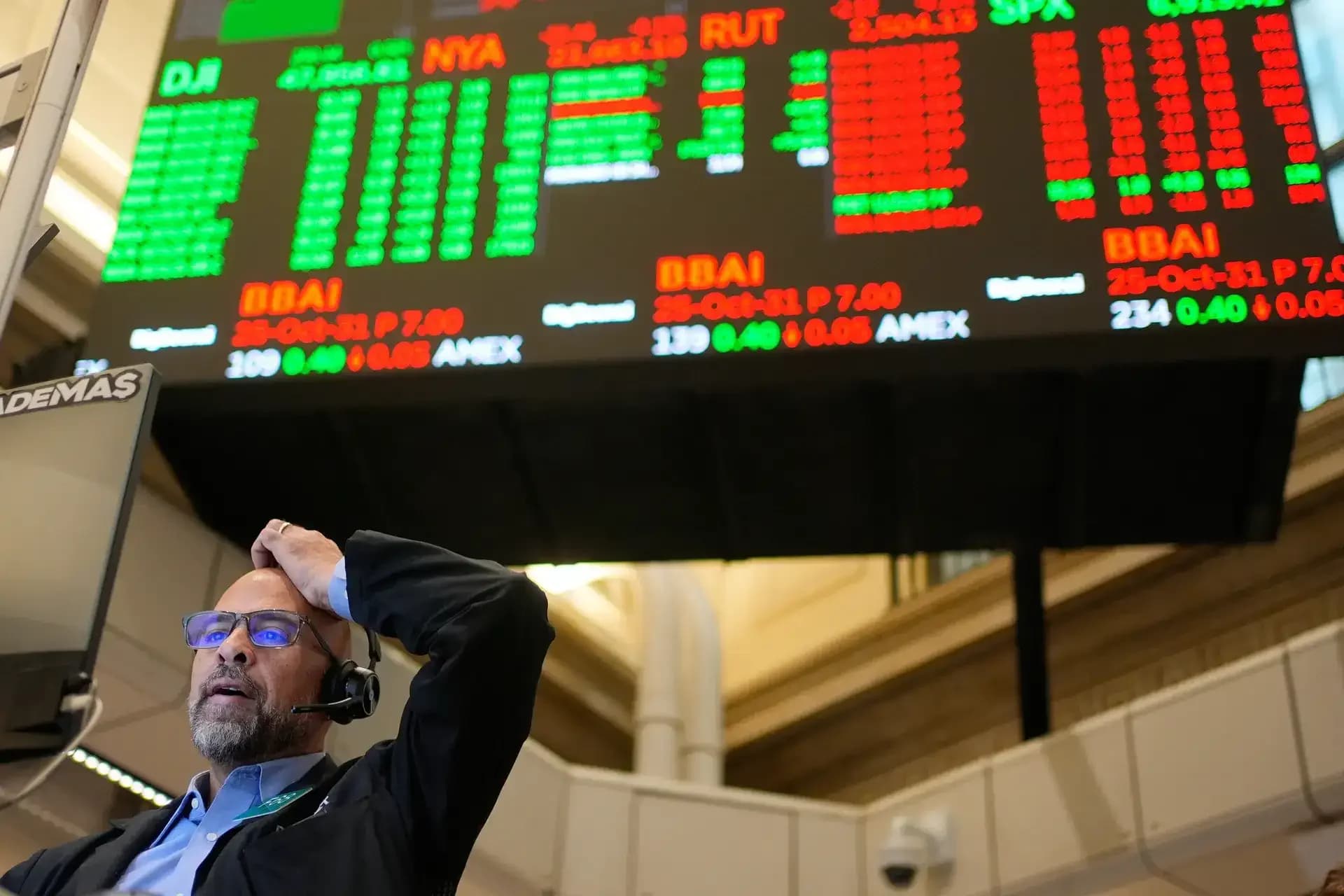
Wall Street indices retreated from record highs on Monday as escalating Middle East tensions overshadowed strong first-quarter earnings reports. According to Reuters, the S&P 500 sank 0.33% to 7,206.53, coming off its latest all-time high, while the Dow Jones Industrial Average dropped 0.91% to 49,050.99. The Nasdaq composite slipped 0.12% to 25,083.19. Ten of the 11 S&P 500 sector indexes declined, led lower by materials, down 1.37%, followed by industrials with a 0.89% loss. Declining stocks outnumbered rising ones by a 2.1-to-1 ratio, with the S&P 500 posting 26 new highs and 22 new lows, while the Nasdaq recorded 115 new highs and 70 new lows.
The renewed nervousness about Middle East conflict emerged after a South Korean ship was hit by an explosion in the Strait of Hormuz, according to Reuters. The explosion appeared likely to persuade commercial shippers it was still unsafe after U.S. President Donald Trump said the U.S. Navy would open the strait. Tehran said it forced a U.S. warship to turn back after it attempted to enter the strait, while the UAE reported a fire at an oil installation following an Iranian drone attack. The U.S. military said Monday that two American-flagged merchant ships had successfully transited the Strait of Hormuz, while also sinking six small boats as it set up an "enhanced security area" for ships crossing the strait. Iran's closure of the strait has kept oil tankers pent up in the Persian Gulf and away from customers worldwide, with prices soaring from roughly $70 per barrel before the war.
Energy stocks saw significant gains amid the confrontations, with the sector benefiting from the geopolitical tensions as investors sought safe-haven assets. The confrontations boosted energy stocks as Brent crude prices jumped 5.8% to $114.44 amid uncertainty about potential supply disruptions in the region. The sector's performance reflected market concerns about the impact of the Middle East uncertainties on global energy markets.
Despite the market decline, S&P 500 companies are expected to post aggregate earnings growth of 28% year/year for the first quarter, double the expectation of 14% at the start of April, according to LSEG I/B/E/S data reported by Reuters. Wall Street's AI heavyweights account for much of that optimism, with Berkshire Hathaway reported on Saturday that it was a net seller of stocks for the 14th consecutive quarter. The strength this reporting season has been broad-based, with the median stock in the S&P 500 tracking for the best growth since 2021, according to Bank of America strategist Savita Subramanian. Investors closely watch the conglomerate, often viewed as a bellwether of the U.S. economy, for its insight into valuations and broader market conditions.
GameStop tumbled 8.5% after announcing a $56 billion cash-and-stock deal to buy eBay, a much larger company with a total market value nearly quadruple GameStop's. GameStop said it has already built a 5% stake in eBay and sees opportunities to cut $2 billion in annual costs quickly. EBay rose 5.4% on the announcement. United Parcel Service dropped 9% and FedEx fell 9% after Amazon announced it was rolling out "Amazon Supply Chain Services," opening up its logistics network for other businesses to use. Norwegian Cruise Line Holdings fell 8% after slashing its annual forecast due to higher fuel costs related to the Middle East conflict and reduced European travel bookings.