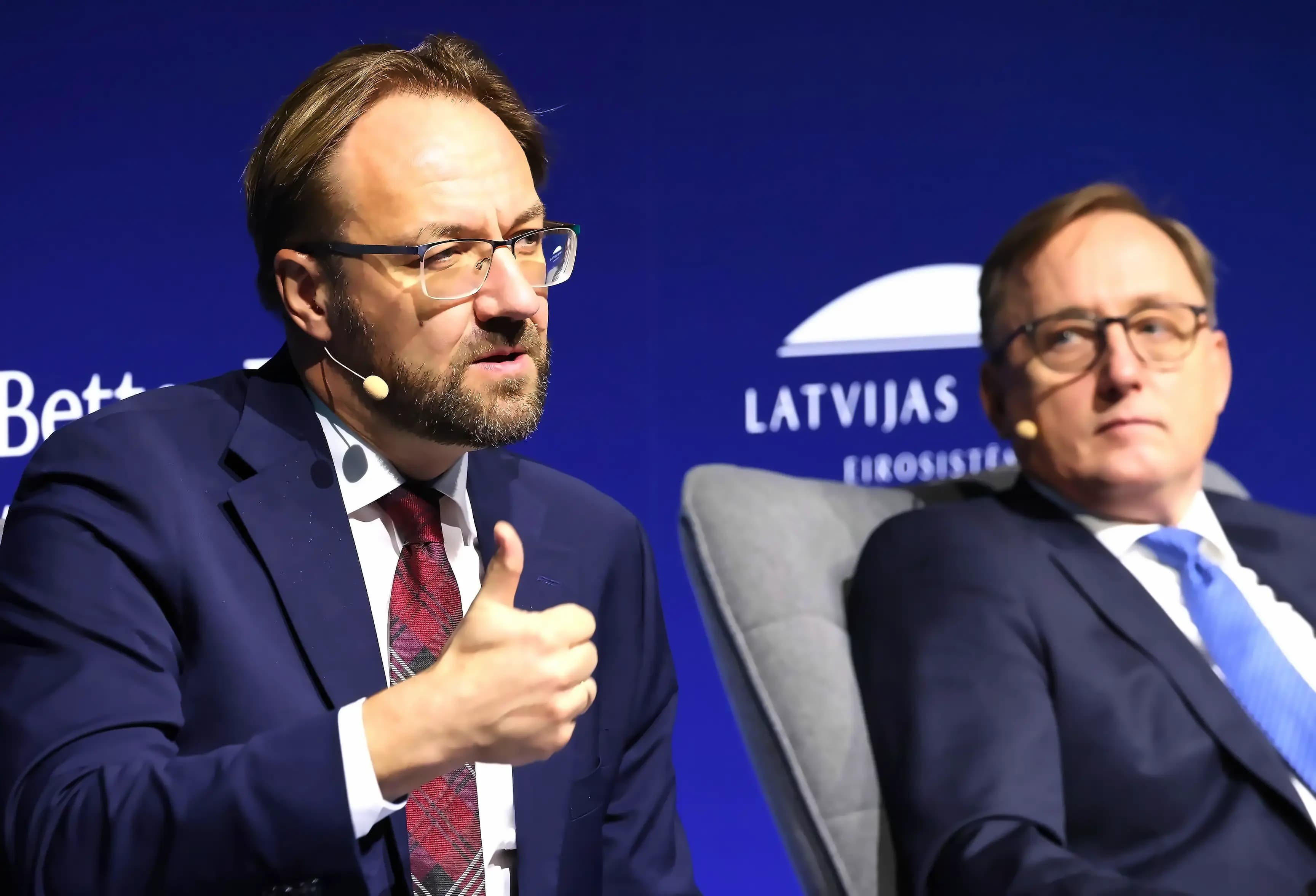
European Central Bank Chief Economist Philip Lane announced that the ECB's expanded euro liquidity facilities have attracted strong demand, with more than 30 central banks expressing interest in the initiative. Speaking at a closed-door event in Shanghai titled 'Monetary System Beyond the Dollar' as part of the annual Bund summit, Lane stated that liquidity arrangements could boost confidence in the euro, reduce currency-related risks and encourage its wider use in international transactions. The EUREP facility, which enables foreign central banks to obtain euros against collateral denominated in the single currency, could support euro area bond markets by encouraging greater purchases of euro-denominated assets by official reserve managers. Lane highlighted that greater international use of the euro could strengthen the ECB's ability to achieve its inflation target by extending the influence of euro area monetary policy beyond the currency bloc.
European Central Bank President Christine Lagarde warned that a global bond selloff is tightening euro zone financial conditions, raising borrowing costs and weighing on economic growth. According to Reuters, speaking at a gathering of central bankers and finance ministers in Bangkok, Lagarde said tighter financing conditions would slow economic activity and reduce the extent to which higher energy prices linked to the Iran war feed through to broader inflation. The development comes as long-term interest rates have risen notably since the central bank's previous policy meeting, making financial conditions tighter than anticipated. Rising bond yields worldwide in recent weeks have reflected concerns about government debt, persistent inflation and increased competition for credit from investments in artificial intelligence. France, which carries a heavy debt burden, has been among the countries most affected by the selloff.
European Central Bank officials are preparing to conclude 2026 with a third interest-rate increase, with policymakers indicating December as the more likely timing for the hike that's widely anticipated among traders and economists. According to reports from Business Standard, while officials kept open the option of acting in October, they pointed to December as the preferred timing for the rate increase. The discussions revealed growing unease over issues including rising bond yields, high energy costs, and the blistering investment boom in artificial intelligence. Latest developments show ECB's Wunsch indicating that further tightening would be reasonable given persistent inflation pressures, with inflation running at almost 4% and domestic inflation at 3%. Market pricing of three rate hikes seems reasonable given the current economic conditions, with the ECB considering that level restrictive, meaning it could weigh on economic activity.
The ECB is reviewing its network of currency swap lines to enhance global monetary policy transmission, with Lane stating that swap lines could encourage greater borrowing in euros while maintaining safeguards against financial risks. These arrangements allow major central banks, including the US Federal Reserve and the People's Bank of China, to exchange their currencies for euros. Lane emphasized that access should be limited to central banks in economies with close financial ties to the euro area and a clear ability to repay their euro liabilities. The initiative reflects the ECB's broader ambition to increase the currency's international appeal while maintaining safeguards against financial risks, with greater global use of the euro potentially strengthening European financial markets and enhancing the transmission of the central bank's monetary policy.
According to Business Standard, inflation heading toward 4 percent — double the ECB's target — hasn't yet spread widely, though there are no signs that energy-driven price pressures are letting up. Brent oil hit $110 a barrel for the first time since May after Iran-backed Houthi rebels pummeled Saudi Arabia with missile and drone strikes, and Russia and Ukraine exchanged tit-for-tat attacks on energy infrastructure. With wage negotiations looming next spring, the ECB is carefully analyzing how such shocks are "traveling through the economy," as President Christine Lagarde told CNN. ECB's Wunsch confirmed that energy prices are likely to remain elevated for longer than previously expected, with underlying inflation approaching 2% and the risk of overshooting the price target. ECB policymaker Olli Rehn, Finland's central bank governor, said the bank would closely monitor potential second-round effects from energy inflation.
As reported by Business Standard, the euro zone was a focal point of discussions, with investors pushing up France's borrowing costs due to its gaping budget deficit and political gridlock. Many participants in Bangkok, including IMF chief Kristalina Georgieva, argued that large budget deficits and debts must urgently be addressed, calling advanced economies the "worst offenders." While some ECB officials signaled optimism that the message investors sent to France has resonated with the government, others are already focused on how to respond if the situation deteriorates. ECB's Nagel emphasized that Germany will remain the anchor of stability in Europe, with Germany getting fit for future challenges through a fitness program of reforms. The ECB's work is overshadowed by increasing frustration among officials about Lagarde's refusal to offer clarity on a possible early exit, with the institution in the midst of a major leadership overhaul.