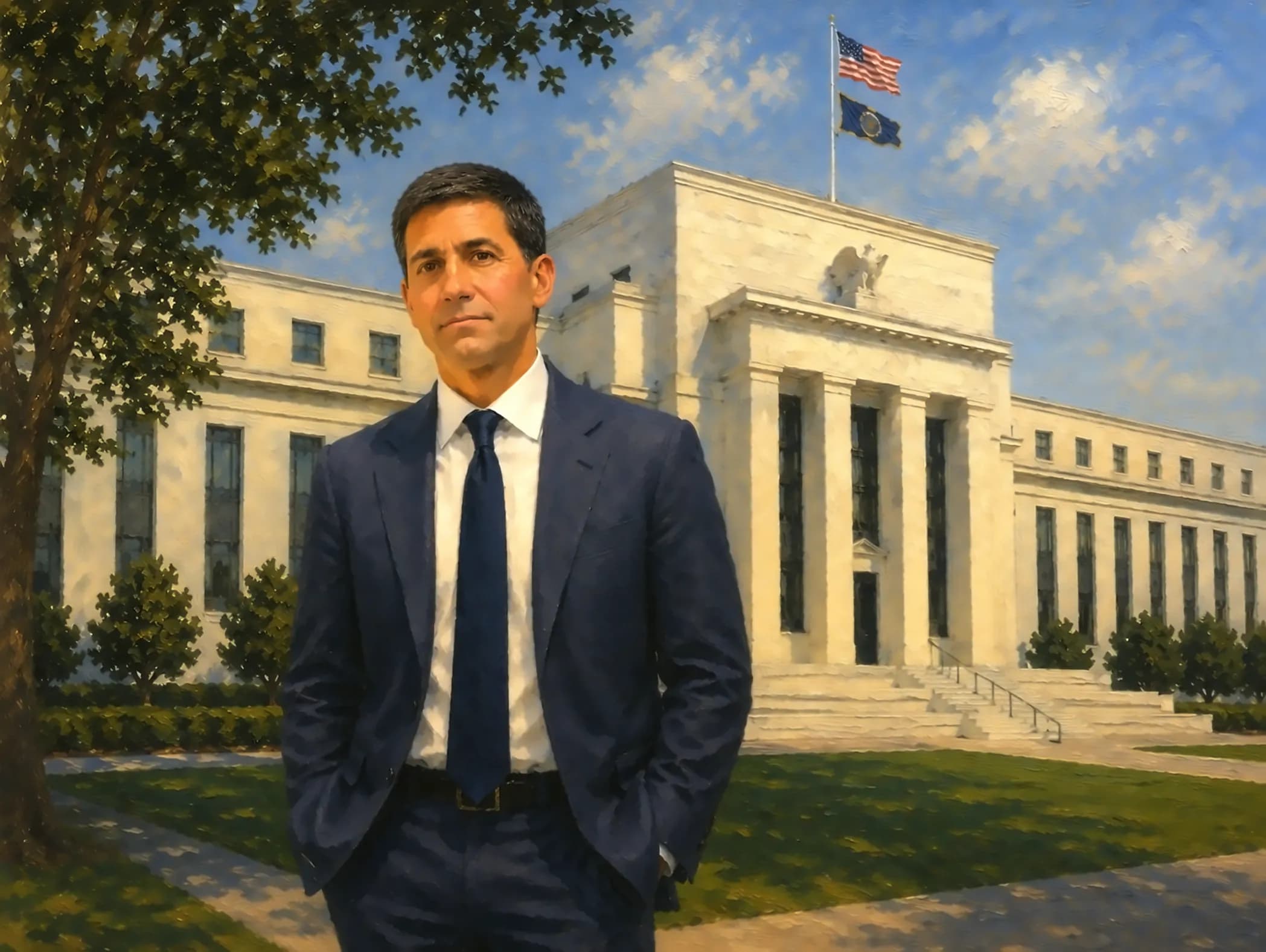
Fed rate cut expectations have weakened sharply, with traders now pricing in less than 50% chance of a rate reduction at the September 16 meeting, according to CME FedWatch data. The probability has fallen from more than 60% a week earlier, following comments from Fed Governor Christopher Waller about the upcoming meeting. Waller acknowledged that inflation remains "meaningfully above" the Fed's 2% target but said recent trends "suggest we are finally seeing some signs of disinflation." In remarks for a Reuters interview, Waller said "If this continues in the data over the next two weeks, I would be inclined to support holding the target for the federal funds rate at its current setting." The governor emphasized that if there is continued progress toward the Fed's 2% inflation goal, he is willing to support holding the policy rate at its current level of 3.50% to 3.75%, with the Federal Open Market Committee meeting scheduled for September 16. Waller's latest comments have seen market expectations for September rate hikes drop to 50% from 63% just a day ago, as reported by Investing.com. However, some analysts are now moving from a hold to hike position, citing upside risks to the inflation outlook that have worsened since July.
US Treasury yields pulled back for the second straight session after touching their highest level since November 2023, as Waller's disinflation comments boosted market sentiment. The benchmark Treasury yield fell to 4.74% after hitting 4.818% on Wednesday, with the governor pointing to the three-month inflation rate measured by the Fed's preferred gauge, which has fallen from 4.76% in February to 3.05% currently. Waller said "That is a considerable improvement, and the speed of this downward trajectory is encouraging." The governor cited recent research from Stanford Graduate School of Business finance professor Hanno Lustig showing the traditional safety premium on US government debt has been eroded over several years. Waller said he has long worried about this trend, noting it has been leading him to raise his neutral rate estimate, which means higher policy rates for any given rate of inflation. However, some analysts remain skeptical of putting too much weight on 3-month changes, noting that PCE has had a seasonal pattern to it in recent years—higher early in the year and lower later in the year.
The timing of upcoming inflation data creates significant uncertainty for Fed policy decisions. The U.S. Bureau of Labor Statistics will release the August Consumer Price Index on September 11, followed by the Producer Price Index on September 10, with both reports arriving less than a week before the Fed announces its decision on September 16. According to the BLS release calendar, the two reports are scheduled for 8:30 a.m. Eastern time. July's Personal Consumption Expenditures price index rose 3.7% from a year earlier, remaining well above the central bank's 2% target, while higher energy costs linked to the U.S.-Iran conflict have added uncertainty to the next set of figures. Despite headline inflation standing at 3.7% and core inflation at 3.3% in July, Waller said the underlying trends are actually "better than the core numbers suggest" and noted that "the annual numbers are not the best guide for where inflation is today." However, analysts point out that "the inflation data alone could clear the bar for a hold, barely" and that "the headlines are tilting the odds toward a rate hike: stalled progress in the Middle East, a trade war with Canada, and chip shortages from the AI buildout."
Market attention is now focused on critical economic releases that could further influence Fed policy decisions. Today's nonfarm payroll report is expected to show 56,000 jobs were added in August after a shock fall of 23,000 in July, with the unemployment rate expected to hold steady at 4.1%. As per Investing.com, weaker-than-expected jobs data could see rate hike expectations lowered further, while stronger-than-expected data could push Treasury yields higher and weigh on stocks. The market will also be assessing next week's CPI inflation report, the next key release ahead of the FOMC meeting. Should the NFP show more than 100,000 jobs created, this could ramp up rate hike expectations, while should the data come in line with expectations, investors could quickly turn their attention to the inflation report. Analysts note that "the upside risks to the inflation outlook have darkened the outlook to the point that I see a modestly higher federal funds rate as appropriate."
The global bond market selloff has intensified significantly, with major economies experiencing unprecedented yield movements. Japan's 10-year yield has moved above 3%, its highest level in 30 years, while Australia's 10-year government bond yield rose to 5.198%, the highest in more than 15 years. India has not been insulated from the selloff, with the 10-year Indian government bond yield briefly crossing 7% on Wednesday for the first time in three months. Britain's 30-year borrowing costs are at 30-year highs, while German and French 10-year yields have reached levels last seen in 2011 and 2008, respectively. In the US, 30-year yields climbed to their highest level since 2007 earlier in August. Rate-hike expectations had spiked in recent sessions as long-dated bond yields climbed to their highest levels in years amid global bond selloff fears over inflation, ballooning debt and geopolitical uncertainty.
US stock markets opened significantly higher on Thursday, September 3, 2026, with investors focusing on easing US Treasury yields and optimistic comments from Federal Reserve Governor Christopher Waller that lowered expectations of an upcoming Fed rate hike. According to MarketWatch data, the Dow Jones Industrial Average surged 1.2% to 53,534, compared to 53,061.95 points at the previous US equity market close. The S&P 500 index rose 1% to 7,716 points, while the tech-heavy Nasdaq 100 jumped nearly 1.4% after opening around 91 points higher, trading around 29,312 points compared to 29,143.33 as of 9:50 am (ET). US futures are heading for a modestly higher open with S&P futures up 0.12% and Nasdaq futures up 0.53%, as reported by Investing.com. The positive market sentiment reflects investor relief over Waller's dovish remarks that have calmed inflation fears ahead of today's nonfarm payroll report.