Recent polling data reveals a 5.7 percentage point advantage for Democrats on the generic congressional ballot according to RealClearPolling averages. The latest Economist/YouGov poll shows 42% of voters would support Democratic candidates, while 35% would vote for Republicans. However, 23% remain undecided, would support another option, or would not vote, indicating significant uncertainty in voter preferences. This polling data comes as Republicans gathered in Dallas for their first-ever midterm convention, where President Trump unveiled his $5,000 "Trump Dividend" proposal conditional on Republican control of both chambers.
Prediction-market pricing for the 2026 US midterm elections presents a sharply divided picture as of September 10, 2026. According to Polymarket data, 87% favor a Democratic Party win for the House, with 85% showing Democrats at 85% to control the U.S. House while Republicans stand at 15%. The same platform shows a much tighter Senate market, with Republicans at 53% and Democrats at 47%. However, Kalshi data reveals conflicting figures, with Democrats listed at 47% for a Democratic sweep and 36% for split control. William Hill now shows Democrats as 1/6 favourites to win House control, with Republicans at 7/2, while the Senate remains a 5/6 coin toss for both parties. This disparity suggests conflicting data or timing, with the available evidence showing that Kalshi House markets favor Democrats while published Polymarket readings differ by source and snapshot.
The Senate race presents a different scenario with Republicans currently holding a 53-47 majority. As reported by Kalshi, Democrats need four seats for control, with Vice President JD Vance able to break ties. Of the 35 Senate seats up for grabs, 23 are secure for incumbents, and five more are likely to remain with the leading party. This leaves seven battlegrounds: Texas, Maine, Michigan, Alaska, Iowa, Ohio, and Nebraska, where Democrats must win four to gain control. Recent elections have been tight, and while Republicans have benefited from court rulings in Florida and Virginia, Democrats are still favored to win the House. Polymarket shows 50% favoring a Democratic sweep of both chambers, while Kalshi predicts 53% favoring a Republican Party win for the Senate, making it the most competitive chamber.
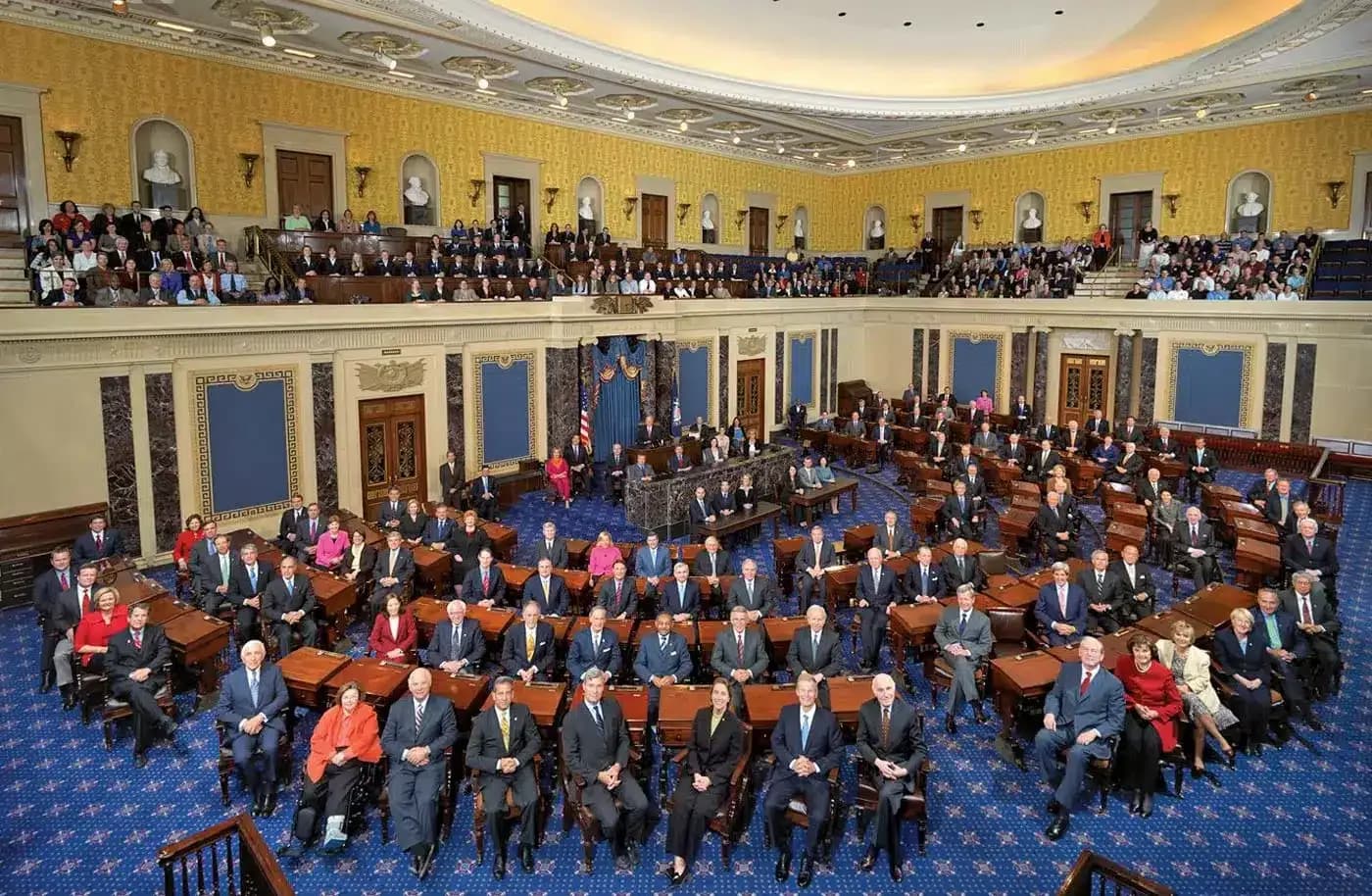
The House race remains particularly crucial due to its narrow margin, with Republicans currently leading 218-214 with two vacancies. According to market analysis, Democrats need to gain three seats to take control. Key competitive districts identified include Arizona's 1st, Iowa's 1st, New Jersey's 7th, and Pennsylvania's 7th, among others. With all 435 House seats contested on November 3rd, closely contested districts can significantly affect control, making outcomes even more critical for both parties. Upcoming primaries in Michigan and Arizona, as well as court decisions affecting district lines, could impact race dynamics. The most likely overall outcome is Democrat control of both chambers at even-money, followed by divided Congress with Democrats winning the House and Republicans retaining the Senate at 6/4.
President Trump announced a proposed $5,000 payment to voters at the Republican Party's midterm convention in Dallas, described as a "Trump dividend" that would be conditional on Republicans retaining both chambers of Congress. According to William Hill betting data, this proposal faces significant market skepticism, with Republicans priced at 7/2 to retain control of both chambers, translating to a 22% implied probability. The proposal would cost more than $1 trillion based on US adult population estimates, but no mechanism for funding or delivering the payments has been outlined. This development adds a new dimension to midterm election betting, as the potential payout creates additional incentives for Republican candidates to maintain control. Trump warned supporters during the convention that losing control would result in losing "your border, your tax cuts, your safety and security, and your wealth."
Prediction markets differ from traditional sportsbooks in how they present prices, with $0.62 indicating a 62% market-implied chance. As reported by market analysts, these prices reflect traders' consensus on outcomes rather than simple snapshots like polls. Prices in prediction markets can exceed 100% due to fees and liquidity, serving as trading costs rather than indicating all outcomes can occur simultaneously. The distinction matters because prediction-market prices are market-implied probabilities, not polls or guarantees, reflecting traders' views on a particular platform at a particular time, and figures can change as trading and information evolve. Both Kalshi, Polymarket, and William Hill rely on official sources for resolution, meaning outcomes that seem certain on election night may take time to pay out officially.
The conflicting data across platforms highlights the importance of understanding prediction market mechanics and verification sources. According to market experts, prediction-market prices are market-implied probabilities that reflect traders' views at specific times, subject to change as trading and information evolve. The 22% implied probability for Republicans retaining both chambers, despite Trump's $5,000 pledge, reflects market skepticism about the proposal's feasibility and the challenging political landscape facing the party, with Democrats showing slight advantages in recent polling averages. Market participants can adjust their strategies as new information arises, with trading volume impacts affecting market stability - markets with higher trading volumes tend to be more stable. The conflicting data across platforms underscores the need for careful verification of sources and understanding that these are market-implied probabilities rather than definitive outcomes.