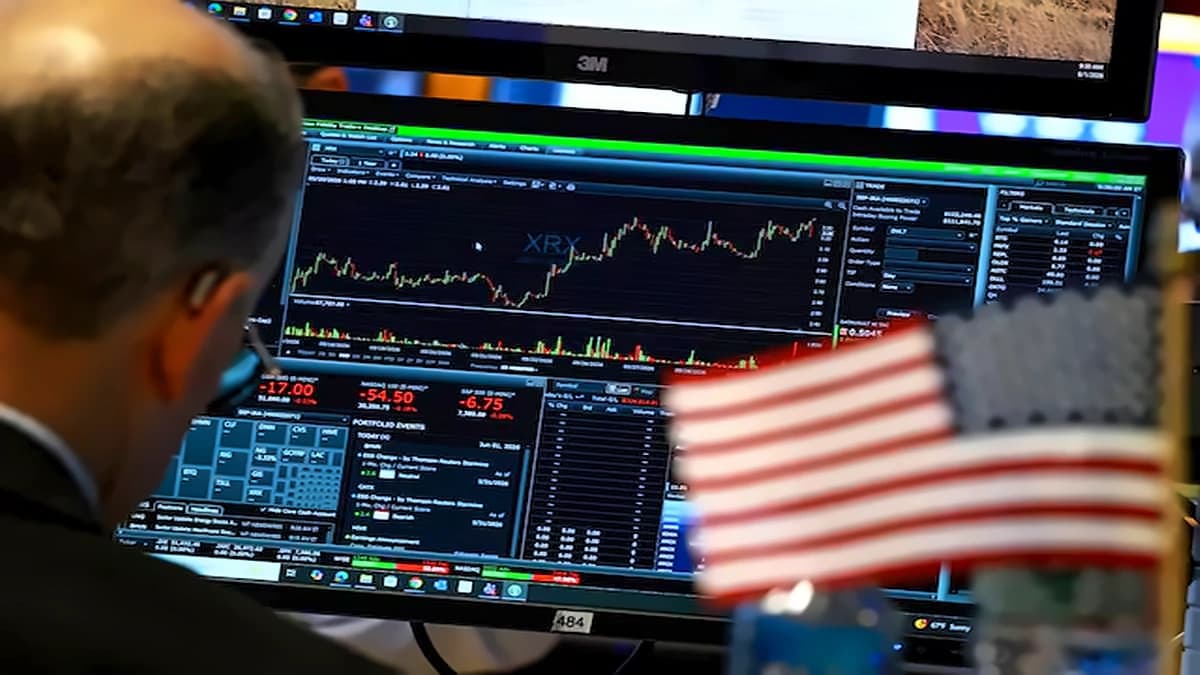
The US stock market has delivered strong returns in 2026 despite facing significant political headwinds. According to reports from The Economic Times, the tech-heavy Nasdaq has gained more than 11% in 2026 so far, while the S&P 500 and Dow Jones Industrial Average rose up to 10%. However, these gains are being overshadowed by historical midterm election volatility and AI valuation concerns that are creating bearish sentiment among investors. The market has already faced brief pockets of sharp selloff amid President Donald Trump's flip-flop policies and the raging conflict in the Middle East, highlighting the ongoing volatility pressures.
Market data reveals concerning patterns for midterm election years. As reported by The Economic Times and The Motley Fool, the S&P 500 has fallen into correction territory 12 times and bear market territory 6 times during the 17 midterm elections since the index's creation in 1957. This puts the odds of a correction and bear market at approximately 70% and 35% respectively in the months ahead. The market previously hit a wall during Trump's first term in 2018, the midterm year, when it gave up 18.8% of its gains according to Ned Davis Research data cited by NY Times. The midterm elections under Trump's presidency are expected to kick off early in November 2026, with all 435 seats in the US House of Representatives and one-third of the 100 Senate seats going up for vote.
The upcoming August primaries in Michigan, Wisconsin and Minnesota will serve as another critical test of Democratic unity ahead of the 2026 midterm elections. As reported by Associated Press, these races across the Upper Midwest are becoming emblematic of deeper divides within the Democratic Party, with progressive candidates facing more moderate rivals. The contest in Minnesota's Democratic U.S. Senate primary between Rep. Angie Craig and Lt. Gov. Peggy Flanagan has become particularly bitter, with millions of dollars in political ads blanketing television screens. Flanagan, backed by progressive Sens. Bernie Sanders and Elizabeth Warren, has condemned what she calls secretive dark money groups working to elect Craig, who is supported by House Minority Leader Hakeem Jeffries and other senior Democratic leaders.
Despite the bearish outlook, historical data suggests potential for recovery after midterm elections. According to The Economic Times citing Carson Research, the six-month period following midterm elections (November to April) has historically been the strongest period of the four-year presidential cycle. The S&P 500 has returned an average of 14% during these six months, providing some optimism for investors despite current concerns about a potential crash near year-end. This year, the market faces additional headwinds including potential split Congress outcomes if Democrats win the 2026 midterm elections, though analysts expect stocks to climb sharply next year regardless of immediate political developments.
Despite current risks, analysts maintain positive long-term expectations for US markets. As reported by The Economic Times, Wall Street's median target price puts the S&P 500 at 8,989 by July 2027 according to FactSet Research. The financial narrative is evolving from asking how big the opportunity is to asking how sustainable the returns are. The market faces additional headwinds including potential split Congress outcomes if Democrats win the 2026 midterm elections, though analysts expect stocks to climb sharply next year regardless of immediate political developments. However, analysts continue to worry about the AI frenzy having reached its peak, with popular investor Michael Burry ramping up bets against leading chipmakers and raising concerns over possible market crash conditions.