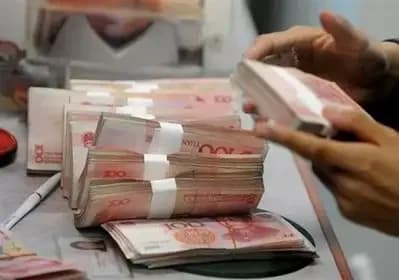
China's yuan reached a three-year high against the dollar as investors awaited outcomes from the Trump-Xi summit, with the People's Bank of China setting the midpoint rate at 6.8401 per dollar, its strongest level since March 24, 2023. However, the official fixing was 513 pips weaker than a Reuters estimate of 6.7888, marking the largest deviation since March 2. The onshore yuan last fetched 6.7877 per dollar while its offshore counterpart traded at 6.7871, with the currency gaining about 3% against the dollar and up 2.15% versus major trading partners year-to-date. According to CCTV, China's President Xi Jinping hailed a "new positioning" of ties with the United States after his summit with President Donald Trump in Beijing, with both leaders agreeing that building a constructive, strategically stable relationship will provide guidance for bilateral relations in the next three years and beyond. Currency traders viewed the move as a signal that Beijing is comfortable with a stronger exchange rate for now, particularly as China seeks to present itself as a stable economic partner during negotiations with Washington.
The summit concluded with President Xi Jinping delivering stark warnings about Taiwan while emphasizing that "the Taiwan issue is the most important issue in China/U.S. relations. If handled well, the relationship can remain overall stable; if mishandled, it could lead to clashes or even conflict, pushing ties into a very dangerous situation." Xi added that "Taiwan independence" is incompatible with peace in the Taiwan Strait, and maintaining peace and stability there is the greatest common ground between China and the United States. However, the most significant development was both leaders agreeing in a meeting that the Strait of Hormuz must be open for the free flow of energy, according to a White House readout of the summit on Thursday. This represents a major breakthrough in addressing the Iran war that has largely shut the key energy gateway since February, with Iran appearing to have tightened its control over the strait, cutting deals with Iraq and Pakistan to ship oil and liquefied natural gas from the region. Oil prices edged up on Thursday, with Brent crude futures up 98 cents to $106.61 a barrel and U.S. West Texas Intermediate futures adding 81 cents to $101.83, as markets focused on potential progress in reopening the strategic waterway.
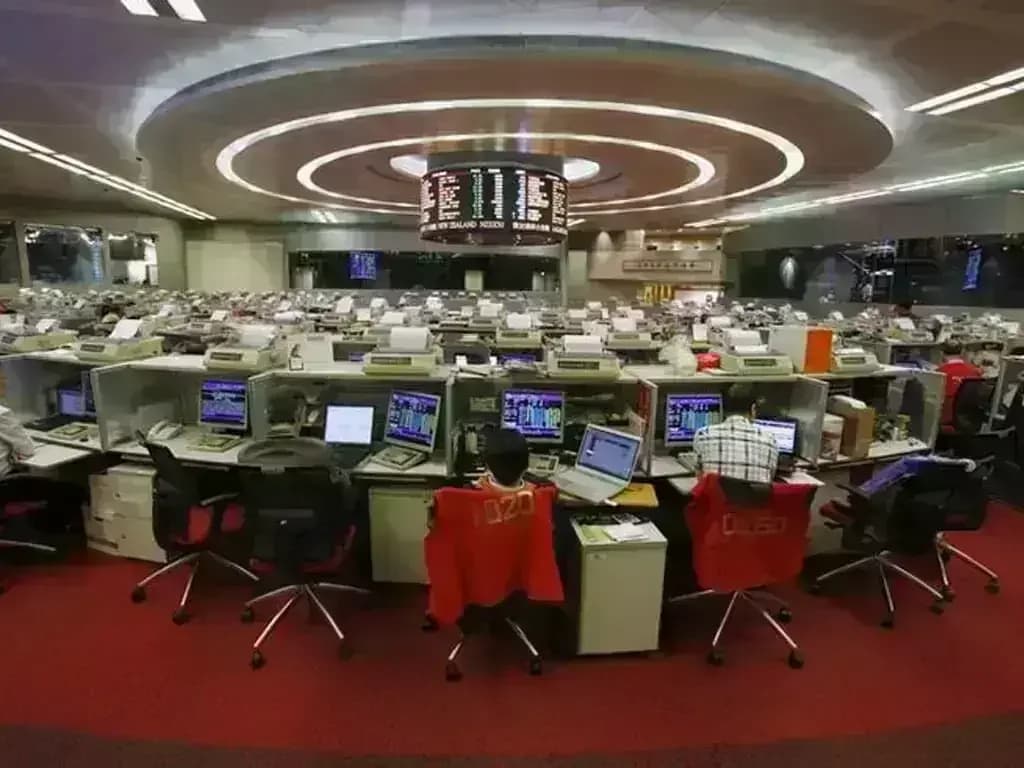
Chinese stocks ended sharply lower on Thursday as the Trump-Xi summit concluded with limited breakthroughs. The Hang Seng Index ended flat with a meagre rise of less than a point to 26,389 on high turnover of HK$306.7 billion, while the China enterprises index was down 17 points, or 0.2 percent, at 8,858. The tech index was down 17 points, or 0.35 percent, at 5,076 on the mainland. The Shanghai Composite Index ended down 64 points, or 1.52 percent, at 4,177, while the Shenzhen Component Index was 344 points, or 2.14 percent, lower at 15,745 and the ChiNext Index lost 87 points, or 2.16 percent, to 3,951. According to Reuters and Xinhua, investors had very low expectations from the summit but hoped for at least reassurances about an extension of a Sino-US trade tariff truce. Investors attributed the weakness to profit-taking, rather than response to news flows out of the Trump-Xi summit, with Richard Pan from China Asset Management noting that capital markets are becoming less sensitive to Sino-U.S. trade talk news.

The summit concluded with Trump telling Fox News Channel that China has agreed to buy 200 Boeing jets, a number that was far fewer than analysts had expected. As reported by Reuters, US Trade Representative Jamieson Greer told Bloomberg TV on Friday that it was undecided whether the trade truce will be extended after it expires later this year, but added that deals had been firmed up on Chinese purchases of farm goods, beef and Boeing aircraft. Xi and Trump are scheduled to have tea and lunch before the US president flies home, with the leaders discussing comprehensive global issues including the Middle East, the war in Ukraine, and the Korean Peninsula. The U.S. and China are expected to inch toward a managed trade mechanism for non-sensitive goods this week, with each side possibly identifying some $30 billion worth of goods on which they could reduce tariffs and sell to each other without crossing national security red lines. China has renewed import licenses for hundreds of U.S. beef processing plants, with permits typically valid for five years, though Reuters reported that around 400 beef plant certifications were renewed Thursday before being reversed later, creating uncertainty in cattle and meat markets.
Despite the geopolitical tensions, Xi signaled support for further economic opening and more stable China-US relations. According to reports from Business Standard, investors are not expecting major breakthroughs from the summit but are hoping both sides can maintain steady ties. This development suggests potential for continued economic cooperation despite ongoing diplomatic challenges, with Xi informed Trump on Thursday that negotiations on trade issues had reached "balanced and positive outcomes". However, as noted by Macquarie's Larry Hu, "Beijing is adopting a wait-and-see mode, given the 'better than expected' first-quarter [economic] growth ... Beijing's focus for the summit is not on deliverables but on optics, aiming to project stability and predictability to both international and domestic audiences." Richard Pan from China Asset Management noted that investors are focusing on rapid technology advancement rather than trade tensions, with the development of AI big models expected to stimulate both countries' capabilities. The U.S. has cleared around 10 Chinese firms to buy Nvidia's second-most powerful AI chip, the H200, but no deliveries have been made yet. The Chinese side also delivered a strong business-friendly message during the summit, with Xi telling U.S. executives attending portions of the visit that China welcomes deeper mutually beneficial economic cooperation.
The sharp market retreat reflects cautious investor positioning as participants digest the summit's limited outcomes and emerging Taiwan tensions. Gary Tan, portfolio manager at Allspring Global Investments, said the summit could act as a strategic springboard for further engagement, noting that "As market expectations for any immediate breakthrough entering the summit are already low, any signs of incremental progress should be taken positively by the market." Ritesh Ganeriwal from Syfe noted that "market expectations are low" and "investors aren't positioned for a positive surprise - meaning even a modest outcome could boost sentiment." The next major U.S.-China trade event isn't until November, when existing rare earth and tariff curbs pause, creating potential for a window of stability for the next six months. ING analysts noted that "oil prices are in a wait-and-see mode" and warned that the market could be pinning too much hope on the U.S.-China talks yielding positive results on the U.S.-Israeli war on Iran. Failure to make meaningful progress on reopening the Strait of Hormuz could leave the U.S. with few options other than renewed military action, according to IG analyst Tony Sycamore.