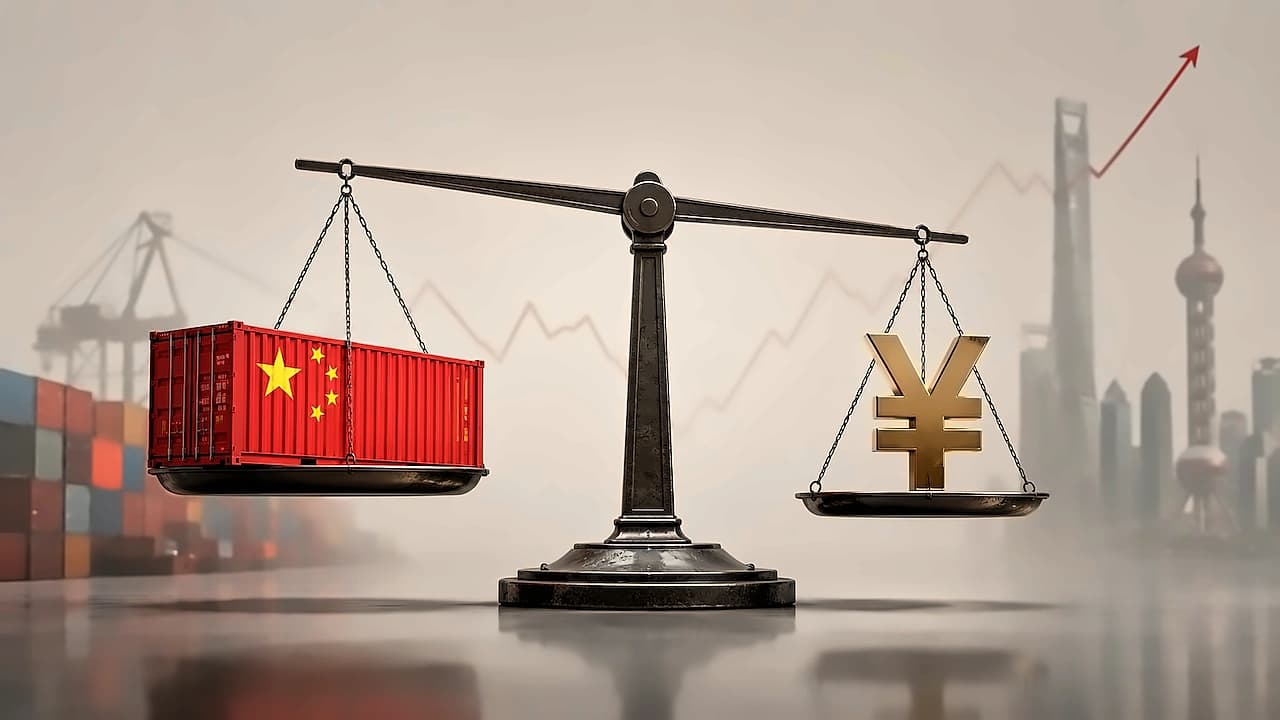
China's economy is experiencing a stark dichotomy between its robust external performance and struggling domestic sectors. According to reports from Reuters, the country posted 24% year-on-year export growth in July and achieved a $113 billion trade surplus, following similar strong numbers in June. This performance puts China on track for another trillion-dollar-plus surplus in 2026. However, the domestic economy shows concerning signs with disappointing 4.3% GDP growth recorded in the second quarter, and subdued retail sales growth of minus 0.6% in May and 1.3% in June. This split directly reflects Beijing's policy choices to gain dominance in advanced manufacturing sectors, with the country actively exporting to revitalize its stalling domestic economy.
Western governments are responding to what they call 'China Shock 2.0' through trade measures and policy changes. As reported by Reuters, Europe has implemented sectoral tariffs, more stringent cybersecurity requirements, and exhortations to China to appreciate its currency. The U.S. President Donald Trump has doubled down on tariffs, creating a challenging environment for Chinese exports. Governments argue that subsidized Chinese EV and green-tech exports are undercutting producers and threatening industrial jobs, particularly in Europe. This represents a significant shift from the early 2000s when China's manufacturing rise first disrupted industries across Europe and the U.S. Recent developments show companies like Shein are experiencing similar challenges, with the ultra-fast fashion retailer downsizing operations in Vietnam due to U.S. trade policy shifts and high tariffs.
Beijing has implemented a comprehensive policy response through its 'Globalization Phase 3.0' initiative. According to the analysis, Chinese companies are increasingly manufacturing directly in core consumer markets to bypass trade barriers, build local support, and insulate supply chains from geopolitical disruption. This strategy allows firms to shield lucrative international revenue streams from global fragmentation while escaping unprofitable domestic markets. The government has also implemented measures to limit cutthroat price wars in industries such as food delivery, EVs, and solar components, though this 'anti-involution' campaign has had limited success.
Companies best positioned to benefit from these policy shifts are concentrated in sectors that dominate China's export landscape. As reported by Reuters, EV leaders BYD and Geely, and battery major CATL command large global market shares and operate globally diversified manufacturing bases. Consumer electronics titans Midea and Haier operate fully integrated global systems across Southeast Asia, Latin America, the U.S. and Europe. Other potential winners include companies manufacturing critical technological components with few Western substitutes, such as Zhongji Innolight and Eoptolink who produce optical transceivers for global AI hardware supply chains. Meanwhile, Chinese companies are adapting by enhancing global manufacturing bases to evade trade hitches, crafting potential economic winners and losers in China's economy.
Beijing's policy response may involve allowing the yuan to appreciate, creating potential corporate winners. According to Reuters, the yuan has rallied 3.6% against the dollar and 5.5% against the euro in 2026 as of August 7. Large state-owned enterprises with significant euro-denominated debt, such as Sinopec, would benefit from yuan appreciation against the euro. Meanwhile, China's 'Big Three' state-owned airline carriers - Air China, China Southern, and China Eastern - would see their massive dollar-denominated debt burdens decrease in local-currency terms. However, companies may still face headwinds from domestic price wars and exogenous shocks like the U.S.-Iran war affecting energy prices.