China's persistent economic imbalance is characterized by production exceeding consumption, weak household spending, and years of investment-led growth that has left the economy dependent on manufacturing and exports. According to reports from The Reason Why, economists broadly agree that China should import more, export less, and encourage household consumption over saving. However, a fundamental debate has emerged between two competing approaches to address this structural problem.
Gita Gopinath, former first deputy managing director of the International Monetary Fund, along with Pierre-Olivier Gourinchas and Hélène Rey, argue that China's policies have contributed to yuan weakness rather than the currency being undervalued. As reported by The Reason Why, their framework identifies weak household spending, property slowdown, high savings, and persistent current account surplus as the core problems. The GGR approach warns that stronger yuan appreciation could create deflationary pressures by making imports cheaper and Chinese exports more expensive, potentially discouraging domestic consumption.
Michael Pettis, senior fellow at the Carnegie Endowment, argues that China's large trade surplus results from households receiving insufficient income. According to The Reason Why, his framework suggests that policies shifting income toward households through higher wages, stronger pensions, tax cuts, welfare spending, lower industrial subsidies, or stronger unions could help correct the imbalance. Pettis contends that yuan appreciation provides a mechanism for income redistribution by making imports cheaper and Chinese exports more expensive, transferring purchasing power from producers to households.
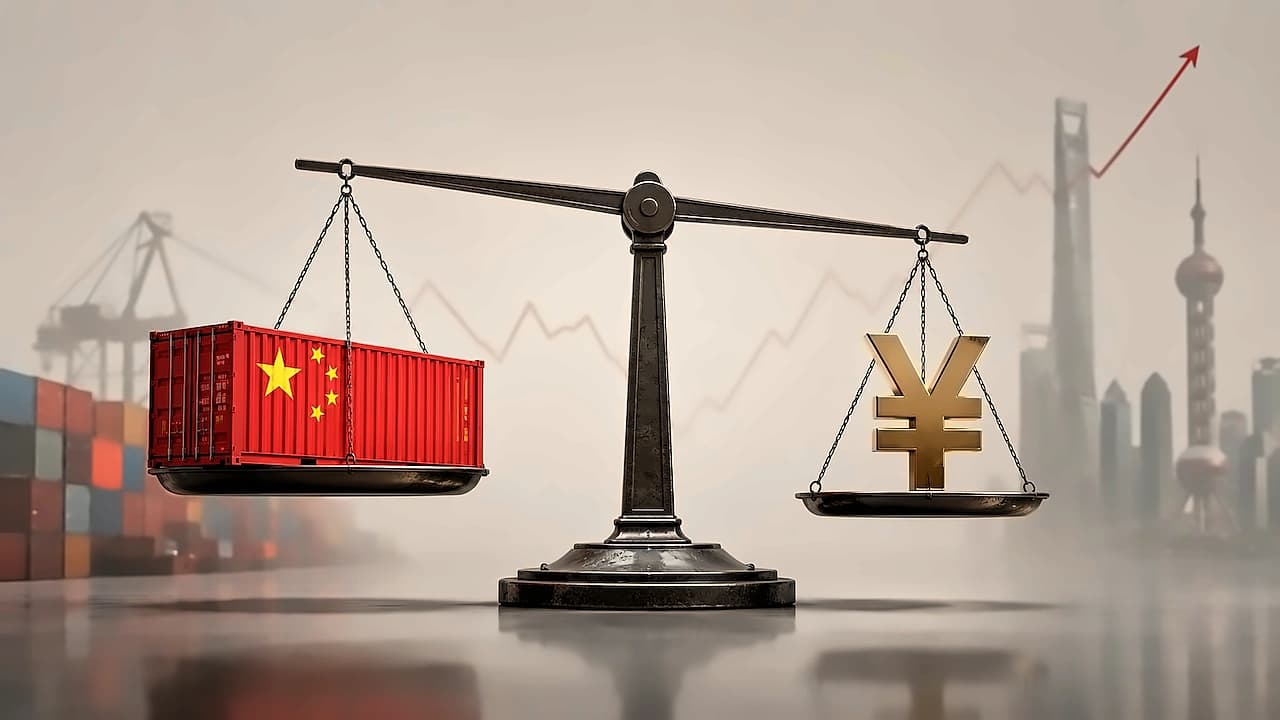
Both approaches face significant implementation hurdles. Critics of the GGR framework argue it understates the exchange rate's role, while Pettis' approach faces the challenge that more household income doesn't necessarily translate into increased consumption. As reported by The Reason Why, Chinese households save not only due to low incomes but also because of uncertainty from a struggling property market, aging population, and weaknesses in public healthcare and pensions. The timing problem with currency appreciation means exporters may take time to respond to stronger yuan, limiting initial impact.
Despite economist recommendations, China has maintained its focus on manufacturing, technological upgrading, and exports even as domestic consumption struggles. According to The Reason Why, Beijing has long resisted external pressure to appreciate the yuan and shown limited appetite for consumption-led policies recommended by the IMF. The country's five-year plans and official speeches continue emphasizing production and exports involving new technologies, suggesting that economists' preferred solutions may not align with China's current policy priorities.