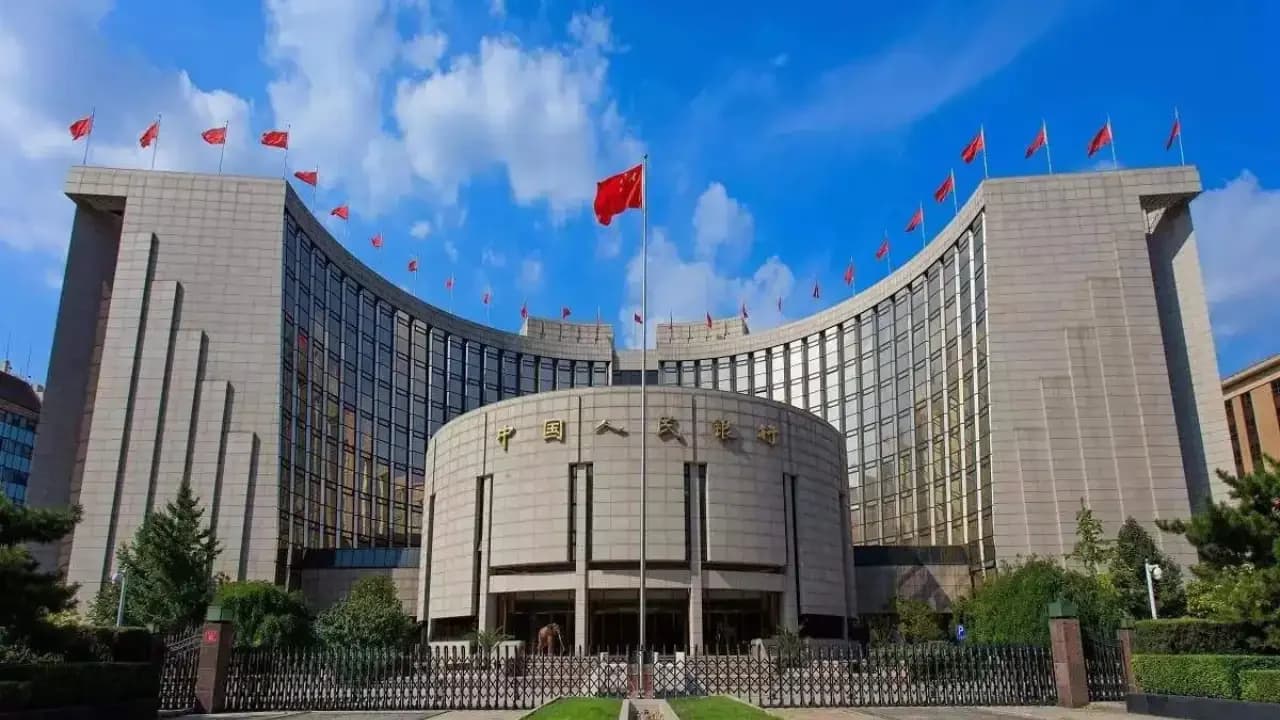
China's slower loan growth is becoming a permanent feature as weakening property and local government sectors reduce credit demand faster than emerging industries can compensate, according to People's Bank of China Governor Pan Gongsheng. As reported by China Daily, the central bank governor emphasized that this shift reflects a broader transformation in China's economy rather than a shortage of financing. The outstanding yuan loans now stand at more than 280 trillion yuan ($41.73 trillion), with a substantial portion linked to property and local government financing vehicles that are now shrinking. Between 2025 and the first half of 2026, outstanding real estate loans fell by more than 2 trillion yuan, a decline that other sectors must first offset before overall lending can grow again. "Slower but higher-quality loan growth is likely to become one of the new normal features of macroeconomic operations," Pan wrote in the Communist Party's flagship theoretical journal Qiushi. "Maintaining previous rates of overall credit growth will be difficult and unnecessary."
China's banks extended 60 billion yuan ($8.95 billion) in new loans in August, according to Reuters, representing a recovery from July's record 340 billion yuan contraction but falling well below the 400 billion yuan expected by analysts. Household borrowing contracted for a sixth consecutive month, reflecting continued weakness in mortgage demand and limited appetite for debt-funded consumption. From January through August, new yuan loans totalled 10.44 trillion yuan, down from 13.46 trillion yuan during the same period a year earlier. Outstanding yuan loans grew 4.9% year-on-year in August, marking the slowest pace on record. Despite the weaker credit demand, financing conditions remain relatively accommodative and effective borrowing needs continue to be met, Pan added. The latest data shows aggregate social financing growth eased to 7.2 percent in August from 7.4 percent in July, with medium- to long-term household loans contracting further reflecting the ongoing shift in China's financing landscape.
PBOC Governor Pan Gongsheng has used an article in Qiushi, the Communist Party's leading policy journal, to reinforce a shift away from quantitative credit targets and toward price-based tools in guiding monetary policy. In the article titled "Deeply Understanding the Transformation of China's Financial Structure and Enhancing the Adaptability of Financial Services to the Real Economy," Pan calls for continued reform of the monetary policy framework, with less weight placed on aggregate lending figures and more on interest rate mechanisms. He specifically flags the need to improve how short-term rates are managed, strengthen the central bank's own policy rate, and give businesses clearer loan pricing benchmarks. The article also calls for stronger enforcement of interest rate policy and continued efforts against what Chinese policymakers term "involutionary" competition, excessive, low-margin competition among lenders, along with idle funds sitting unused in the financial system. This shift represents a deliberate move away from chasing loan targets to maintaining stable debt levels, with Pan arguing that slower growth in total financial volume actually helps keep China's macro leverage ratio stable.
The changing composition of China's economy is reducing the importance of bank loans as the sole indicator of financing conditions. According to China Daily, in 2025, bank loans accounted for 45% of the increase in total social financing, while bond and equity financing together represented 47%, surpassing bank lending for the first time. This shift is particularly relevant as China seeks to direct capital towards high-tech manufacturing, green industries and other emerging sectors that tend to rely more heavily on technology, data and intellectual property than on traditional bank borrowing. The ratio of corporate bond issuance to new loans climbed from 7 percent in 2023 to nearly 20 percent in the first half of 2026. By the end of June 2026, direct financing represented roughly one-third of the outstanding social financing stock, up from near zero in the early 1990s, while the loan share had fallen to approximately 60%. Fast-growing industries such as high-tech manufacturing and green technology, responsible for more than 40% of economic growth in the first half of 2026, rely more on technology, data and intellectual property than land and factories, making them less dependent on bank lending. Financial markets also offer alternatives for financing innovative industries, meaning loan growth alone cannot gauge financial support for the economy.
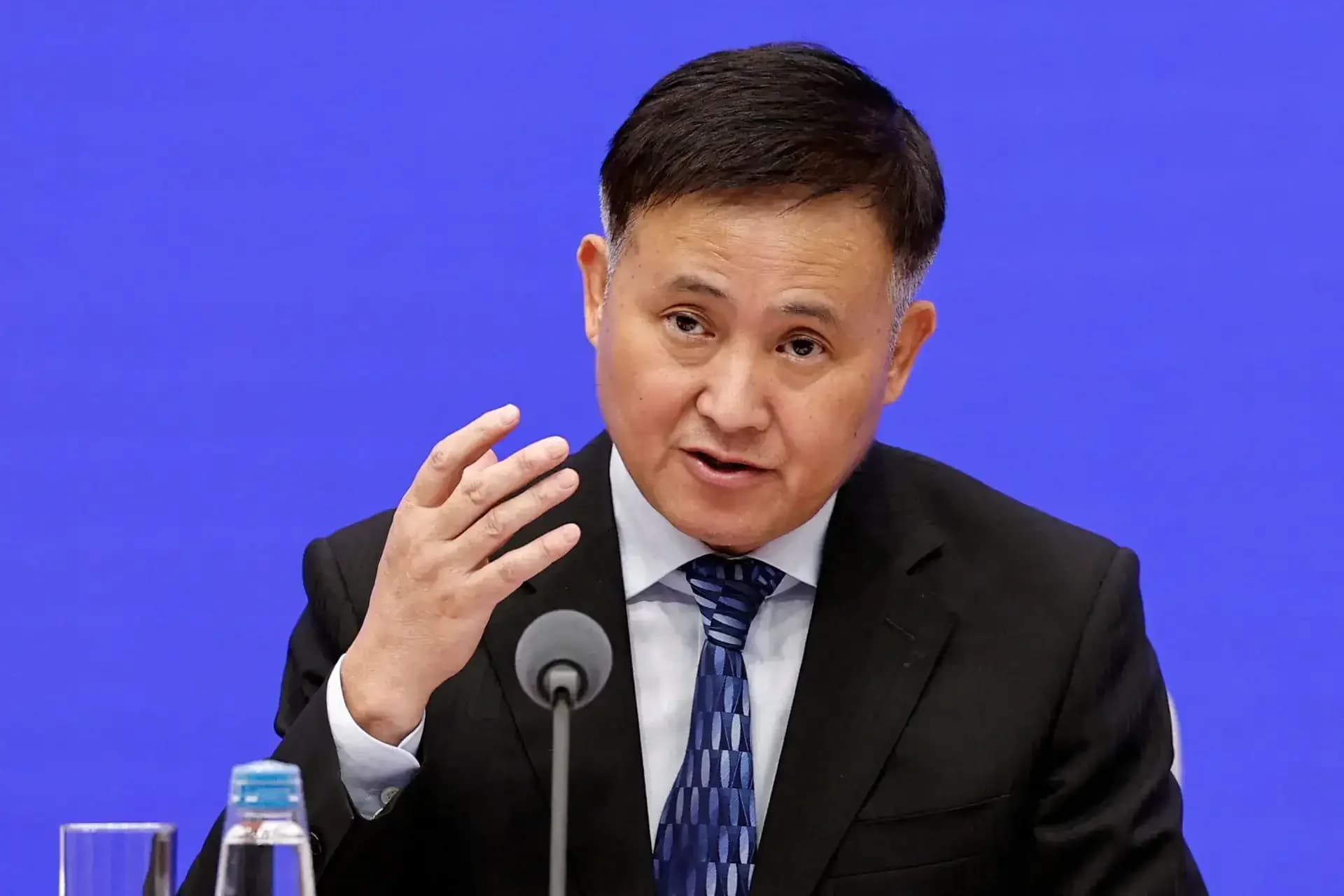
China's macro leverage ratio has shown significant improvement, with the National Institution for Finance & Development reporting a decline of 1.1 percentage points to 308.2% in the second quarter, marking its first quarterly decline since 2022. According to China Daily, this improvement was helped by recovery in nominal GDP growth. Pan cautioned that "financing growth exceeding the real economy's needs, leaving funds idle, further increasing leverage and hindering the exit of outdated capacity and inefficient businesses." The governor emphasized that "the slowdown in the growth of financial aggregates helps maintain the macro leverage ratio generally stable." During the 15th Five-Year Plan (2026-30) period, the central bank will lessen emphasis on quantitative targets, particularly lending, and strengthen interest rate mechanisms. The PBOC will also improve financial market connectivity, prudently develop interest rate and foreign exchange derivatives, and build a cross-border payment system with multiple channels and broad coverage.