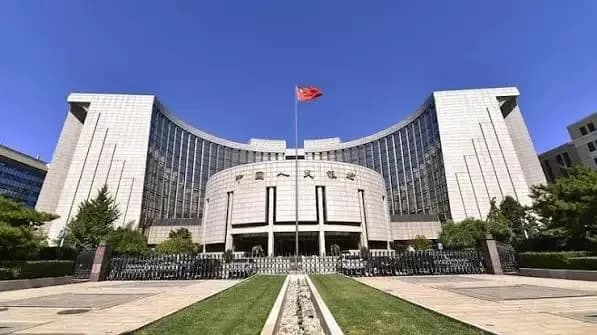
Chinese equity markets staged a strong rebound as investors responded positively to the People's Bank of China's policy framework signals. According to reports from Business Standard, market sentiment improved significantly after the PBOC indicated it may shift to using the overnight policy rate as its main benchmark, replacing the current seven-day reverse repo rate. The change would bring China's monetary policy framework more in line with those used by major central banks such as the U.S. Federal Reserve. Technology stocks led the advance, with gains in Zhongji Innolight, Eoptolink Technology, and NAURA Technology helping lift the broader market. The positive market reaction reflects investor confidence in the PBOC's strategic direction toward a more modern monetary policy framework.
China's central bank has signalled a potential shift toward an overnight policy rate system, marking a significant departure from its current framework. According to reports from The Hindu BusinessLine, Governor Pan Gongsheng announced at the Lujiazui Forum in Shanghai that the People's Bank of China will improve its adjustment of short-term interest rates and expand its suite of overnight reverse repurchase operations at an appropriate time. This move would bring the PBOC closer to global peers and give policymakers greater influence over short-term funding costs. The development comes as global central banks face similar policy framework adjustments, with the Fed's upcoming FOMC meeting on June 17 potentially marking a shift toward more hawkish policy expectations under new Chairman Kevin Warsh.
The proposed changes involve specific operational adjustments to the interest rate corridor. As reported by The Hindu BusinessLine, Pan announced that the PBOC will improve the use of temporary overnight reverse repo and repo operations, setting their rates at 25 basis points above and below the seven-day reverse repo rate. This will narrow the interest-rate corridor to 50 basis points from 70 basis points previously, according to the governor. Standard Chartered's head of China macro strategy, Becky Liu, noted that the PBOC will likely gradually move towards a new monetary policy corridor framework, with overnight repo rate being the likely new de facto policy rate. The Fed operates a similar framework, setting a target range for the federal funds rate at 3.50% to 3.75%, which is narrower than the new corridor announced by the PBOC.
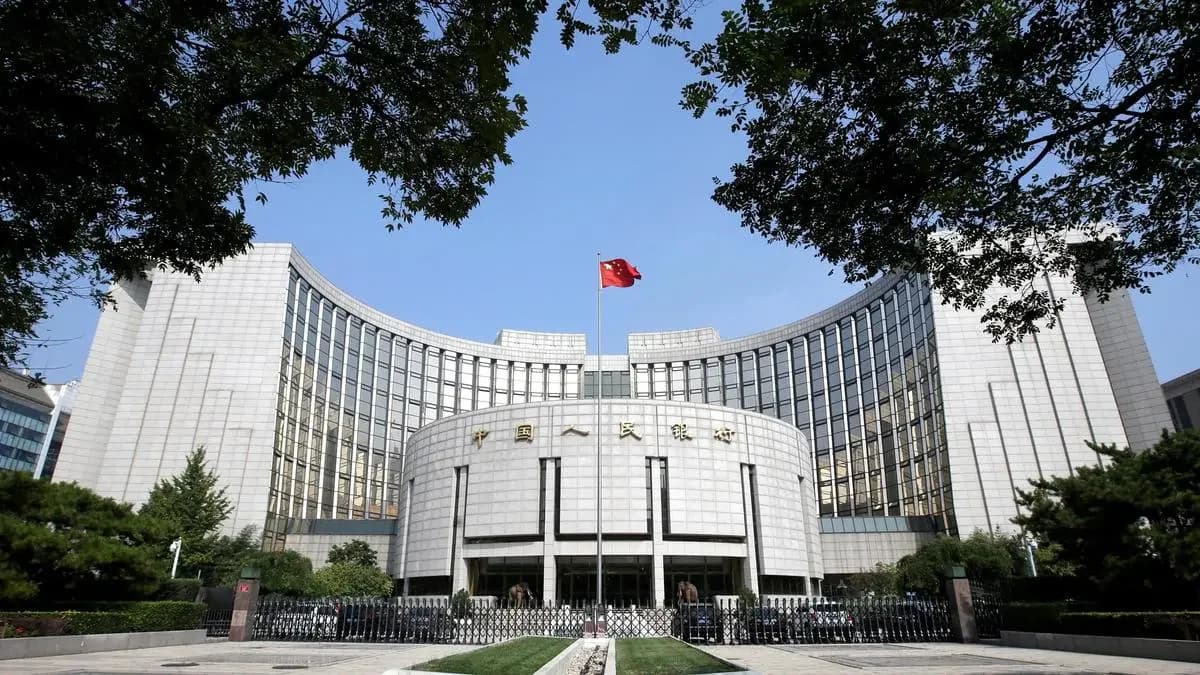
The PBOC's recent rate decisions reflect a more cautious monetary policy stance. According to reports from The Hindu BusinessLine, the central bank last cut its seven-day policy rate by 10 basis points to 1.4% in May 2025, which was far less than the 40 to 60 basis points of reductions many economists had expected for the year. Many economists have pushed back their forecasts for the next rate cut to 2027 as factory-gate inflation picks up, driven by the Iran war and higher oil prices. However, weak consumer spending and investment data released this week suggest growth risks are mounting, potentially adding pressure on policymakers to ease. Meanwhile, Fed Funds futures traders are pricing in 99% odds of no change to interest rates for the upcoming FOMC meeting, with traders also pricing in a ~60% probability of at least one interest rate hike by the end of the year.
Investor confidence was further bolstered by comments from Vice Premier He Lifeng regarding China's financial legal framework. As reported by Business Standard, He Lifeng said China plans to strengthen its financial legal framework, including introducing anti-sanctions measures aimed at countering what it views as unfair foreign restrictions. This development addresses concerns about China's regulatory environment and provides clarity for international investors. The overnight rate system offers significant advantages for monetary policy transmission, with financial institutions borrowing from one another daily to manage liquidity and settle transactions, making overnight rates much more heavily traded than other tenors. By exerting tighter control over overnight rates, the PBOC could improve the transmission of monetary policy through the financial system.
This development represents another step in the PBOC's ongoing policy framework revamp that began two years ago. According to reports from The Hindu BusinessLine, under the reform, the central bank sought to simplify a system that relied on multiple policy tools and instead centered policy signaling around a single key rate — the seven-day reverse repo rate. The PBOC does not currently have a regularly used overnight policy rate, but in recent months it has signalled that it's monitoring the overnight market borrowing costs more closely instead of the seven-day tenor. Since January, it has included analysis in its monthly reports tracking the spread between the overnight repo rate in the interbank market and the seven-day rate. Meanwhile, the Fed's communication strategy under Warsh faces scrutiny, with traders expecting him to address political pressure and Fed independence during his first press conference, which could have lasting implications for global monetary policy coordination.