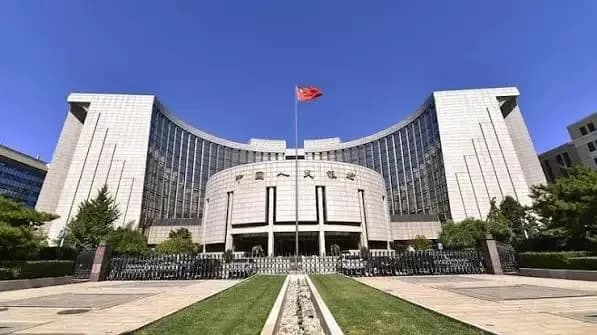
China's central bank has significantly boosted liquidity support while maintaining the overnight reverse repo rate at 1.25%. According to Reuters, the People's Bank of China injected 300 billion yuan through its new overnight reverse-repo facility on Tuesday, doubling the amount provided during the tool's debut on Monday. The PBOC also injected 69.5 billion yuan through seven-day reverse repo operations while keeping the interest rate unchanged at 1.4%. This increased support signals a focus on stable money markets and economic activity, with the larger liquidity injection specifically aimed at helping banks and financial institutions manage month-end funding pressures when demand for cash typically increases as institutions strengthen their liquidity positions.
The PBOC's decision to set the overnight reverse repo rate at 1.25% represents a deliberate strategy to manage market expectations without forcing investors to reinterpret China's broader policy stance each time liquidity is adjusted. According to Bloomberg, analysts had anticipated the inaugural rate would fall somewhere between 1.3% and 1.35%, which would have sat just below the current 7-day reverse repo rate of 1.40%. The 1.25% rate provides a middle ground that allows the PBOC to smooth day-to-day funding stress without creating unnecessary volatility in short-term funding markets. For Chinese banks, a smoother overnight lending market means lower and more predictable short-term borrowing costs, which feed directly into the cost of lending to businesses, consumers, and property developers still working through the real estate correction. The undisclosed rate introduces short-term uncertainty that will resolve quickly once the PBOC either publishes the rate or market participants infer it from transaction pricing.
The real signal comes not from the size of the injection but from the strategic pricing below market expectations. As noted by Investing.com, the PBOC could have easily deployed 300 billion yuan without breaking a sweat, but instead chose to set the overnight rate at 1.25%, 10 basis points below the 1.35% consensus estimate. This deliberate pricing below expectations tells markets that Beijing wants overnight borrowing costs to drift lower, signaling a quieter channel for easing rather than a full-scale stimulus blast. The central bank's decision to land 10 basis points below expectations demonstrates that policymakers are easing the handbrake one click without yet admitting the car is rolling downhill. The existing seven-day reverse-repo rate stayed at 1.40%, giving officials enough cover to say this was merely a new liquidity operation rather than an outright policy shift, but the market understands the policy signal clearly.
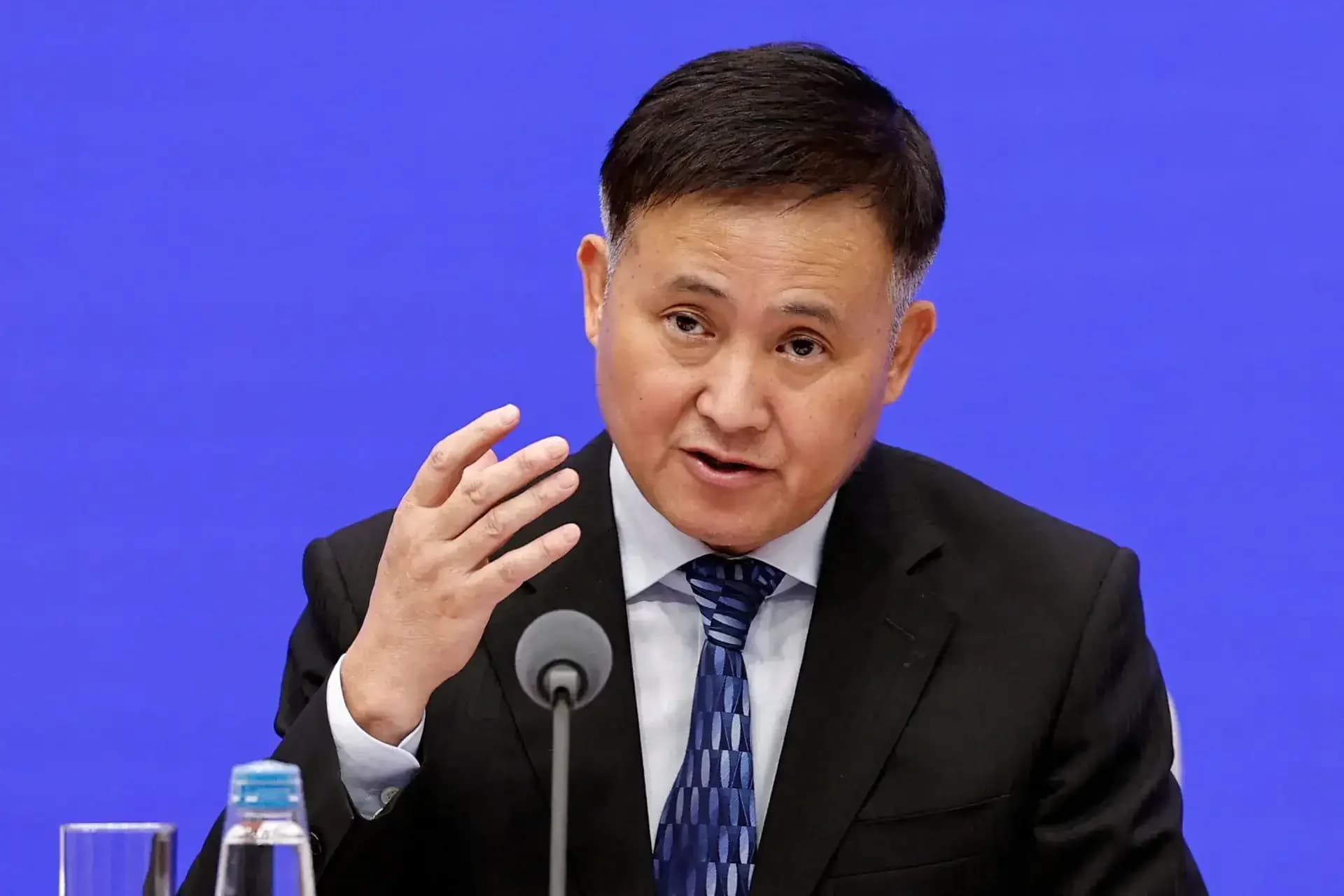
The overnight reverse repo launch is part of a comprehensive strategy to tighten control over short-term interest rates through a narrower interest rate corridor. As reported by Bloomberg, PBOC Governor Pan Gongsheng telegraphed the move at the Lujiazui Forum on June 17, framing overnight reverse repos as part of this broader effort. The PBOC is compressing the corridor for short-term rates from 70 basis points wide to 50 basis points. The 7-day reverse repo became the PBOC's primary policy benchmark in 2024, replacing an older, more complicated system that relied on multiple reference rates simultaneously. This corridor compression represents the next phase in the PBOC's systematic refinement of its monetary policy framework, providing greater control over short-term funding conditions. The PBOC added outright reverse repos in October 2024, with the overnight tool announced now being the next layer of that ongoing refinement.
Market participants quickly understood the policy signal, with China's 10-year government yield slipping toward 1.71%, extending its recent decline while both overnight and seven-day repo rates eased. According to Investing.com, this bond market response shows the next move in China is more likely to be lower borrowing costs than tighter financial conditions. Citigroup and Standard Chartered both see the move as laying the groundwork for lower effective lending rates and a possible reduction in China's Loan Prime Rates. The next confirmation point will be lower effective lending rates or an LPR cut, which would make sense given that Beijing has spent years avoiding the optics of another blunt stimulus blitz. However, the economy is increasingly making that balancing act harder, with retail sales softening, investment momentum fading, property remaining a drag, and broader demand struggling to find traction. For now, China has not formally declared an easing cycle, but it has made it much harder to argue that one is not coming.