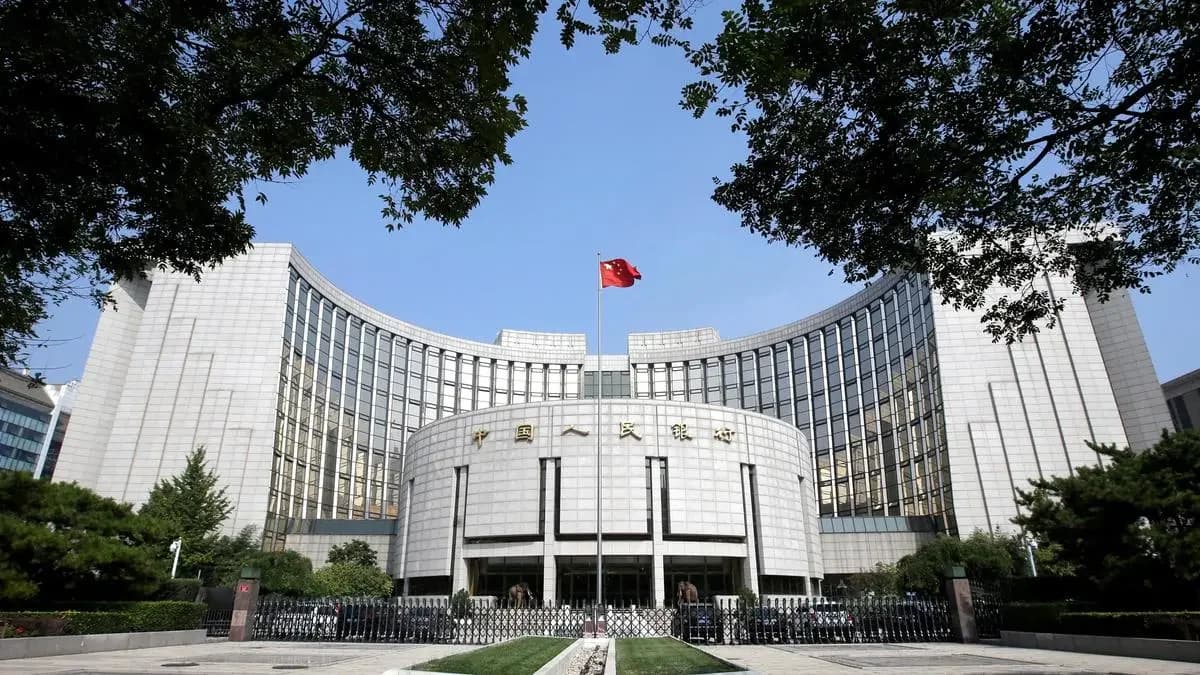
China maintained its benchmark lending rates unchanged for the 17th consecutive month in October, with the one-year loan prime rate (LPR) held at 3.00% and the five-year LPR unchanged at 3.50%. According to The Hindu BusinessLine, a Reuters survey of 22 market participants conducted on Monday predicted no change to either rate, with all participants expecting the status quo. China's blue-chip CSI300 Index dropped 0.5% by lunch break, while the Shanghai Composite Index was 0.1% weaker. In Hong Kong, the Hang Seng fell 1% and the Hang Seng Tech Index slid 1.2% to a two-year low. The decision signals that policymakers are in no rush to roll out further monetary easing following the strong GDP reading.
China's economy expanded 4.5% year-on-year in the third quarter, topping forecasts and reducing the urgency for Beijing to step up support to meet its annual growth target. According to The Hindu BusinessLine, analysts noted that the stable headline growth "lessens the urgency to unleash a new volley of fiscal and monetary stimulus." Without additional stimulus, sluggish domestic investment and consumption will still lead to slightly slower growth, they added. This economic resilience has contributed to the cautious monetary policy stance, reducing expectations for immediate policy support.
The People's Bank of China is embarking on a multi-month transition toward an overnight policy interest rate, with analysts at Société Générale SA, Standard Chartered, and Tianfeng Securities viewing this as a gradual process rather than a one-off change. As reported by Financial News, the central bank announced it will conduct overnight reverse repo operations from October 21 to November 2, moving beyond its prior practice of using such operations strictly during month-end or tax-payment seasons. Michelle Lam from Société Générale expects the transition could take place over the coming months as soon as the fourth quarter, with the window being the upcoming quarterly PBOC meeting. The PBOC has been consistent with its reform toward a price-based policy framework, with Tianfeng Securities analysts expecting the overnight open market operation rate may be formally established as the benchmark anchor in the first half of 2027.

State-backed funds are stepping up their market presence as China's benchmark stock index faces pressure from the rate decision. According to Bloomberg data, inflows into exchange-traded funds favored by the so-called National Team surged to their highest level since July last week. While there's no official confirmation that state funds are boosting purchases, the size and timing of these flows have convinced many market participants that Beijing is looking to support the market. China Securities Co. analysts, including Yao Ziwei, noted that the latest buying bears the hallmarks of large institutions moving against the market's decline, citing persistent large inflows, their concentration in leading broad-based ETFs, and heavier trading near the close.
The broader market decline was led by financial and technology sectors, with the CSI Banks Index and financial sector both down 1.4%. The gold-related sector weakened 1.2% as bullion prices continued to slip. However, there were signs of recovery in some segments, with the startup board ChiNext Composite index higher by 0.3% to recover from a 14-month low, and Shanghai's tech-focused STAR50 index up 0.8%. The smaller Beijing Stock Exchange 50 Index jumped more than 4% after China's securities regulator announced it would launch an ETF tracking the index to support the bourse's development.