China's manufacturing sector showed significant improvement in August, with the official manufacturing purchasing managers' index (PMI) rising to 49.8 from 49.2 in July, according to data from the National Bureau of Statistics. The reading beat the median forecast of 49.6 in a Reuters poll but remained below the 50-mark separating growth from contraction. As reported by CNBC TV18, the report Monday was better than what economists had expected, with Nguyen Hoang Nam, a China economist at Capital Economics, noting that "manufacturing activity rebounded thanks to strong export demand." Huo Lihui, a chief statistician with the National Bureau of Statistics, said in a statement that the August PMI data reflected an improvement in China's overall economy. The production index registered 50.4% and new orders index reached 50.6%, both up from the previous month, with the significantly larger increase in new orders indicating that demand-side recovery is outpacing supply-side momentum.
The manufacturing demand recovery was particularly evident in export-related metrics, with the new orders subindex rising to 50.6 in August from 48.5 in July, while a separate measure for new export orders came in at 50.1, up from 49.6 a month earlier. According to CNBC TV18, several PMI sub-indexes returned to expansion in August, with the sub-index on production advancing to 50.4 from 49.9 in July. Max Zenglein, a senior economist for the Asia Pacific at The Conference Board, noted that "demand for green technologies was already accelerating last year and has continued to strengthen, providing an important additional boost to Chinese exports so far this year." China has also been exporting more to regions including Europe and Southeast Asia as US tariffs dent China-US trade following President Donald Trump's return to the White House last year. Lynn Song, ING's Greater China chief economist, noted that "the data came in a little stronger than market expectations," adding this could set the stage for a slight recovery in the industrial production growth data for August.
The non-manufacturing purchasing managers' index (PMI), covering services and construction, remained unchanged at 49.0, matching July's reading and marking the weakest level since December 2022. According to Reuters, the services business activity index was 49.3%, with business conditions remaining broadly stable. The construction business activity index was 46.9%, edging down 0.1 percentage points from the previous month due to extreme weather including heavy rain and typhoons. However, the construction business activity expectation index was 51.8%, unchanged from the previous month, with enterprises maintaining relatively stable confidence in near-term market development. Lynn Song, ING's Greater China chief economist, noted that "because China's services sector is primarily domestically focused, this suggests domestic demand remained relatively sluggish in August." He added that "for now, the PMI data suggests that we are due for another month of relatively sluggish domestic activity data in August, with any potential rebound likely to be limited."
The August PMIs revealed significant sectoral differences, with electrical machinery and equipment, as well as computer, communications, and electronic equipment performing particularly well, with both production and new orders indices exceeding 53.0%, reflecting rapid release of production and demand. Equipment manufacturing PMI stood at 51.4% while high-tech manufacturing PMI reached 52.9%, both remaining in expansion territory for consecutive months. In contrast, chemical raw materials and chemical products, along with ferrous metal smelting and rolling processing, saw both indices fall below the threshold, indicating persistently weak market activity. Consumer goods and high-energy-consuming industries remained in contraction at 49.0% and 47.9% respectively, but rose 1.2 and 0.9 percentage points from the previous month, showing improved business conditions. Large enterprises were the main drivers of improvement, with Large Enterprise PMI at 50.6%, up 1.1 percentage points from the previous month, while medium-sized and small enterprises showed mixed performance. Zhang Liqun, an analyst with the China Federation of Logistics & Purchasing, said that with the manufacturing PMI reading still in contraction, business confidence remained unstable, noting that "continued government investment in public goods should be strengthened to effectively drive increased orders for businesses."
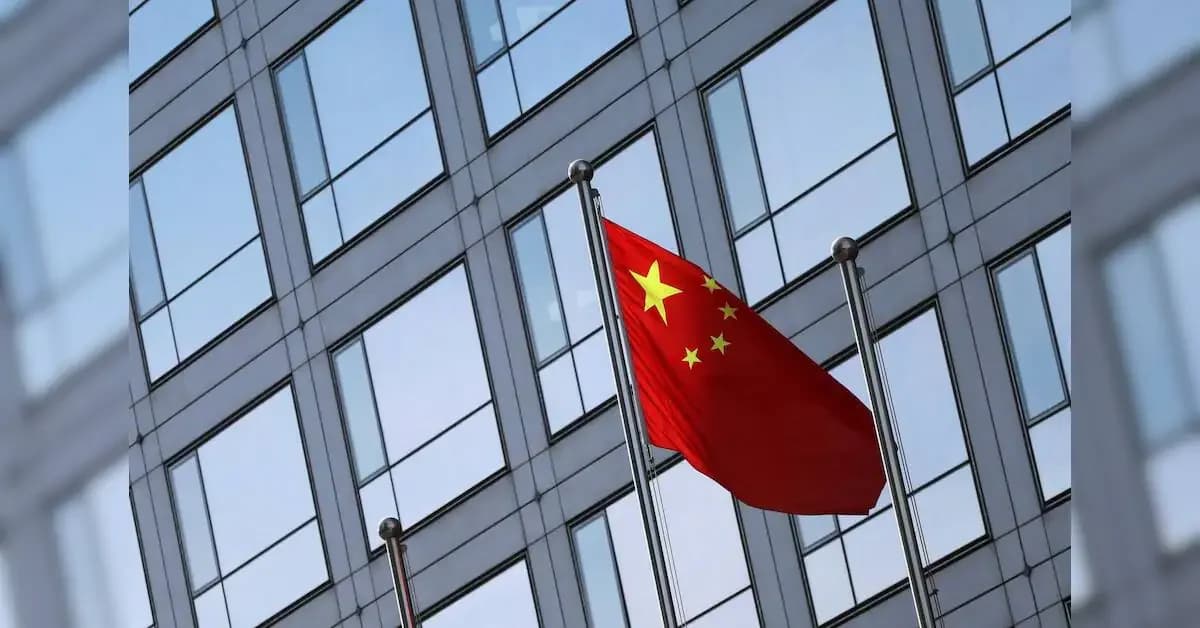
Despite the manufacturing recovery, economic data released earlier this month showed growth remained under pressure at the start of the second half, with goods consumption and industrial output both slowing. According to Reuters, Xu Tianchen, senior economist at the Economist Intelligence Unit, said "domestic demand seems to be coming back, although it's more likely to have been driven by AI and exports than by policy expansion." Zhiwei Zhang, president and chief economist at Pinpoint Asset Management, said it was too early to conclude the economy had rebounded. China's economy grew at a 4.3% annual pace in the April-June quarter, its slowest growth rate in more than three years. Despite the boom in trade, sluggish domestic demand partly due to a protracted slump in the property sector has weighed on the Chinese economy. The government has vowed to accelerate fiscal spending on already-budgeted infrastructure projects for the remainder of the year to support economic recovery, with 109 major projects and the "six networks" planning and construction entering an accelerated phase. As reported by BigGo Finance, the trend of stabilizing manufacturing operations and clearly improving business conditions has been preliminarily established, with pro-consumption policy measures gaining traction and the guiding and driving effects of central budget investment becoming more evident.
In a sign the government will not unveil large-scale stimulus, an article published this month in the People's Daily said China is not excessively reliant on strong policy stimulus and that it is capable of achieving its annual economic growth target. As reported by Reuters, the government has vowed to accelerate fiscal spending on already-budgeted infrastructure projects for the remainder of the year to support economic recovery. The finance ministry recently expanded loan interest subsidies for small private firms and consumers, while the central bank said it would roll out measures without signalling explicit cuts to policy rates. Trade issues will likely be discussed during Trump's expected meeting with Chinese leader Xi Jinping, which is set for late September. The divergence between manufacturing and service sectors suggests that China will continue to rely on manufacturing and exports to drive growth as momentum remains under pressure from lacklustre domestic consumption and investment.