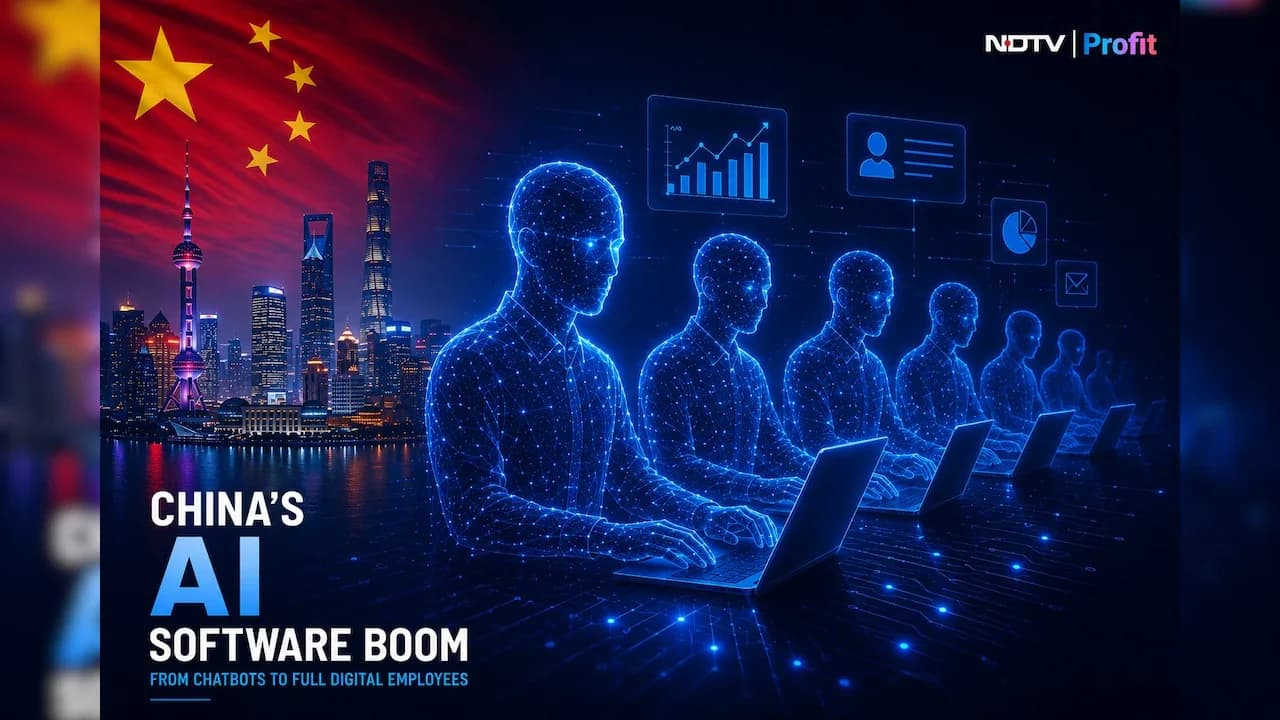
A wave of advanced AI models from Alibaba, Moonshot, ByteDance, DeepSeek and Z.ai is rapidly closing the technology gap with US rivals while intensifying competition on price and performance. Alibaba Group Holding Ltd. became the latest in a parade of Chinese debuts hitting the top of global benchmarks with its Qwen3.8-Max this week, its most advanced model to date that appeared to match or exceed Anthropic PBC's flagship Fable 5. Two weeks earlier, Moonshot AI's Kimi K3 showed performance comparable to the priciest US options built on a much humbler budget, sparking fresh questions over the effectiveness of US chip sanctions intended to slow China's tech ascent. The rapid advances are creating what analysts describe as a 'DeepSeek death zone' for anyone without frontier-pushing technology or market-breaking pricing. Poe Zhao, a Beijing-based tech analyst, noted that 'The most important change since January 2025 is that China's progress no longer looks like a single-company breakthrough', with Chinese developers now having a repeatable system for producing models close to the global frontier.
The cost differential between Chinese and US AI models has become even more pronounced, with DeepSeek V4 Flash executing complex real-world workloads for just $0.03 compared to $3.15 with Claude Fable 5 in benchmark testing by independent evaluator Artificial Analysis. This significant price advantage stems from Chinese developers' focus on radical efficiency over capability, prioritizing delivering useful performance at the lowest possible price rather than pursuing the most capable model at any cost. Moonshot and Alibaba made the riskier bet of building very large models, each with more than 2 trillion parameters, an indication of their sophistication, while OpenAI and Anthropic treat their parameter counts as confidential and do not disclose specific figures. The performance gap continues to narrow as Chinese developers have embraced collaborative innovation, streamlined model designs and found ways to use computing resources more efficiently. This cost advantage means more people can afford to use AI, more companies can experiment with it, and more applications become commercially viable.
The report highlighted differing investor reactions to recent earnings announcements by major technology companies, as reported by The Hindu BusinessLine. Alphabet came under pressure after reporting negative free cash flow in the second quarter of 2026 for the first time since its initial public offering in 2004. Similarly, Meta's shares declined 10 per cent in after-hours trading after its free cash flow plunged 91 per cent, falling from $8.5 billion in Q2 2025 to $784 million in Q2 2026. However, Microsoft gained 8 per cent in after-hours trading after maintaining its capital expenditure guidance for calendar year 2026 at approximately $175 billion. Meta notably raised its 2026 capital expenditure guidance to $130-145 billion, compared with its earlier guidance of $125-145 billion.
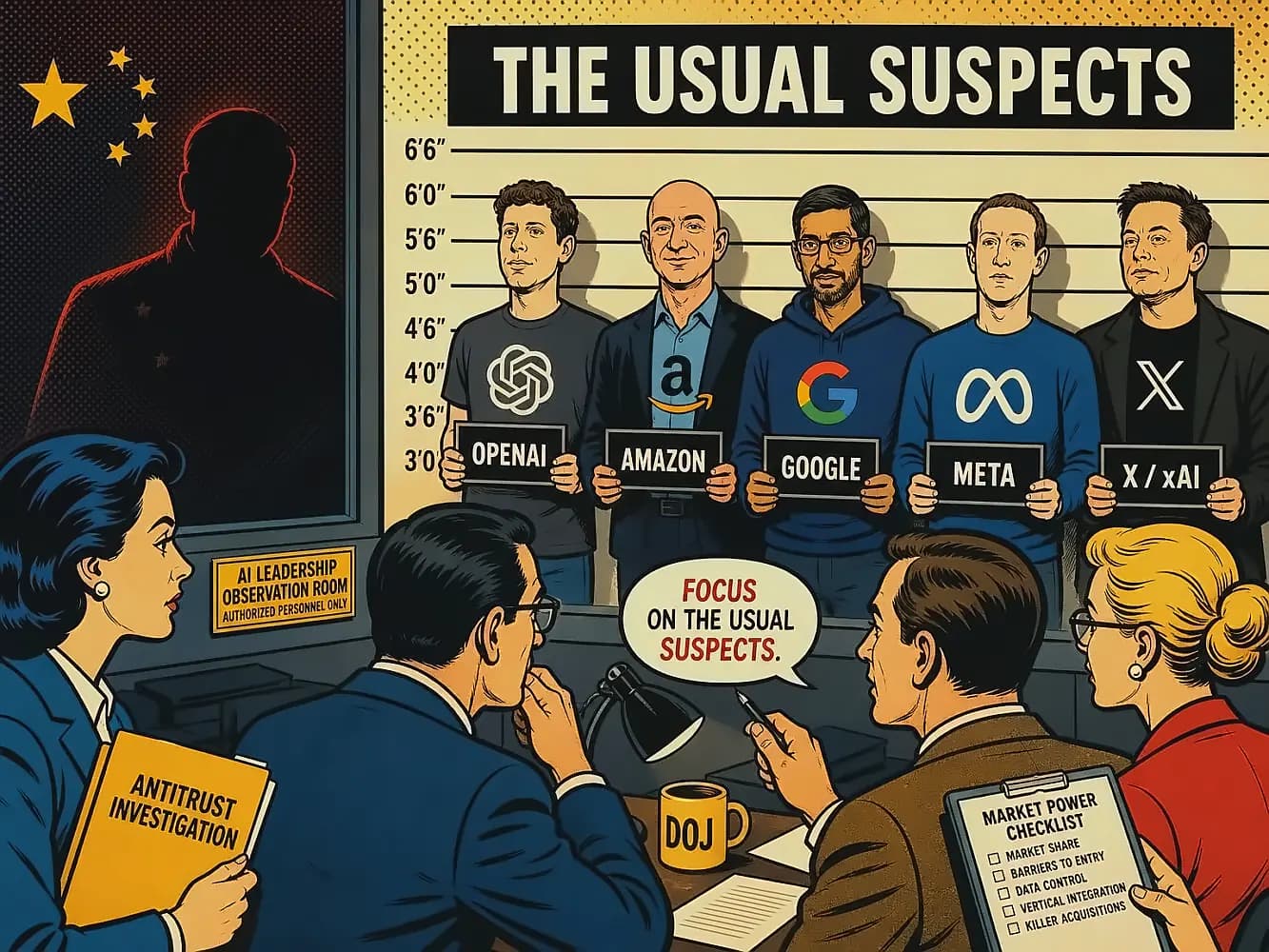
The rapid advances are deepening US-China tech friction, prompting Washington to threaten sanctions over intellectual property concerns after Moonshot's Kimi breakthrough. Trump has signaled that his administration is weighing China's threat against the need for additional safety controls on products like Anthropic's Fable or OpenAI's GPT series, telling reporters 'We have to be careful in both ways. We don't want to restrict them where all of a sudden, we come in second to China'. George Chen, partner at The Asia Group, noted that 'When Xi visits the White House in September, because of Kimi, because of Alibaba and the model they just released last night, Xi will definitely feel like he has, in Trump's language, more cards to play'. The proposed 'AI Kill Switch Act' would force top developers to keep a shutdown option for their strongest systems, as regulators face competing pressures to contain AI risks without pushing developers toward secrecy.
What is perhaps underappreciated is that China's contribution to the global AI ecosystem extends beyond lower pricing, as noted by China Daily. Chinese AI developers have helped broaden the industry's focus from a singular race for the most powerful model toward a more practical question: How can advanced AI be made accessible at scale? This approach mirrors China's role in other technology sectors where innovation has been driven by affordability, deployment speed and mass adoption rather than pursuing the most premium product. As Chinese models become increasingly capable, they are expanding the range of choices available to enterprises and developers around the world, with greater competition accelerating innovation, encouraging cost discipline and reducing barriers to adoption. The emergence of multiple centers of AI innovation is expected to be healthier than a market dominated by only a handful of providers, allowing technological progress to reach businesses, consumers and emerging economies more quickly.