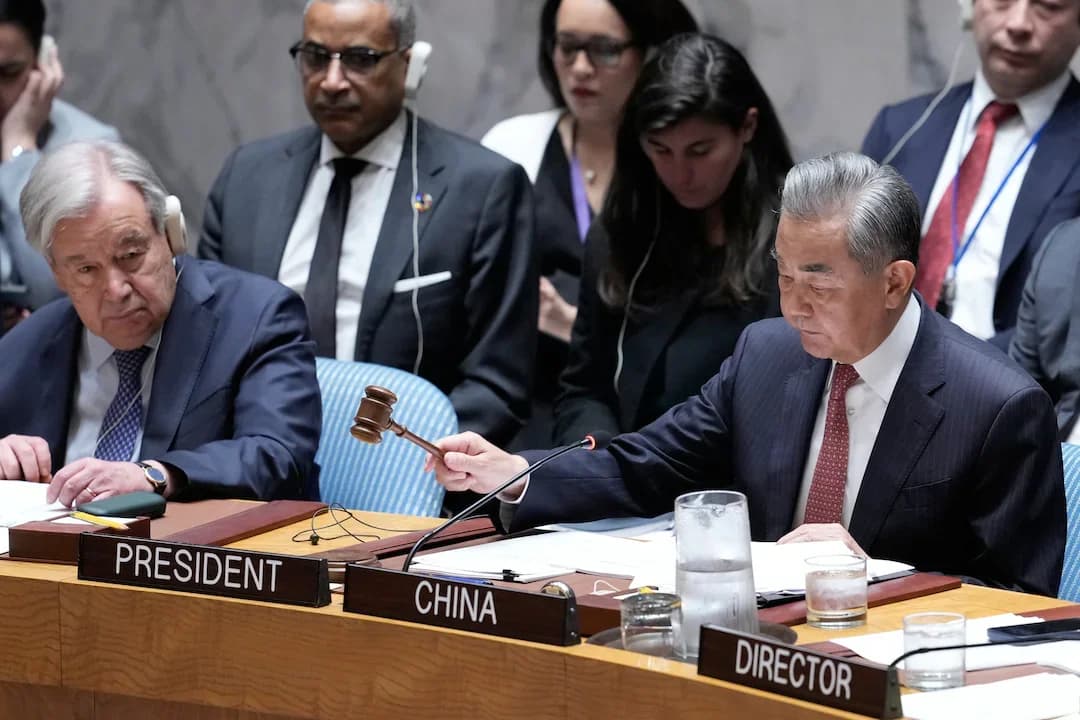
Chinese Foreign Minister Wang Yi has escalated his diplomatic efforts, calling for advancement of negotiations between the United States and Iran during a high-level Security Council debate. According to China Daily, Wang made these remarks after presiding over the open debate session on Tuesday, May 26, 2026, stating that 'we believe that the sovereignty, security and territorial integrity of all countries in the region must be respected, that civilian and non-military targets must be protected, that the security of passages and energy infrastructure must be safeguarded, and that the provisions of the nuclear non-proliferation regime must be implemented'. The Chinese foreign minister emphasized that 'the key issue concerning the Iran situation is the negotiations between Washington and Teheran' and reiterated China's support for 'active mediation by Pakistan and other countries' while also backing efforts made by both the US and Iran respectively. Wang told reporters that 'a longstanding issue cannot be resolved overnight, however, every step forward in the negotiations brings more hope for peace' and noted that 'the earlier the conflict ends, the fewer civilian casualties there will be'. During separate meetings, Wang called for 'a comprehensive and lasting ceasefire' in the Gulf region and expressed hope that 'the Gulf region and the Middle East will return to peace and tranquility at an early date'.
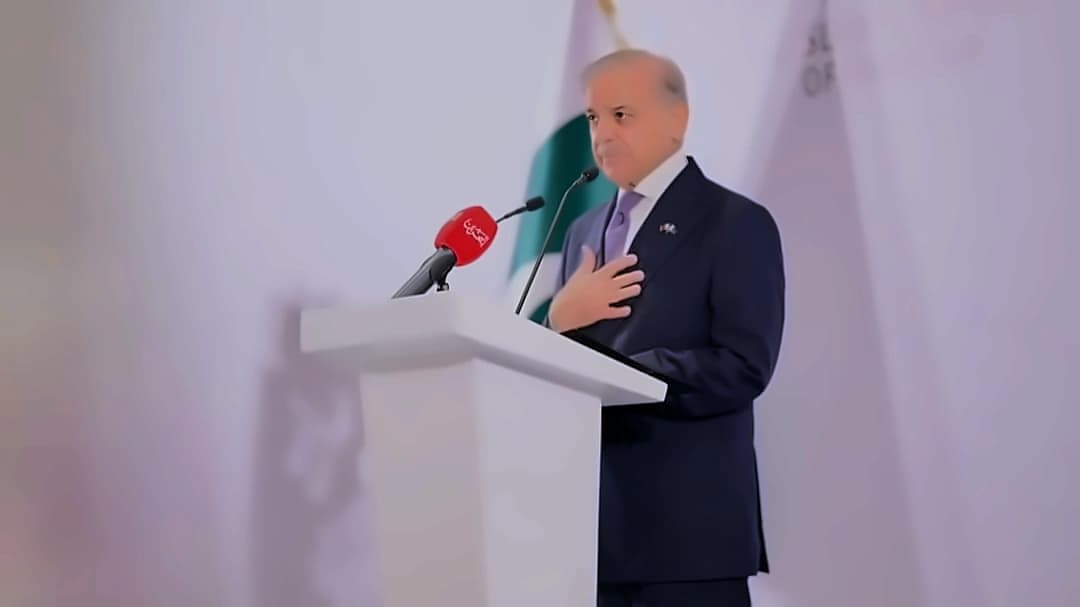
Pakistan's Army Chief Field Marshal Asim Munir told Chinese Foreign Minister Wang Yi during talks in Beijing on Monday, May 25, 2026, that a U.S.-Iran agreement was 'close to being reached', according to Chinese state media. The meeting took place during Pakistani Prime Minister Shehbaz Sharif's official visit to China, as part of Sharif's four-day visit that began on Saturday. Munir briefed Wang on Islamabad's mediation efforts after returning from Tehran, where he met Iranian officials last week. As reported by Xinhua, Munir told Beijing that Pakistan was willing to 'continue making every effort' to help facilitate an agreement and hoped China would take on a larger role in the process. Wang described Pakistan as 'a trustworthy mediator' and welcomed its diplomatic efforts, with the timing demonstrating the urgency of the current situation and coordinated efforts among regional powers. During recent diplomatic engagements, Bahraini Foreign Minister Abdullatif bin Rashid Al Zayani appreciated China's active efforts to promote ceasefire and peace in the Middle East and expressed hope that 'China can play a greater role' in the mediation process.
Iran is seeking the release of $24 billion in frozen assets as part of a possible agreement with Washington, according to Iran's semi-official Tasnim news agency. Tehran reportedly wants immediate access to $12 billion, while another $12 billion would be transferred within 60 days of signing a deal. Iranian parliament speaker and top negotiator Mohammed Bagher Ghalibaf traveled to Qatar on Monday for talks focused on securing the first tranche of funds and removing obstacles tied to the transfer process. A source cited by Tasnim said Iranian officials stressed the need for strict oversight during implementation to avoid issues seen in previous fund-release arrangements involving South Korea and Qatar. The source added that negotiations in Qatar were 'generally positive' and helped move broader discussions forward.
Despite ceasefire efforts, tensions remained high with Iran accusing the US of violating the truce and warning it could retaliate after US forces struck missile sites in southern Iran and targeted boats allegedly attempting to lay mines on Monday, threatening broader negotiations aimed at ending the conflict. As reported by Xinhua, these developments came as Beijing called on Iran and the United States to uphold a fragile ceasefire and continue moving toward compromise. US Senator Lindsey Graham has criticized Pakistan's mediating role, stating in a post on X that Pakistan as a mediator is 'more than problematic'. Graham cited Pakistan's animosity towards Israel as long-standing and noted that Iranian military aircraft are being housed on Pakistani air bases, with the senator noting that 'the sentiment is fresh'. The conflict, which Wang described as 'the conflcit, which should not have happened in the first place, has no reason to drag on', has created significant regional tensions and diplomatic challenges for all parties involved.
Wang expressed hope that parties concerned can stay committed to pursuing a ceasefire and continue meeting each other halfway to return peace to the Middle East as early as possible. According to China Daily, he believes that once an agreement is reached, it will be submitted to the UN Security Council for endorsement to have legitimacy and authority. The Chinese foreign minister emphasized that it takes more than one cold day to freeze three feet of ice, indicating patience is required for long-standing issues to be resolved. Wang's remarks came as the U.S.-Iran conflict continues to escalate, with the need for diplomatic intervention becoming increasingly urgent despite recent ceasefire violations. The international community should 'double its efforts to promote peace and jointly work toward de-escalation, and in particular, oppose actions that fan the flames or escalate tensions', as Wang stated during his Security Council engagement.