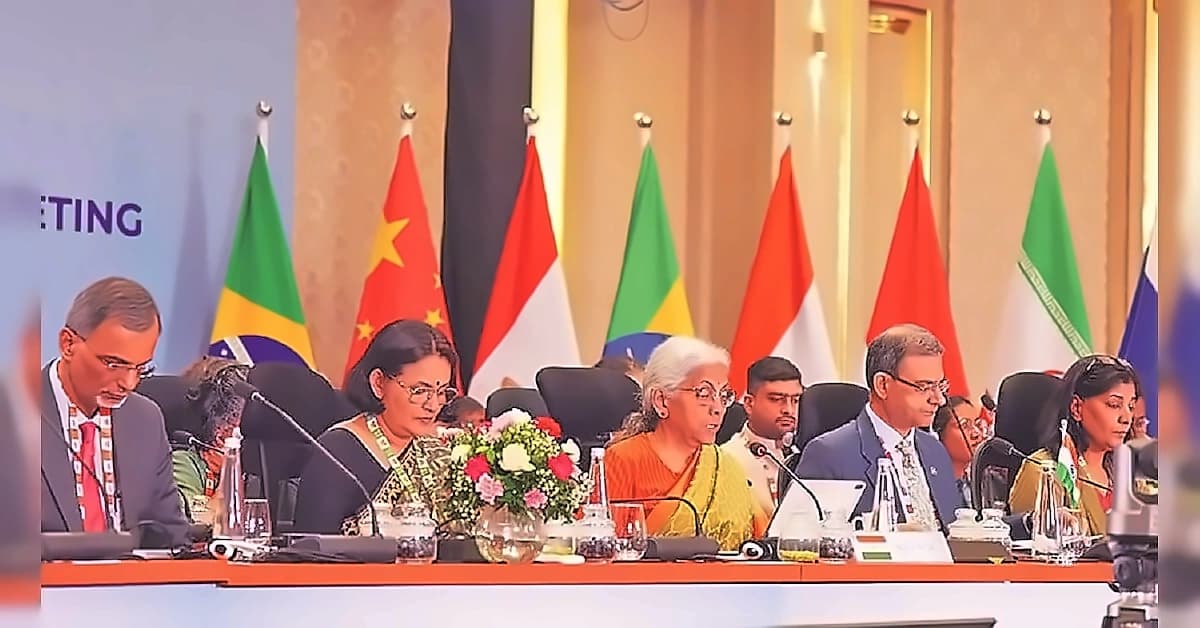
BRICS labour and employment ministers on Wednesday adopted the Hyderabad Declaration during their 12th meeting held under India's 2026 chairship, committing to closer cooperation on expanding social security coverage, formalising labour markets, increasing women's workforce participation, strengthening skills development and improving the use of digital technologies in labour administration, including for gig and platform workers. According to a statement by the Ministry of Labour and Employment, the declaration was adopted under the theme "Building for Resilience, Innovation, Cooperation and Sustainability," bringing together ministers, senior officials, employers' organisations, workers' representatives and international institutions to discuss policies that can create more resilient, inclusive and technology-driven labour markets.
The declaration calls for greater cooperation on policies aimed at improving women's participation in the workforce, including expanding access to skills development, strengthening parental leave provisions, tackling workplace harassment and discrimination, and increasing women's representation in leadership roles across the public and private sectors. As reported by the ministry's statement, these initiatives are designed to address the specific challenges facing women in the labour market and promote greater gender equality in employment opportunities.
The declaration places skills development and digital labour governance among the group's priorities, calling for closer cooperation on employability, skills mapping and future workforce requirements. According to the ministry's statement, the platform will encourage member countries to exchange experiences on the use of digital technologies in labour administration and recognises the growing importance of gig and platform work. The initiative calls for collaboration to address labour market transitions through knowledge sharing and South-South cooperation.
The ministers also adopted BRICS CONNECT, an initiative proposed by India to establish a platform for technical cooperation among member countries on labour and employment. As reported by the ministry, the platform will facilitate collaboration on labour market intelligence, skills forecasting, digital employment services, social security systems and labour market reforms through the exchange of technical expertise and best practices. Union Labour Minister Dr. Mansukh Mandaviya highlighted India's digital achievements, noting that the country now hosts over 2,100 Global Capability Centres, employing around 2.35 million professionals and generating nearly USD 98 billion in annual revenue. He also mentioned that India's e-Shram portal has already registered more than 317 million unorganised workers, enabling easier access to social security and government benefits.
The declaration also took note of an ongoing International Labour Organization (ILO) feasibility study on an International Reference Classification of Occupations (IRCO), being conducted in collaboration with India, with Brazil also participating. According to the ministry, the proposed framework seeks to develop a common occupational classification that could improve skills mapping and support labour mobility across emerging sectors. The International Labour Organization welcomed India's leadership, noting that the country's social protection system now reaches nearly one billion people, offering valuable lessons for South-South cooperation. Delegations from Brazil, China, Russia, South Africa, Indonesia, Iran, Ethiopia and the United Arab Emirates shared national experiences on employment, digital transformation and workforce development during the meeting.