The Chinese yuan strengthened to 6.7877 per dollar as of 0800 GMT, marking a 3% gain against the dollar year-to-date and 2.15% higher versus major trading partners. According to Reuters, the offshore yuan traded at 6.7871, continuing its 11th consecutive day of gains - the longest winning streak since September 2017. The central bank has been setting weaker-than-expected midpoints since November, a move that market participants believe was to prevent excess yuan gains and maintain currency stability. Investors attributed the weakness to profit-taking rather than response to news flows from the Trump-Xi summit, with Richard Pan from China Asset Management Co noting that capital markets are becoming less sensitive to Sino-U.S. trade talk news, focusing instead on rapid technology advancement.
US markets achieved new milestones Thursday as Cisco Systems led the rally with a 13.4% surge after reporting better-than-expected profit and revenue for the latest quarter. According to Associated Press, the S&P 500 climbed 0.8% to set an all-time high for a second straight day, closing at 7,501.24 points. The Dow Jones Industrial Average rose 370.26 points to 50,063.46, finishing above the 50,000 level for the first time since the Iran war began, while the Nasdaq composite climbed 232.88 to 26,635.22. CEO Chuck Robbins attributed the strong performance to "very strong, broad-based demand for our products" as big tech companies continue pouring cash into artificial intelligence technology. Cerebras Systems, an AI processor company, raised $5.55 billion in its initial public offering and surged 68.1% in its debut on the Nasdaq.
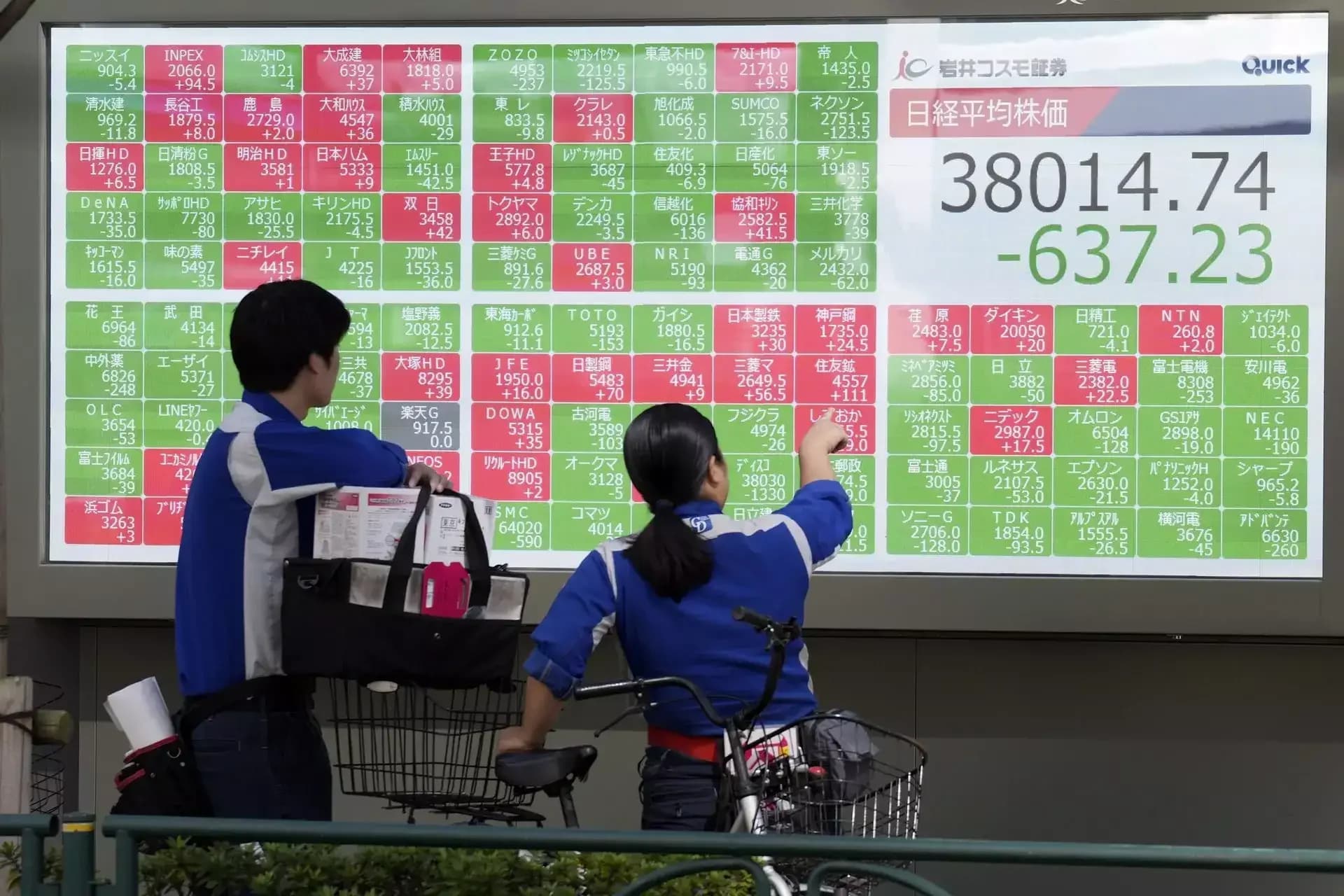
Asian markets showed mixed performance as investors awaited further developments from the ongoing China-US summit in Beijing, which has so far failed to produce any fresh catalysts to extend the recent rally. According to H.G Markets, MSCI's broadest index of Asia-Pacific shares outside Japan fell 1.2%, more than wiping out this week's gains, while MSCI's All Country World Index was little changed after closing at a record high Wednesday. The decline was driven by rising inflation fears that saw Treasury yields spike to one-year highs and increasing bets on a U.S. rate hike this year. Japan's Nikkei also dropped 1.2% as data showed the country's wholesale inflation accelerated to 4.9% in April, the fastest pace in three years, leaving the Bank of Japan on track to raise interest rates. South Korea's Kospi jumped 1.8% to another record thanks to gains for AI-related stocks, while stocks were virtually flat in Hong Kong and down 1.5% in Shanghai as Chinese leader Xi Jinping met with U.S. President Donald Trump in Beijing.
SoftBank Group declined 4.3% despite reporting a sharp rise in quarterly profit, supported by valuation gains linked to its investment in OpenAI. As reported by Business Standard, Fujikura tumbled 19.1% even after posting strong double-digit growth in both sales and profits. Other major decliners included Kioxia Holdings, JX Advanced Metals, Mitsubishi Heavy Industries, Sumitomo Electric, and Sony Group. The market decline came despite strong quarterly results from several major companies, highlighting the cautious sentiment among investors. Outside of AI, other stocks rallying after delivering better-than-expected profit reports included StubHub Holdings, up 13.7%, Viking Holdings, up 5.5% and Yeti Holdings, up 6.2%. These companies sell products that aren't day-to-day essentials, such as concert tickets, river cruises and insulated water bottles, indicating customers are still willing to spend despite economic concerns.

Mitsui Kinzoku fell 7.9% after issuing a weaker profit outlook for FY2027 despite expecting higher revenue. According to Business Standard, the mixed corporate earnings and outlook from major companies contributed to the market's cautious sentiment. Corporate earnings reported so far this season have reinforced that this is still an AI-led market, but one where the impact is broadening quickly, according to Gargi Pal Chaudhuri, chief investment and portfolio strategist at BlackRock. What started with a handful of companies is now driving earnings growth across semiconductors, infrastructure, and even parts of the industrial economy. The U.S. has cleared around 10 Chinese firms to buy Nvidia's second-most powerful AI chip, the H200, but not a single delivery has been made so far, leaving a major technology deal in limbo as CEO Jensen Huang seeks a breakthrough in China this week. "Market expectations are low," said Ritesh Ganeriwal, group head of investments & advisory at digital investment platform Syfe.