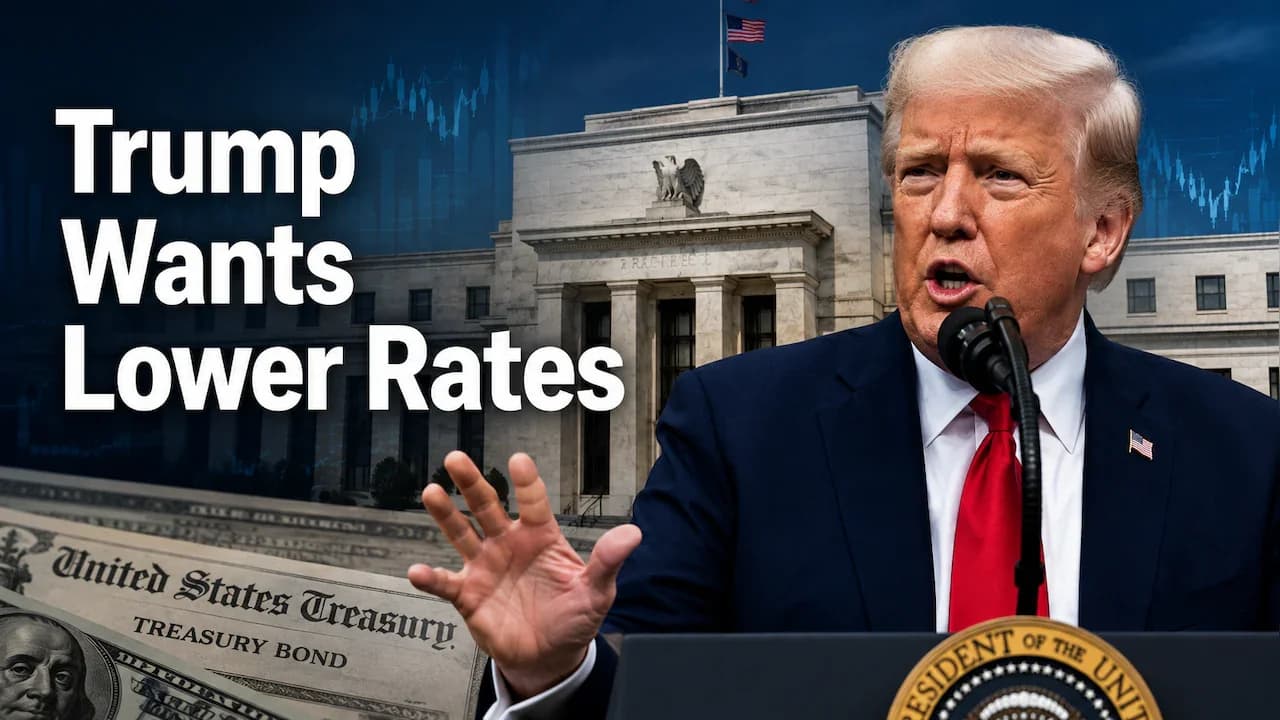
The Federal Reserve raised its benchmark rate by 25 basis points to a 3.75%-4% target range on Wednesday, marking the first increase since 2023. According to reports from The Economic Times, US President Donald Trump responded by calling for sharply lower interest rates, stating that rates should be 1% or less. Trump argued that the country deserves lower borrowing costs because "We (US) are the Best Credit in the World — By far. Our country is booming with new investment!" As per The Times of India, Trump emphasized his urgency for rate reductions, stating "LOWER THE INTEREST RATES FOR THE UNITED STATES OF AMERICA, AND FAST!" However, as reported by The Times of India, Trump's claim that the US has "the Best Credit in the World" is not accurate, with several countries including Canada, Australia and Germany all rated higher by S&P. The Fed's open market committee voted unanimously to raise rates, with Fed Chair Kevin Warsh acknowledging that "inflation remains elevated" and "inflation is too high and has been for too long." Warsh stated that "This summer's inflation readings do not tell me that underlying trends have meaningfully improved," setting the stage for potential conflict with Trump.
Following the Fed's rate hike announcement, bond yields have strengthened significantly as markets respond to the central bank's commentary on economic growth. According to Moneycontrol, there has been a strong uptick in both capex and corporate earnings metrics of the US private sector, which is supporting the positive yield environment. Businesses with pricing power are expected to fare better in this elevated yields environment, as they can pass through cost increases to consumers more effectively. The Fed's decision to raise rates reflects growing confidence in economic growth prospects, with the central bank projecting GDP growth of 2.3% by year-end, up 0.1 percentage point from previous estimates.
The Federal Open Market Committee's decision has reignited the fight over Fed independence, with Trump demanding the central bank slash rates to 1% or lower within hours of the announcement. According to The Economic Times, the Trump administration launched a criminal probe against Kevin Warsh's predecessor Jerome Powell and is still trying to fire Fed Governor Lisa Cook. On Tuesday, key Trump economic advisor Kevin Hassett advocated against a rate hike but said the White House would "understand and respect the decision." Kevin Warsh was named to his position after a contentious Senate confirmation process, where Democratic lawmakers accused him of being a "sock puppet" for Trump, which he denied. So far, Trump has supported Warsh, claiming that the Fed chair wants lower rates and accusing the board of being "political." The committee also dropped language blaming part of inflation on supply shocks, now arguing that the hike supports a quicker return to its 2% target. Updated projections show 16 of 18 officials expect another increase before year-end, representing a shift from July's outlook.
The Fed's rate hike comes in response to inflation reaching 3.4% in August, unchanged from the previous month but still well above the Fed's long-term 2% target. According to The Economic Times, the Fed raised its forecast for its preferred gauge of inflation - the Personal Consumption Expenditures (PCE) price index - by 0.1 percentage points to 3.7% by year-end. Inflation "has spread across the economy and is becoming embedded in consumer and firm behavior - exactly what the Fed must prevent," said Diane Swonk, chief economist at KPMG. The US economy has been dealing with years of higher-than-target inflation, with prices surging in the wake of Donald Trump's war on Iran, his signature tariff policies and the ongoing AI boom. The Fed has held rates steady since January, choosing to wait to gauge the effects of energy price shocks and let the impact of tariffs on prices ripple through the economy. At its last meeting in July, a quarter of the committee's voting members dissented from the decision to hold pat, calling for an immediate hike.
Wall Street expected the Fed to hike rates Wednesday, with market odds for an interest rate increase at more than 90% after August inflation data came in hot at a 3.4% annual clip. Following Wednesday's rate increase, major stock indexes reversed their earlier gains and turned lower for the trading session. The S&P 500 recovered from its drop, trading 0.15% higher at 7,596 points on Wednesday's US market, while the Nasdaq 100 recovered, trading 0.54% higher at 29,092 points as investors carried out buying at the day's low level. The Dow Jones declined to touch its intraday low level, down 0.28% to 51,948 points as of 2:46 pm (ET) on September 16. The Fed also raised its projection for GDP growth by year-end to 2.3%, up 0.1 percentage point. According to Bureau of Labor Statistics data, total non-farm payroll employment increased by 162,000 in the 12 months ended August 2026, indicating healthy job growth with unemployment remaining unchanged at 4.1%.
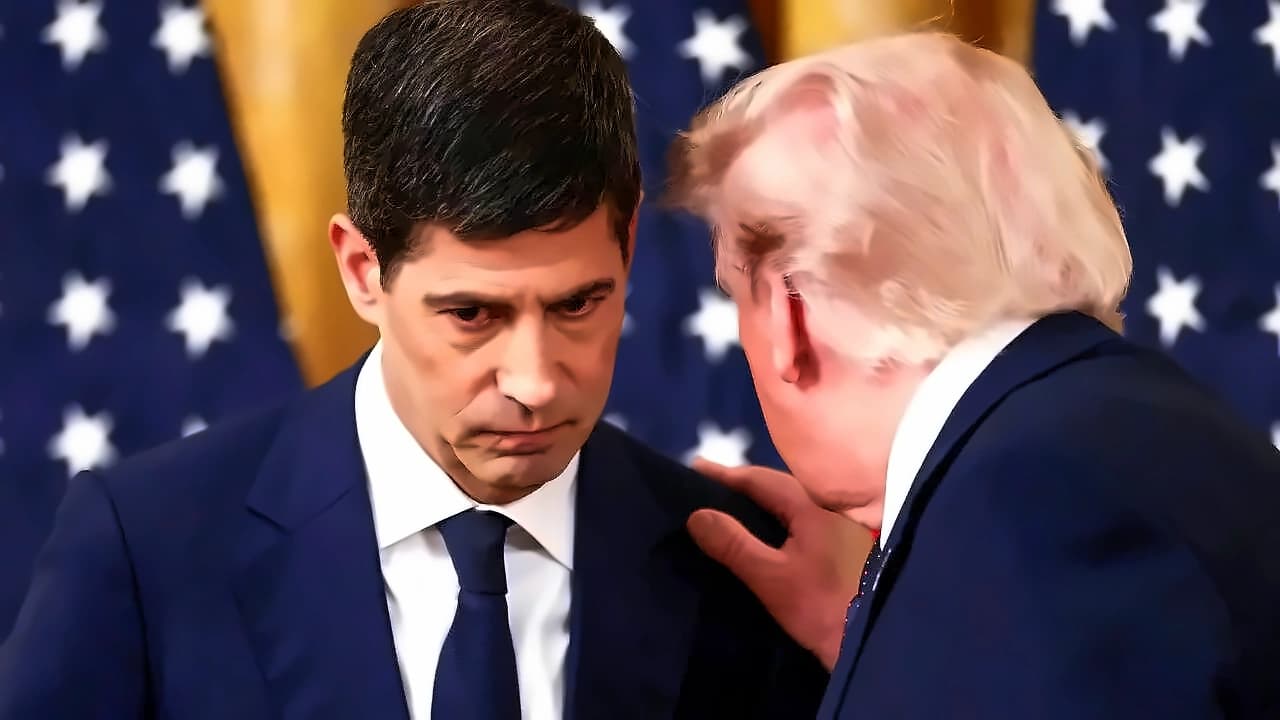
The rate hike comes amid ongoing geopolitical tensions, with Fed Chair Kevin Warsh acknowledging that "there's no hiding from hot spots around the world, and our judgment about what is the most likely or least likely of the geopolitical situation has changed." Higher prices have painted a grim economic outlook as voters prepare for November elections, with inflation remaining stubbornly high while unemployment stayed steady at 4.1% according to August jobs data. Recent data shows hourly earnings for employees decreased by 0.1% year-over-year after accounting for inflation and fell by 0.3% from the month prior. Consumer sentiment has rapidly declined, with candidates on both sides seeking to make cost-of-living concerns central to their campaigns. Meanwhile, Trump has promised every American a $5000 "Trump dividend" if Republicans retain control of Congress, though critics have called this move akin to bribery. White House spokesman Kush Desai told Fox News that Trump "absolutely" still believes in the independence of the Fed, stating "But that doesn't change the fact that the president of the United States has a First Amendment right" to speak out when things go awry.