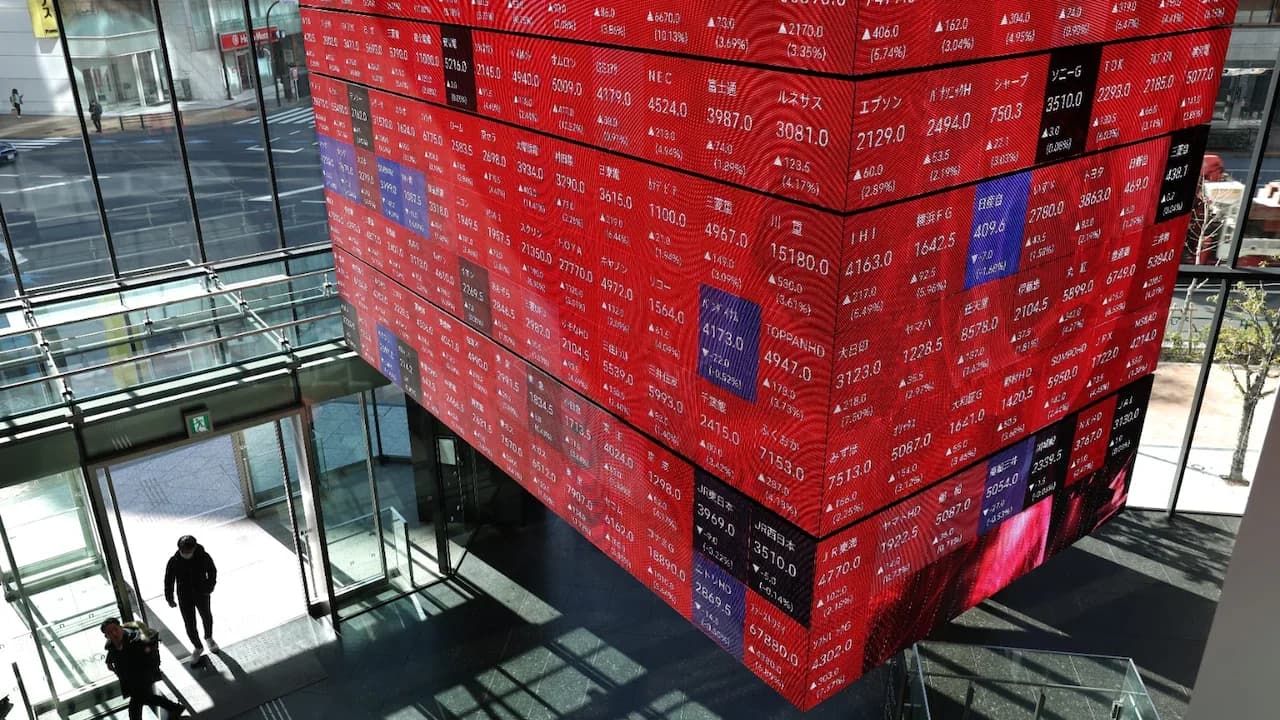
Japan's Nikkei share average dropped more than 2% on Friday, falling 2.69% to 64,634.04 as concerns over heavy artificial intelligence spending intensified. The broader Topix index slipped 1.28% to 4,002.09, with the Nikkei having lost more than 7% so far this month, tumbling into correction territory last week. According to The Economic Times, the decline was spurred by a sharp fall in Google parent Alphabet shares, which sank 7% overnight after the company reported higher spending plans while also burning cash. Wall Street indexes closed lower, with the Nasdaq shedding more than 2%, marking the worst session for megacap stocks since April 2025.
The positive momentum from Alphabet's massive AI investment announcement was overshadowed by broader tech sector concerns. Alphabet Inc. fell 7.1% after raising its capital-expenditure forecast, while Tesla Inc. tumbled 15% as profits disappointed despite strong electric-vehicle deliveries. Meta Platforms Inc., Microsoft Corp. and Amazon.com Inc. telegraphed in April they'd be spending as much as $725 billion this year on AI ambitions, but markets are increasingly demanding evidence that massive spending on artificial intelligence will generate commensurate earnings growth. A lot of the spending is expected to boost Asian chipmakers, with South Korea's KOSPI up more than 3% led by SK Hynix and Samsung Electronics, as noted by Business Standard. International Business Machines Corp. edged lower on a lower full-year sales outlook, while Tesla Inc. dropped 4% following second quarter earnings miss.
The positive momentum extended to global markets, with Wall Street ending higher overnight as the S&P 500 rose 0.9% to snap a three-day losing streak. According to The Times of India, the rebound was driven by semiconductor shares after data showed Korean semiconductor exports nearly tripled during the first few weeks of July, while a measure of Taiwanese export orders for June exceeded estimates. Chipmakers and data storage firms led the gains, with SanDisk and Western Digital each rising more than 7% in early trade, while Marvell Technology and Intel gained 6.2% and 5.7%, respectively. Nvidia added 1.3% after disclosing it had acquired a 9% stake in Dutch cloud computing company Nebius. General Motors rose 1.7% after reporting second-quarter sales and profit that beat Wall Street expectations and raising its guidance. The rally came despite Brent crude climbing 0.6% to $91.55 a barrel, extending gains after settling at a five-week high in the previous session.
Major technology stocks such as Kioxia Holdings, Advantest, SoftBank Group, Tokyo Electron, Taiyo Yuden, Lasertec, and Murata Manufacturing posted notable declines, as reported by Business Standard. Chip-related shares fell significantly, with Advantest and Tokyo Electron losing 6.33% and 5.43%, respectively, as reported by The Economic Times. Technology investor SoftBank Group fell 7.42% and memory chip maker Kioxia lost 4.4%. However, shares supported by domestic demand rose, with Central Japan Railway and East Japan Railway rising 1.17% and 0.6%, respectively. Shippers also performed well, with Kawasaki Kisen and Mitsui OSK Lines up 0.61% and 0.88%, respectively. Otsuka Holdings, a maker of Pocari Sweat, rose 1.6% to become the top percentage gainer on the Nikkei. Concerns resurfaced over whether heavy spending on AI infrastructure is sustainable after Alphabet shares fell sharply overnight, said Kazuaki Shimada, chief strategist at IwaiCosmo Securities, as reported by The Economic Times.

Japan's annual inflation rate rose to 1.7% in June from 1.5% in May, marking the highest reading in six months, according to Business Standard. The stronger inflation data reinforced expectations that the Bank of Japan could continue raising interest rates. Despite Friday's losses, Japanese equities ended the week in positive territory, with the Nikkei 225 gaining 0.7% for the week and the Topix rising more than 2%, marking their first weekly advances in three weeks. In currency markets, the yen held its losses from the prior session, trading around 163.83 per dollar, after Japan's key inflation gauge picked up for the first time in three months, keeping the Bank of Japan on course for another interest-rate hike this year. The US dollar stood tall amid safe-haven flows as well as on the back of rising wagers the Fed will increase rates, as noted by Business Standard. The offshore yuan was little changed at 6.7739 per dollar, and spot gold fell almost 2% to about $4,050 an ounce Thursday as bets on rate hikes reduced the appeal for the non-interest-bearing metal.